AI Tattoo Generator
Generate a design for this placement — your sign, your intention, your style. Free, no sign-up.
ankle tattoos
Ankle tattoos: delicate band and small floral ideas, pain 6.5-7/10, healing 2-4 weeks. High pain — bone, almost no padding, shoe friction slows healing.
Generate a design for this placement →
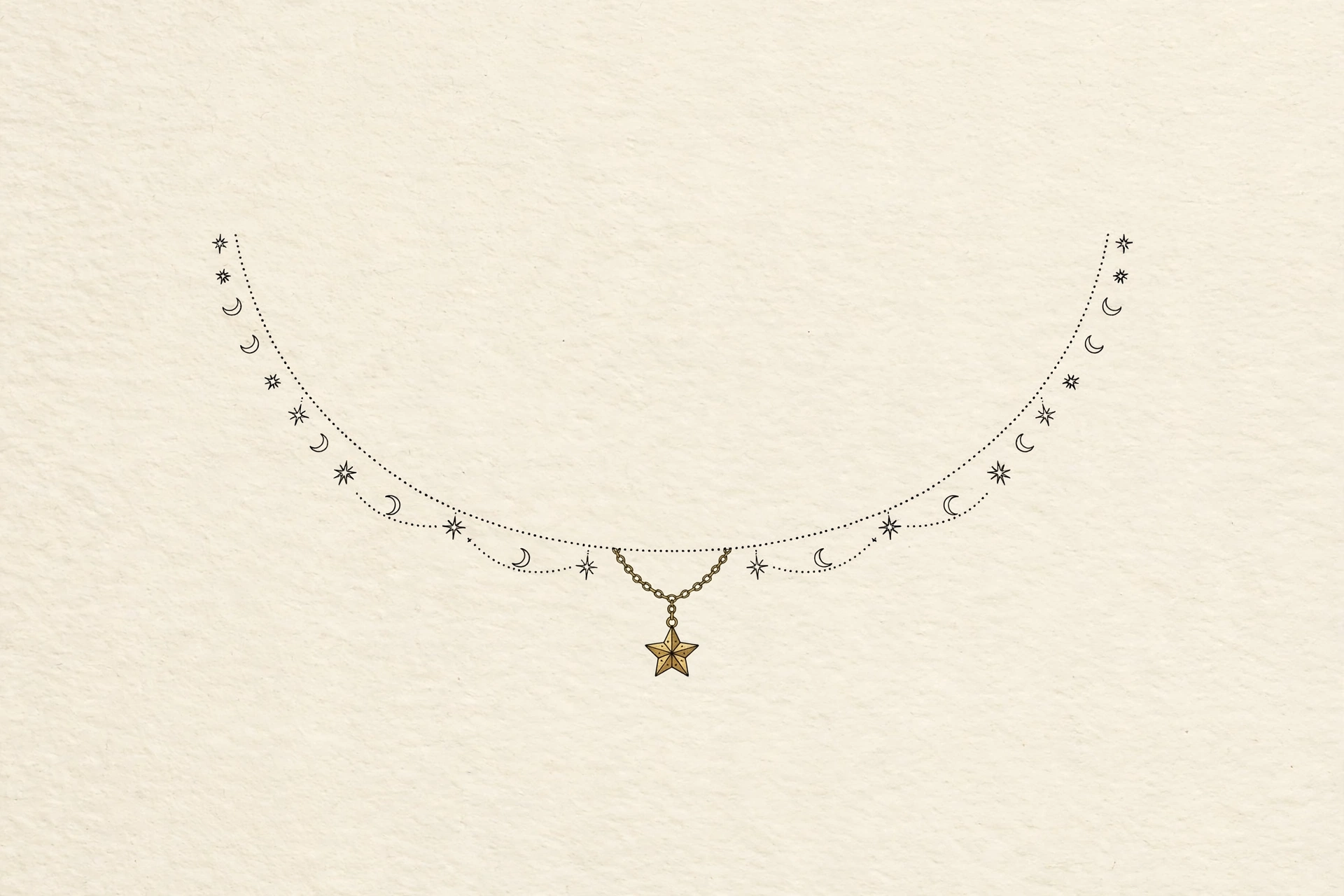
An ankle tattoo is a small, delicate piece worn around the ankle bone, typically just 3–8 cm. It suits jewellery-like designs — thin bands, small florals and single glyphs — but it is a high-pain spot, reported at 6.5–7/10, because the bone sits right under the skin with almost no padding.
Key takeaways
| What | What to expect |
|---|---|
| Size | 3-8 cm |
| Pain | 6.5-7/10 |
| Healing | 2-4 weeks |
| Fading | Fast — shoe/sock friction |
Pain is a consensus range — artists and charts disagree on the exact number, so treat it as a range, not a measurement. Only a licensed artist who sees the design and the body part can give you a real quote.
An ankle tattoo is small, but the pain is not. At a reported 6.5–7/10 it ranks as high pain, because the ankle bone sits almost directly under the skin with barely any padding to soften the needle, and the thin skin over the bone is sensitive.
The ankle bone is the problem. Unlike the thigh or calf, where muscle cushions the needle, the ankle has bone almost directly under the skin, with tendons and thin tissue in between. The needle's vibration is felt on the bone itself, and the skin over the bone is thin and sensitive, which is why a tattoo that takes only a short time can still be an intense experience.
Small does not mean painless, and the ankle is the clearest proof of that. A 3–8 cm ankle piece may take less time than a large thigh piece, but the pain per minute is much higher, and the bony spots — directly over the ankle bone itself — are the sharpest. The softer areas just above or below the bone are a little easier, which is why placement within the ankle matters.
The good news is that ankle sessions are short. A small band, a single glyph or a small floral rarely needs a long sitting, so the pain is intense but brief. If you are worried about it, talk to your artist beforehand: a short session, a calm pace and a clear plan for breaks make a high-pain spot much more manageable.
Small and simple wins on the ankle. Delicate bands that circle the ankle like jewellery, small florals and single glyphs all fit the 3–8 cm space, while dense or finely detailed designs soften quickly on such a small, high-friction spot.
A band is the ankle's signature design. A thin vine, a fine chain or a row of tiny stars circling the ankle reads like a permanent bracelet, and it uses the ankle's curve instead of fighting it. Bands work best when they are kept simple: one clean line, or a line with a single small motif at the front, rather than a crowded pattern that wraps all the way around.
Small florals are the other classic. A wildflower sprig, a tiny lotus or a few delicate stems on the outer ankle look elegant at 3–8 cm, and the outer side is the flattest, most visible spot for a single motif. A single glyph — a zodiac sign, a small moon, an initial — works the same way: one symbol, drawn cleanly, with enough space around it to breathe.
What does not suit the ankle is dense or fiddly work. A detailed design shrunk to 3–8 cm loses its fine lines as it heals, and the ankle's daily friction softens it further. Keep the lines a little bolder than you think you need, keep the design simple, and the tattoo will still be readable years later.
Ankle tattoos heal in around 2–4 weeks, but shoe and sock friction slows healing, so footwear is the main thing to plan. Open shoes or loose socks that clear the tattoo are ideal while it heals, and tight boots or trainers rubbing the fresh ink should be avoided.
Healing an ankle tattoo takes around 2–4 weeks, and the main complication is footwear. Every shoe and sock touches the ankle, and a fresh tattoo does not want to be rubbed, pressed or kept damp. Open shoes that clear the tattoo are the ideal choice while it heals, and if you must wear socks, choose loose ones that do not sit directly on the fresh ink.
Tight boots and trainers are the worst option during healing. They press on the tattoo, rub it with every step and trap moisture against the skin, all of which slow healing and can pull at the fresh ink. If your job or the weather forces you into closed shoes, wear the loosest fit you can, keep the tattoo clean and dry, and change out of them as soon as you can.
Showering needs a little care too. Keep the tattoo clean, but do not soak it — no baths, no swimming and no standing under a hot shower with the water hitting the ankle directly while it is fresh. Pat it dry gently afterwards rather than rubbing it with a towel, and follow your artist's aftercare instructions for moisturising.
Fading is fast on the ankle because shoes and socks rub the spot every day. Fine, delicate lines look beautiful at first but soften sooner here than almost anywhere else, so a slightly bolder line and simpler shapes will keep the design readable for longer.
The ankle is rubbed every single day. Socks slide over it, shoe collars press against it, and trouser hems brush it — and that constant friction is what makes fading fast here. A tattoo on the outer thigh, which spends most of its life untouched under clothing, can hold fine lines for years; the same fine lines on the ankle will soften much sooner.
That is why bolder is better on the ankle. A line that looks slightly heavy on the day it is done will settle into a clean, readable line as it heals and ages, while a hairline that looks perfect in the studio can fade into a soft grey smudge. Your artist will usually suggest going a little bolder than you first imagined — trust that advice, because they have seen how ankle tattoos age.
Touch-ups are part of owning an ankle tattoo, not a sign that anything went wrong. Plan for one at some point, protect the healed tattoo from the sun when it is exposed, and choose simple shapes over dense detail. A simple design with bold lines will outlast a complicated one with fine lines on this spot every time.
The ankle offers four small canvases: the front over the tendons, the inner and outer sides, the back above the heel, and all the way around as a band. A band uses the ankle's curve best, while a single motif usually sits cleanest on the outer side, where it is visible and flatter.
A band that circles the whole ankle is the most complete use of the spot. It follows the ankle's natural curve, reads like jewellery from every angle, and suits thin, simple designs — a vine, a chain, a row of tiny stars. The trick is keeping it level: the ankle is not a perfect cylinder, so your artist will draw the stencil while you are standing, to make sure the band sits evenly when you walk.
The outer side is the best spot for a single motif. It is the flattest part of the ankle, the most visible when you wear sandals or cropped trousers, and the least rubbed by shoes. A small floral, a glyph or a tiny animal sits cleanly here, with enough flat skin around it to let the design breathe.
The front of the ankle, over the tendons, is a bonier and more sensitive spot, and the back above the heel takes more rubbing from shoe collars than anywhere else on the ankle. Both can be tattooed, but they are less forgiving than the outer side — expect more discomfort during the session and faster softening afterwards, and keep the design especially simple if you choose them.
A thin vine band circling the ankle, with tiny leaves and a single small flower.
A small wildflower sprig on the outer ankle, with a few delicate stems and buds.
A single zodiac glyph, about 3 cm tall, on the outer ankle bone.
A tiny wave curling around the ankle, for a subtle nod to the sea.
A fine bracelet-style chain tattooed around the ankle, with a small charm at the front.
A small bird in flight above the ankle bone, drawn in a few clean lines.
A crescent moon on the inner ankle, small enough to hide under a sock.
A fine-line snake wrapping once around the ankle, its head resting near the front.
A tiny compass rose on the outer ankle, with a small star marking north.
The ankle suits zodiac ideas that are small and singular. A single glyph — your sun sign, a small moon, or a tiny constellation — fits the 3–8 cm space without crowding, and a thin band of tiny stars can circle the ankle like a bracelet. The key is restraint: one sign, one symbol, drawn boldly enough to survive daily shoe friction. Larger zodiac work such as a full birth-chart wheel belongs on a bigger panel like the thigh, not here. Like all zodiac designs, these are decorative interpretations of astrological symbolism, meant to be personal rather than predictive.
Generate a design for this placement — your sign, your intention, your style. Free, no sign-up.
Size (Tiny to Extra Large) and style in, cost range out. Ranges are estimates — an artist quote wins.
12 placements: Wrist, Forearm, Upper Arm, Chest, Back, Ribs, Thigh, Ankle, Neck, Hand, Foot, Inner Arm. Shows pain range, healing and fading for the chosen spot. Ranges only — sources disagree, no single decimal is a fact.
Foot tattoos: top-of-foot floral and script ideas, pain 7.5/10, healing 3-5 weeks. High pain, almost no padding, shoe friction fades it faster.
Leg tattoos: hub for thigh, calf, shin, knee, ankle and foot. Outer thigh and calf are low-pain first-tattoo spots; shin is bony at 7.5/10.
Yes — high pain, reported 6.5-7/10. Bone with almost no padding.
Shoe and sock friction slows healing. Plan footwear while it heals.
Small and simple — delicate bands, small florals, glyphs.
Open shoes that clear the tattoo are the safest option while it heals. Closed shoes and tight socks rub the fresh ink and slow healing, so if you must wear them, choose the loosest fit and keep the tattoo clean and dry.
Wait until the tattoo has settled, which takes around 2–4 weeks, and longer if the skin still feels tender or flaky. Boots that press or rub directly on the tattoo are the last thing to bring back.
Fading is fast on the ankle because of daily shoe and sock friction, so some softening over time is normal. A bolder line at the start and a touch-up later on will keep the design readable for longer.
AI designs are for inspiration only. Always consult a licensed tattoo artist. This page does not provide medical advice. Last reviewed: 24 November 2026.