AI Tattoo Generator
Generate a design for this placement — your sign, your intention, your style. Free, no sign-up.
back tattoos
Back tattoos: full-back and upper-back ideas, pain 4.5-5.5/10, healing 3-5 weeks. Best canvas for symmetry and large scenes, including birth-chart wheels.
Generate a design for this placement →
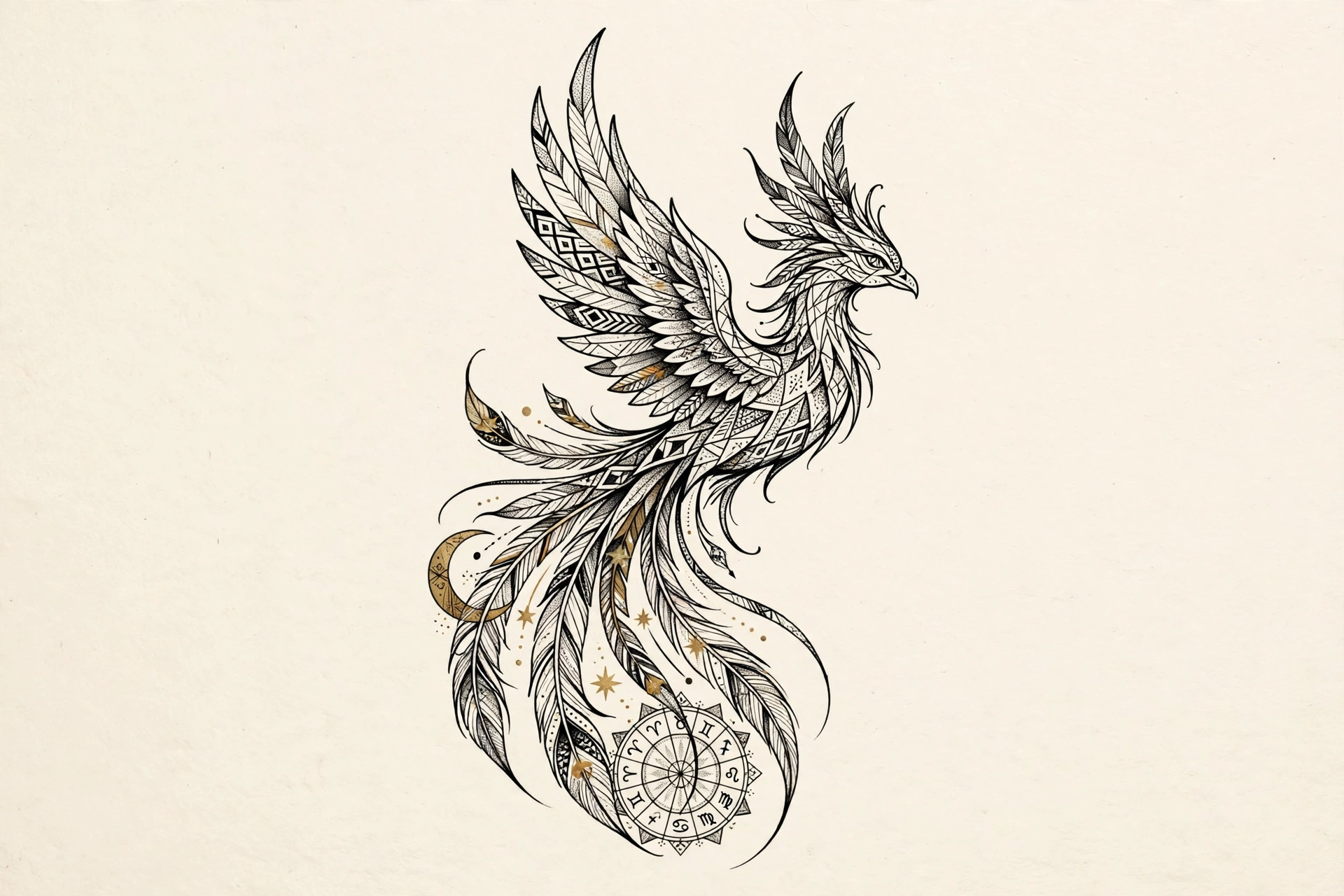
A back tattoo is a tattoo on the upper or lower back, from about 12 cm to a full-back mural. It suits someone who wants the largest canvas on the body — a symmetrical centrepiece, a large scene, a birth-chart wheel — and who is happy to plan help for aftercare, since the back is hard to reach alone.
Key takeaways
| What | What to expect |
|---|---|
| Size | Upper back 15-35 cm, lower back 12-30 cm |
| Pain | 4.5-5.5/10 |
| Healing | 3-5 weeks |
| Fading | Slow |
Pain is a consensus range — artists and charts disagree on the exact number, so treat it as a range, not a measurement. Only a licensed artist who sees the design and the body part can give you a real quote.
The upper back and the lower back suit different designs. The upper back is broad, flat and stable, ideal for symmetrical pieces and large scenes, while the lower back is narrower and suits horizontal designs that follow the waist, and a tall vertical scene would suit it less well.
The upper back is the classic large canvas. It is wide, flat and does not move much, so it can carry a full scene, a symmetrical design centred on the spine, a pair of wings, or a large animal or floral piece. It is also the easiest part of the back to show and to photograph, which matters if the design is meant to be seen.
The lower back is smaller and more curved, and it moves more when you bend and twist. It suits horizontal designs that follow the natural line of the waist — a floral band, a line of script, a small symmetrical ornament — rather than a large vertical scene. A design that is too tall for the lower back can distort when you move.
A full-back piece uses both. A mural that runs from the shoulders to the waist needs to be designed as one piece, with the upper back carrying the main image and the lower back carrying the elements that complete it. That is a major project, so it needs an artist experienced in large-scale work and a plan for multiple sessions.
The back is the best canvas for symmetry and for large scenes, because it is the largest flat area on the body. A design centred on the spine, with matching elements on each side, looks more balanced here than it could anywhere else.
Symmetry is the back's signature strength. A mandala centred on the spine, wings spreading evenly to each side, a pair of animals facing each other, a floral design mirrored across the spine — all of these use the back's natural centre line. The spine gives the artist a clear guide, and the body's own symmetry does half the work.
Large scenes also belong on the back. A landscape, a seascape, a mythological scene, a forest with animals — any design that needs space to tell a story will find it here. The back can carry a scene with foreground, middle ground and background, which smaller placements simply cannot do.
The key is to design for the back, not just to enlarge a small design. A large back piece needs bold shapes, clear focal points and background elements that fill the space, or it will look empty despite its size. Work with your artist on a composition that uses the whole canvas, with the strongest image where the back is widest and supporting elements filling the rest.
The back is the one placement where a full birth-chart wheel fits comfortably. A wheel needs 12 cm or more to stay readable, and the upper back gives it a flat, stable surface where the circle stays true and the symbols have room.
A birth-chart wheel is a circle divided into twelve sections, one for each sign, with the planets placed where they were at the moment of birth. On the upper back it can be drawn large enough that each section is clear, the glyphs are readable, and the centre of the wheel has room for a focal image such as the sun or moon.
A star chart is a related idea: the sky as it looked on a specific date, time and place, drawn as a map of constellations across the upper back. It needs the same flat space and the same careful sizing, and it works best when the stars are spaced generously so they do not merge as the tattoo ages.
Both designs need an artist who is comfortable with geometric work, because a wheel that is not quite round or a chart whose stars are unevenly spaced will be obvious on such a large, flat canvas. Ask to see the stencil on your back before the work starts, and check it in a mirror — a wheel that looks round from the front may need adjusting when seen from behind.
Back pain is low away from the spine, reported in the 4.5–5.5/10 range, and higher near the spine itself. Healing takes about 3–5 weeks, and aftercare is harder on the back than anywhere else, because it is difficult to reach alone — plan help in advance.
The upper back away from the spine is one of the more comfortable large areas to tattoo. The muscle and flesh cushion the needle, and the flat surface lets the artist work steadily. Near the spine, the bone is close to the surface and the pain is sharper, and the same is true over the shoulder blades and the ribs at the sides.
Healing is the real challenge. You cannot easily see your own back, and you cannot easily reach it to clean and moisturise it, so you will need someone to help — a partner, a friend, or a family member who can follow your artist's aftercare guidance. Plan that help before the appointment, not after.
Clothing matters while the back heals. A soft, loose shirt that does not rub the fresh tattoo is better than a tight top or a rough fabric, and a bag strap across a fresh back tattoo can irritate it. Sleep on your side or stomach for the first few nights if you can, and protect the tattoo from sun while it heals. Fading is slow on the back, which rewards the effort of good aftercare.
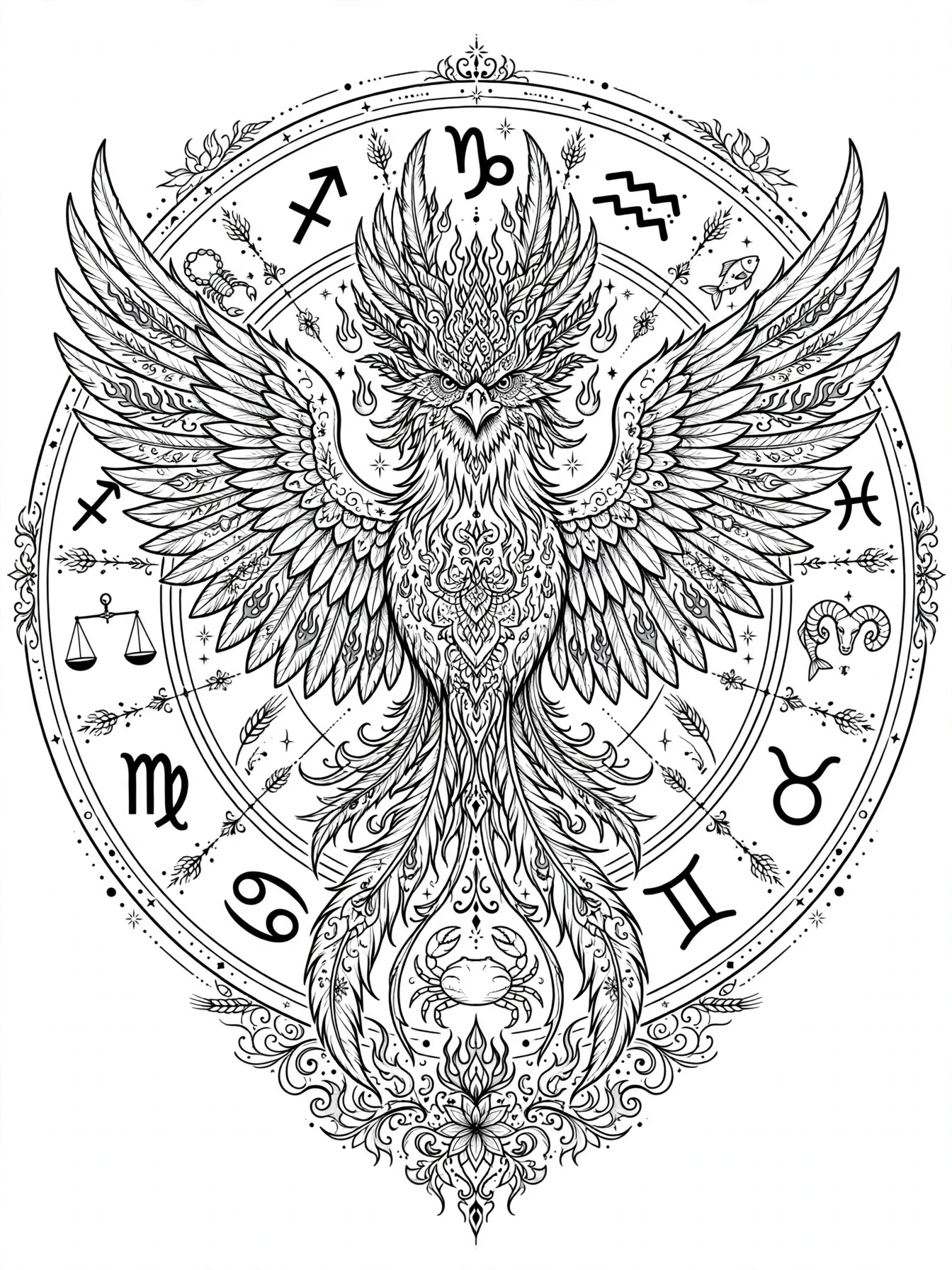
A full birth-chart wheel centred on the upper back, at least 12 cm across, with the twelve signs around the edge and the sun and moon at the centre.
A pair of wings spreading symmetrically across the upper back, with layered feathers drawn large enough to show detail on each side.
A mandala centred on the spine, with a clear central shape and evenly spaced pattern lines radiating outward across the upper back.
A mountain landscape across the upper back, with layered peaks, a moon and a few birds, using the back's width to create real depth.
A large phoenix rising across the upper back, with wings spread and tail feathers trailing down toward the lower back.
A floral back piece of roses and leaves, with one large bloom as the focal point and vines spreading symmetrically to each side.
A seascape across the upper back, with waves at the bottom, a ship or a whale in the middle, and clouds and birds above.
A pair of koi fish swimming in a circle on the upper back, with water ripples and lotus leaves filling the space around them.
A forest scene down the full back, with tall trees on the upper back, a deer or a wolf in the middle, and ferns at the base.
A symmetrical geometric piece centred on the spine, with clean lines and shapes mirrored exactly on each side of the back.
The back is where zodiac designs can be at their most ambitious, because it is the only placement with enough flat space for a complete chart. A full birth-chart wheel, drawn at 12 cm or more on the upper back, can show all twelve signs, the planets and the houses in a single circle, with room for the symbols to stay readable and the centre to carry a sun or moon. In astrology, a birth chart is read as an interpretation of personality and timing based on the positions of the sun, moon and planets at birth, not as a fixed prediction,
Generate a design for this placement — your sign, your intention, your style. Free, no sign-up.
Size (Tiny to Extra Large) and style in, cost range out. Ranges are estimates — an artist quote wins.
12 placements: Wrist, Forearm, Upper Arm, Chest, Back, Ribs, Thigh, Ankle, Neck, Hand, Foot, Inner Arm. Shows pain range, healing and fading for the chosen spot. Ranges only — sources disagree, no single decimal is a fact.
Spine tattoos: long narrow vertical ideas, pain 7.5/10, healing 3-6 weeks (sources disagree). Narrow and long only — split large pieces into sessions.
Low pain away from the spine, reported 4.5-5.5/10. Near the spine it is higher.
Large canvas, best for symmetry and large scenes.
Yes — it is hard to reach alone. Plan help for aftercare.
It needs 12 cm or more to stay readable, and the upper back is the best place for it because the surface is flat and stable. Smaller than that, the twelve sections and their glyphs crowd together and the wheel becomes hard to read as it ages.
It can be, if you want a large piece and you have help for aftercare. Pain away from the spine is reported in the 4.5–5.5/10 range, healing takes about 3–5 weeks, and fading is slow. The main drawback for a first tattoo is that you cannot see it yourself while it heals, so you will need someone to help.
Some change is possible with significant weight change, because the skin on the back and waist can stretch. A well-placed design on the upper back usually handles normal change well. Tell your artist if you expect your weight to change, and avoid placing fine detail where the skin moves the most.
AI designs are for inspiration only. Always consult a licensed tattoo artist. This page does not provide medical advice. Last reviewed: 24 November 2026.