Tattoo Cost Estimator
Size (Tiny to Extra Large) and style in, cost range out. Ranges are estimates — an artist quote wins. A 20% tip is shown separately.
Dec 22–Jan 19 · Earth sign · Ruled by Saturn
Capricorn tattoo ideas for patient climbers: 25 goat, Saturn and summit designs with meaning, placements, styles, pain and cost guidance here.
A Capricorn tattoo should feel earned, not rushed. This page gives you 25 Capricorn tattoo ideas built around the mountain goat, the Saturn glyph and the summit line, in charcoal and forest tones. You'll get the meaning behind each symbol, the sea-goat story, how Saturn shapes the design, the styles that suit earth energy, and placements that hold detail over time. There's also straight guidance on pain and cost, aftercare for the spots these designs sit on, and answers to the questions people ask before booking. Use it to pick a design that fits the climb you're actually on.
This page sits under Zodiac Tattoo Ideas — the hub for all 12 signs — and the Zodiac hub lists every sign in one place.
Key takeaways
What does a Capricorn tattoo mean? It stands for patience, discipline and reaching a goal one careful step at a time, like a mountain goat climbing ground others give up on. The goat is the heart of the symbol: sure-footed, steady and built for steep places. The summit line marks the goal itself — a ridge, a peak or a single line that says you know where you're headed. Saturn, the ruling planet, adds structure, time and responsibility, so many Capricorn designs feel calm and ordered rather than loud. Earth gives the sign its grounded mood: charcoal, forest green, stone and pine all fit, and designs tend to sit solidly on the skin. A Capricorn tattoo can mark a career milestone, a long recovery, a degree earned late, or a promise to yourself to keep going. Some people choose it after years of quiet work finally paid off, and the goat keeps that effort visible. Keep the image simple and the climb stays the point, not the decoration. The strongest Capricorn designs leave the goat or the ridge plenty of room, because a crowded mountain scene loses its calm and the horns can blur into the rock as the ink settles over time. The sea-goat is older than the zodiac itself. In Greek myth, the goat-fish is Aegipan, who leapt into a river to escape the monster Typhon and came out half goat, half fish — a creature that climbs and swims, at home on the ridge and in the deep. An older image comes from Babylon, where the goat-fish belonged to Ea, god of fresh water and wisdom. That double nature is why the sign suits people who live in two modes at once: steady on the surface, deep underneath. Saturn adds the second half of the meaning. The planet the Romans named for the god of sowing and time stands for structure, patience and work that pays off late. A Capricorn design is rarely about a single moment. It marks a climb already made — a qualification, a business built over years, a mountain walked step by step — or a goal still ahead, drawn as a summit line to walk toward. Pick the symbol that matches the climb. The mountain goat fits a hard-won goal. The summit line fits a goal still ahead. The Saturn glyph fits patience itself, drawn small and carried anywhere.
Symbols to work with: Mountain goat · Saturn glyph · Summit line. Tagline: The Patient Climber.
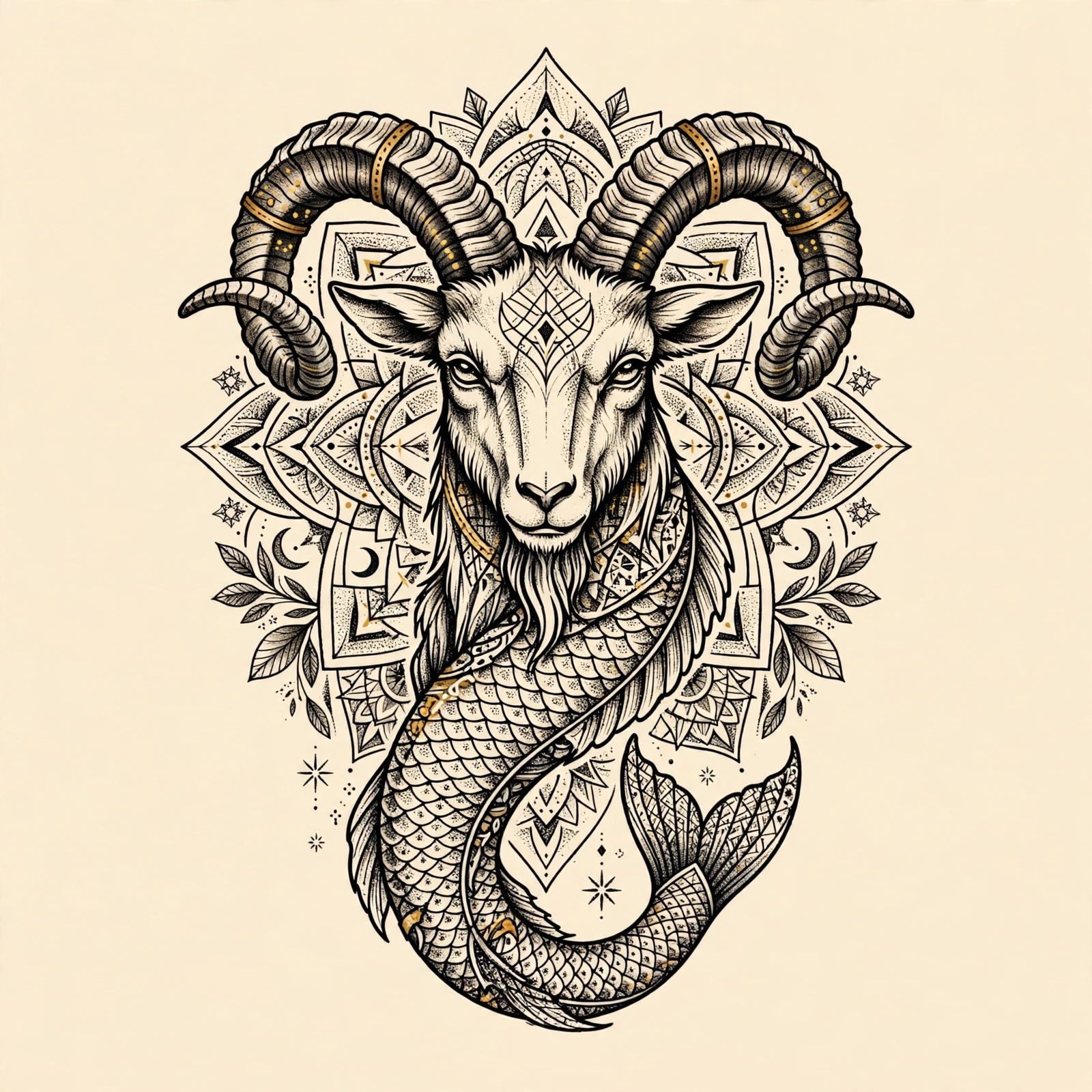


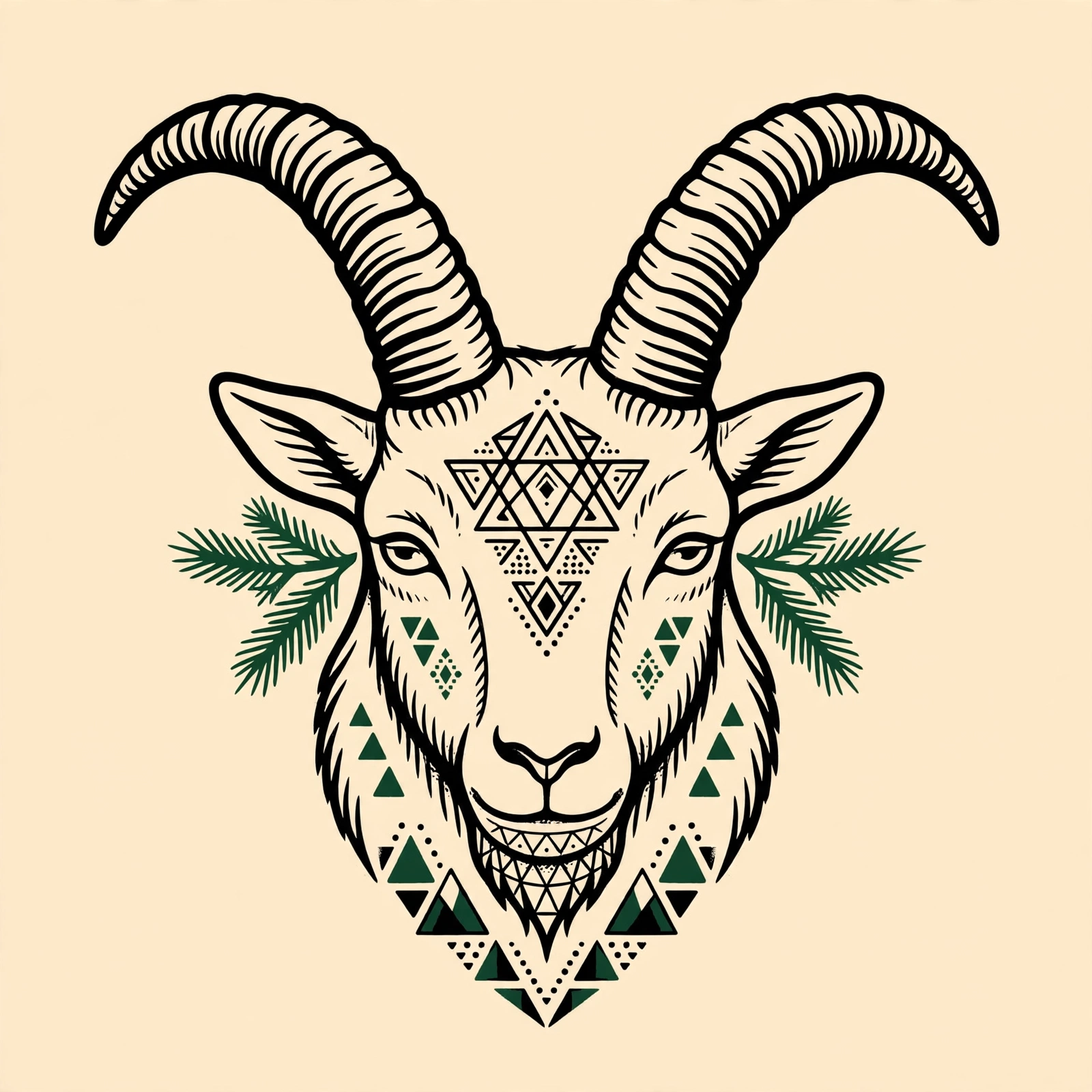


A mountain goat head in blackwork on the upper arm, with curved horns and steady, calm eyes.
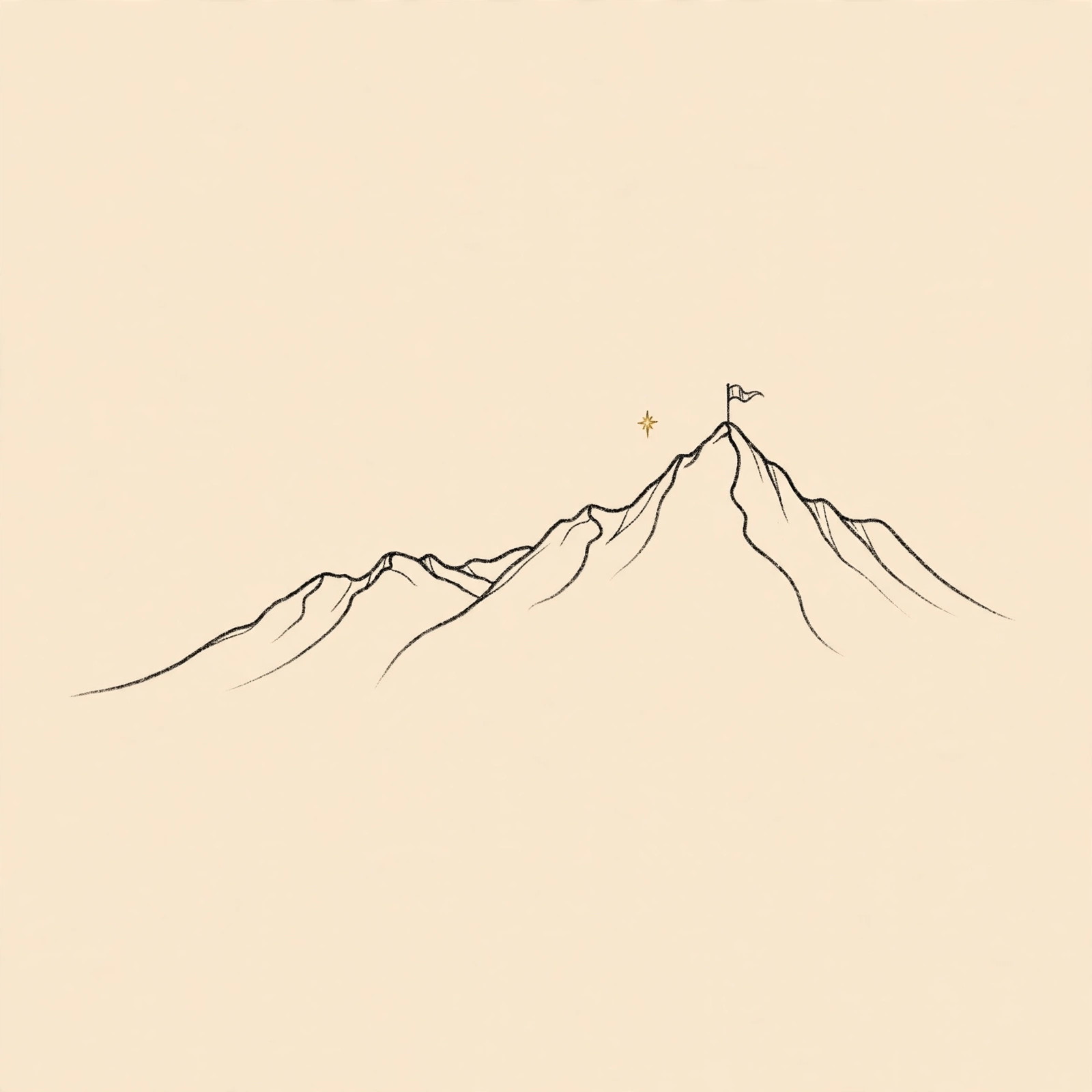
A summit line across the forearm, a single charcoal ridge with a small flag at the top.
A Saturn glyph with its ring on the wrist, small and clean in black ink.
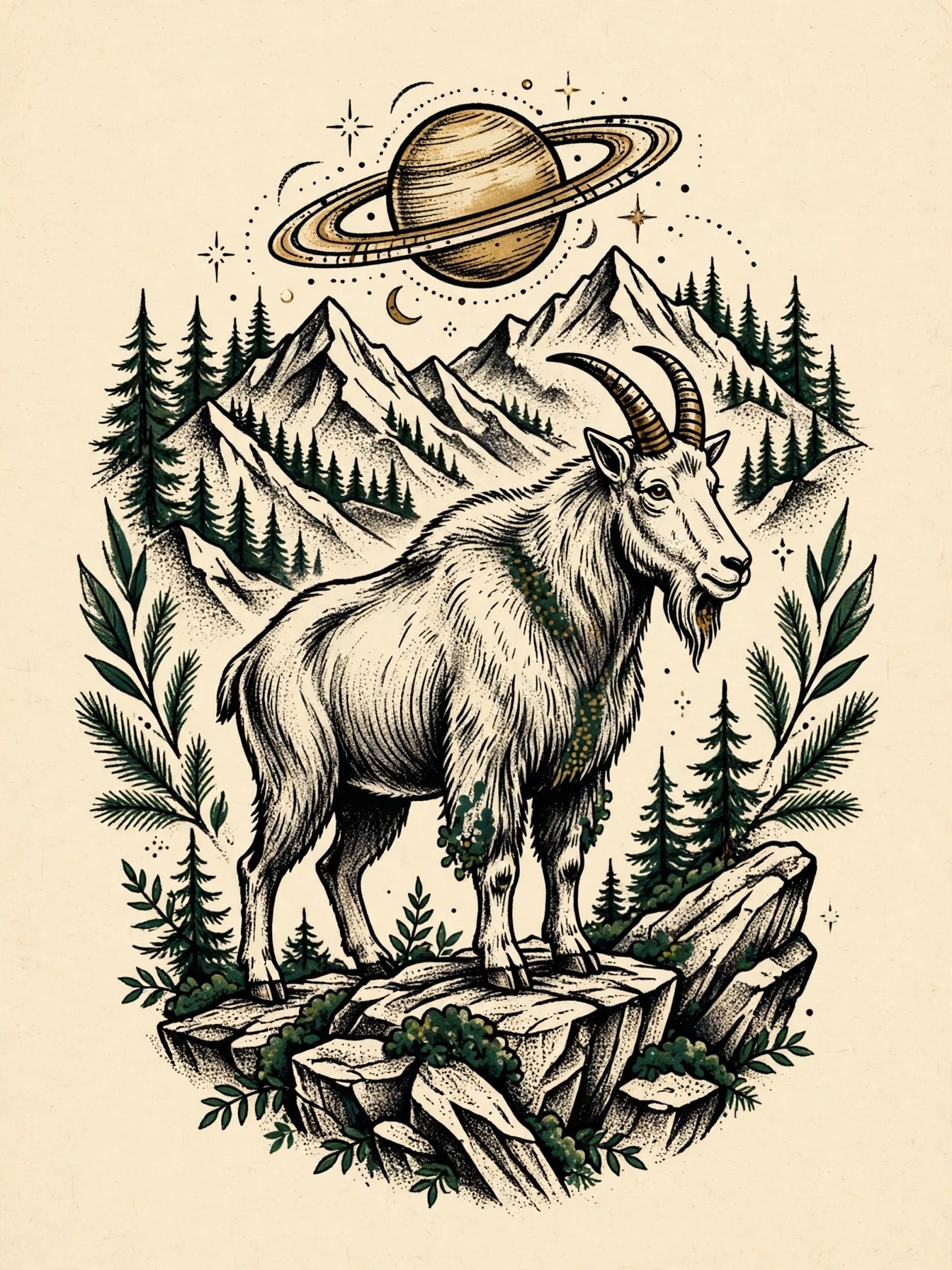
A full mountain scene with a goat on a ledge on the calf, for a long climb told in one piece.
A goat silhouette against a forest tree line on the shoulder blade, in charcoal and deep green.
A minimal goat outline in fine line on the ankle, with one forest-green eye detail.
A Saturn glyph inside a mountain circle on the chest, for structure and a goal held close.
A climbing path in dotted line up the spine, ending in a small summit star.
A mountain range with Dec 22–Jan 19 in fine script beneath it, on the inner forearm.
A sea-goat — half goat, half fish — in fine line on the forearm, for Capricorn’s old symbol of land and water.
A goat standing on a rocky peak at sunrise on the upper back, in muted charcoal tones.
A small Saturn glyph behind the ear, minimal blackwork that hides easily under hair every day.
A forest of pine trees with a goat trail through it on the forearm, for steady progress.
A geometric goat head in linework on the shoulder, sharp angles with a forest accent.
A summit line that turns into a heartbeat trace on the wrist, for effort that keeps going.
A goat and compass on the bicep, for direction earned through patience and hard work.
A Saturn ring wrapped around a mountain peak on the ribs, bold and vertical in black.
A charcoal goat hoof print trail climbing the calf, small prints leading to a peak.
A mountain goat with a laurel branch on the upper arm, for a goal reached after long effort.
A tiny summit line on the finger, simple blackwork for a quiet daily reminder of goals.
A goat under a starry sky on the thigh, in dotwork with forest-green stars above it.
A Saturn glyph paired with a pine tree on the forearm, for time, growth and roots.
An old stone staircase winding up a mountain on the back, for the long way up.
A goat skull in fine line on the shoulder, for resilience and lessons carried forward.
A summit line across the collarbone with a small goat at one end, delicate and balanced.
Saturn is the ruler of Capricorn and the planet tied in astrology to time, structure, discipline and long-term results. That story shapes Capricorn tattoo design in a direct way: lines stay clean, compositions stay balanced, and the image earns its place instead of filling space. Saturn's glyph — a curved hook topped by a cross — reads well as a small, quiet mark on the wrist or behind the ear, or as a larger centrepiece with a ring around a mountain peak. Because Saturn is linked to patience, many people choose designs that suggest slow progress: a winding path, a staircase, a goat mid-climb rather than at the top. Charcoal suits Saturn's mood, steady and serious, while forest green adds life without breaking the calm. If you want the planet in the design, keep its ring unbroken and let the mountain carry the detail, so the piece stays calm. That calm, structured feel is what makes a Capricorn tattoo easy to wear for years. Saturn is the slowest planet the eye can see, taking nearly thirty years to circle the sun — which is why astrologers link it with long arcs: careers, commitments, things built over decades rather than months. Its rings make a ready tattoo motif on their own: a thin circle around the glyph, or a band around a mountain scene. The glyph itself is a cross with a curve, read as a scythe, the tool of the harvest god. In a tattoo it works at two centimetres on the wrist, and at larger sizes it anchors a goat or a summit scene without stealing the focus. Saturn's return — the point around age twenty-nine when the planet comes back to where it was at your birth — is a common reason people book a Capricorn piece: a marker for a chapter closing and a sturdier one opening.
Blackwork suits Capricorn well when the design is a mountain goat, a mountain scene or a bold summit line. Solid black gives the image weight and staying power, and charcoal shading adds depth without colour fuss. Fine line works better for small pieces — the Saturn glyph, a summit line, a tiny goat outline — where clean, thin lines keep the symbol calm and readable. Realism fits a detailed goat portrait on the thigh or upper arm, where the artist has room to build fur, horns and rock texture. Dotwork is a strong choice for starry skies over a mountain, adding texture without bulk. Avoid cramming a whole mountain range into a very small space: the ridges need room, or they'll merge into a dark patch within a few years, and a blurred ridge loses the whole idea. Whichever style you pick, ask for a healed photo of similar work so you can judge how the shading holds. Size decides the style more than taste does. A full mountain goat with fur and rock texture needs a large spot and a realism or blackwork hand; squeezed small, the horns and the head blur into one dark shape. A summit line is the opposite: one clean ridge in fine line reads at three centimetres on the wrist and still reads in ten years. Geometric suits Capricorn well — triangles for peaks, straight lines for the climb, a small circle for Saturn above the ridge. Dotwork adds texture to rock and fur without heavy black fill, and it heals softer on the calf and thigh. Forest green works as a single accent — a wash behind the ridge, or green eyes on the goat — but keep one colour leading, or the charcoal loses its weight.
| Style | Best size | What to ask your artist |
|---|---|---|
| Blackwork | Medium to large | Solid black gives goats and mountains weight and staying power. |
| Fine line | Small to medium | Keeps the Saturn glyph and summit lines calm and readable. |
| Realism | Large | Detailed fur, horns and rock texture need space to read well. |
| Geometric | Small to large | Summit lines and triangles suit the sign's steady geometry. |
The upper arm and shoulder are the strongest placements for a Capricorn design because they're broad, fairly flat and hold a goat portrait or mountain scene well. The forearm suits a summit line, a Saturn glyph or a pine forest, since its long, flat surface keeps horizontal lines straight. The calf works for a climbing scene — a goat on a ledge, a winding path — because its gentle curve adds depth without bending the ridge. The chest holds a Saturn glyph inside a mountain circle close to the heart, but the skin moves with breathing, so keep the ring simple. The wrist and ankle suit small, quiet marks, though the skin there is thin and the design may need a touch-up sooner. The back gives room for the biggest pieces, like a full mountain range at sunrise. Whichever spot you pick, check the design in a mirror first so the ridge sits straight on your body. Think about the shape of the design before the spot. A mountain scene is wide, so it wants the upper arm, shoulder or thigh, where the ridge can run flat. A vertical climb — goat above, summit below — suits the calf or the spine, where the body gives it height. A Saturn glyph goes almost anywhere at two centimetres: wrist, ankle, behind the ear. The ribs take a long ridge line well, but the skin there moves with every breath, so keep the line bold. The ankle suits a small glyph or summit line, yet shoes rub it while it heals, so plan the timing around footwear.
Pain and cost depend on placement and size, not on your star sign, so a Capricorn tattoo hurts the same as any other design in the same spot. Bony or thin-skinned areas — ribs, ankle, collarbone and spine — tend to hurt more than the forearm, upper arm or thigh, where there's more muscle and fat. Larger pieces with heavy shading take longer and feel more intense simply because the session runs longer, and detailed fur or rock texture adds time too. No online figure prices a tattoo accurately — every artist and shop sets rates differently, and size, detail and colour all move the quote. Get a quote from a licensed artist for your exact design, size and placement, and treat that quote — not a website — as the real number. Take a clear reference and your exact size to the consultation, so the quote matches the tattoo you actually want. Pain follows the spot, not the sign. The upper arm, calf and thigh feel steadier, with more flesh under the needle. The ribs, ankle, spine and inner wrist sting more — thin skin over bone, and the ribs move as you breathe. A small glyph is a short session; a full goat scene across the shoulder takes hours over more than one sitting, and forest green fill adds time. Aftercare depends on the spot. A calf piece needs sun kept off it while it heals, and loose trousers rather than tight socks over the ankle. A shoulder piece rubs under a bag strap, so carry the bag on the other side for the first weeks. Keep the piece clean, let it dry, and moisturise only as your artist advises — and go back for a touch-up if a fine summit line softens.
Plan the numbers properly: try the Cost Estimator for a size-and-style estimate, and read the Placement Pain Guide before you pick a spot. Only a licensed artist who sees the design and the body part can give you a real quote.
Capricorn designs age well when the lines stay bold enough to read after years of wear. A mountain goat needs clear horns and a defined outline; if the lines are hair-thin, the head can blur into the horns as the skin settles. Ask your artist to keep the summit line simple — one clean ridge, not five competing peaks. For the Saturn glyph, size matters: go at least a couple of inches wide or the ring will close up. Charcoal and forest tones look strong together, so let one shade lead and the other support it.
Generate your Capricorn design →
Your sign is only the start — the generator reads your birth date, your intention and your style, so the design it makes is yours, not a copy of someone else's.
Size (Tiny to Extra Large) and style in, cost range out. Ranges are estimates — an artist quote wins. A 20% tip is shown separately.
12 placements: Wrist, Forearm, Upper Arm, Chest, Back, Ribs, Thigh, Ankle, Neck, Hand, Foot, Inner Arm. Shows pain range, healing and fading for the chosen spot. Ranges only — sources disagree, no single decimal is a fact.
Two zodiac signs in, compatibility score out. Tested live: Aries + Leo = 88% overall (Love 90%, Friendship 85%, Soul Bond 88%, Fire + Fire).
Date of birth plus optional birth time (default 06:00 AM). Generates Sun / Moon / Rising summary. This is the only tool that asks for birth time; the homepage DOB wizard does not.
See all 12 signs on the Zodiac hub.
Taurus tattoo ideas with 25 grounded designs, meanings, placements and styles. Find a bull, oak leaf or Venus design that fits your steady strength.
Virgo tattoo ideas with 25 neat designs, meanings, placements and styles. Find a wheat, Mercury glyph or leaf tattoo in sage and stone that suits you.
Sagittarius tattoo ideas for bold explorers: 25 arrow, compass and Jupiter designs with meaning, placements, styles, pain and cost guidance to plan yours.
Aquarius tattoo ideas for original thinkers: 25 water-bearer, Uranus and star burst designs with meaning, placements, styles, pain and cost help.
It means patience, steady work and reaching a goal step by step. The mountain goat climbs where others turn back, the summit line marks the goal, and Saturn adds structure, time and self-discipline to the design. Saturn's story fits the sign when the design stays simple and steady.
The upper arm and shoulder suit a goat or mountain scene because they're broad and fairly flat. The forearm works for a summit line or a small Saturn glyph, while the calf suits a long climbing scene. Your artist can stencil the size on your skin first, so you can check it.
Cost and pain depend on size, detail and placement, not on being a Capricorn. Ribs, ankles and collarbones usually hurt more than forearms, thighs or upper arms. Get a quote from a licensed artist for your exact design. Ask for the quote in writing, including what a later touch-up would cost.
Blackwork suits goats and mountain scenes, fine line suits the Saturn glyph and summit lines, and realism fits a detailed goat portrait. Charcoal shading with a touch of forest green keeps the palette grounded. Ask your artist which style will keep the goat's horns crisp as it heals.
Choose the goat if you want the animal and its climbing story front and centre. Choose the summit line if you prefer a quieter mark — a single ridge that stands for a goal without spelling it out. Either one stands alone — you don't have to use both.
Blackwork holds up well, but fine lines soften over time, especially on hands and feet. Keep the design at a sensible size, use sun protection, and plan a touch-up if the horns or ring start to blur. Healed work shows the truth — ask to see it before you book.
The sea-goat is Aegipan from Greek myth: a goat who leapt into a river to escape the monster Typhon and came out half goat, half fish. It stands for living in two modes — climbing on the surface, deep underneath. An older version comes from Babylon, where the goat-fish belonged to Ea, god of fresh water and wisdom. In a tattoo, the sea-goat suits someone who has handled both a hard climb and deep water in the same life.
Yes, if you keep it simple. A Saturn glyph or a summit line at two to three centimetres on the forearm or upper arm is a short session, heals fast, and reads clearly for years. A full mountain goat scene is a bigger commitment — large, longer, and harder to hide — so save the goat for a second piece, once you know how your skin heals.
AI designs are for inspiration only. Always consult a licensed tattoo artist. Astrology on this site is for inspiration and self-expression. This page does not provide medical advice. Last reviewed: 22 November 2026.