Tattoo Cost Estimator
Size (Tiny to Extra Large) and style in, cost range out. Ranges are estimates — an artist quote wins. A 20% tip is shown separately.
sagittarius tattoo placement · Nov 22–Dec 21 · Fire sign · Ruled by Jupiter
Sagittarius tattoo placement guide: 13 spots with sizes, pain and healing notes. Forearm, shoulder, ribs, ankle and more, matched to each design.
An arrow points, and where it points depends on the spot. A long arrow needs a flat run, a bow needs broad ground, and a glyph fits almost anywhere with room to breathe. Here are 13 spots for Sagittarius designs, with the size each one takes, how much it stings, and how it heals, so the placement suits the design instead of fighting it.
This page sits under Sagittarius tattoo ideas and zodiac tattoo ideas.
Key takeaways
You can redraw a design. You cannot move a spot. That is why placement deserves as much thought as the art. Sagittarius gives you three marks, each asking for different skin. The arrow is long and straight, so it wants a flat run with room on both ends — forearm, upper back, shoulder blades, thigh. On the ribs the curve bends the shaft. A bow is broad, so it wants the shoulder, the upper arm or the upper back, where the curve has room. The Jupiter glyph is the easy one: a curve and a cross that read on the wrist, ankle, behind the ear or finger from two centimetres up. Ask three things before you choose: will you see it every day, how much sting can you sit through, and how fast will this spot lose ink? Those answers leave you with one or two spots.
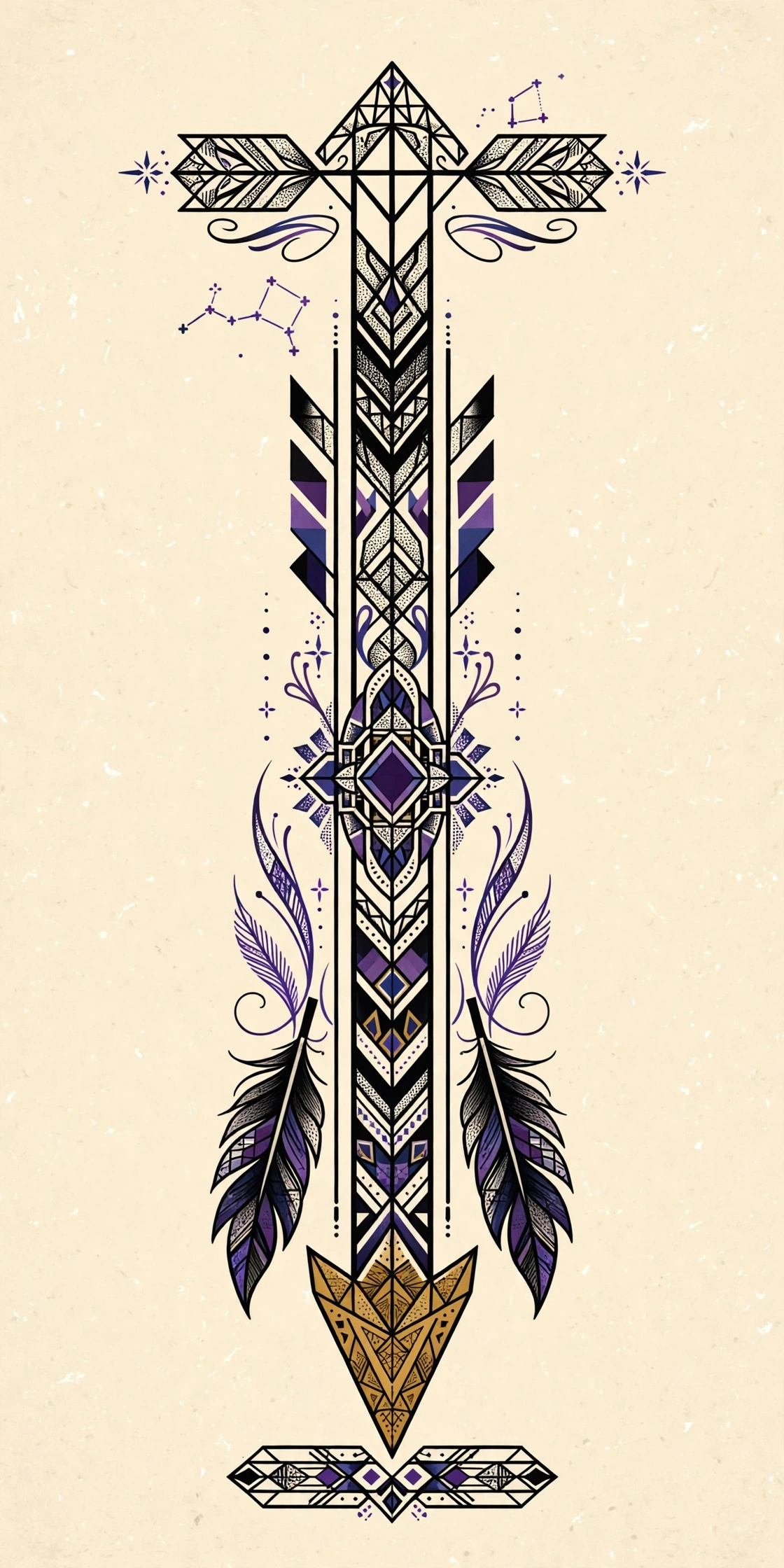
A long fine-line arrow across the forearm, palm size or larger, the flat skin keeping the shaft straight.
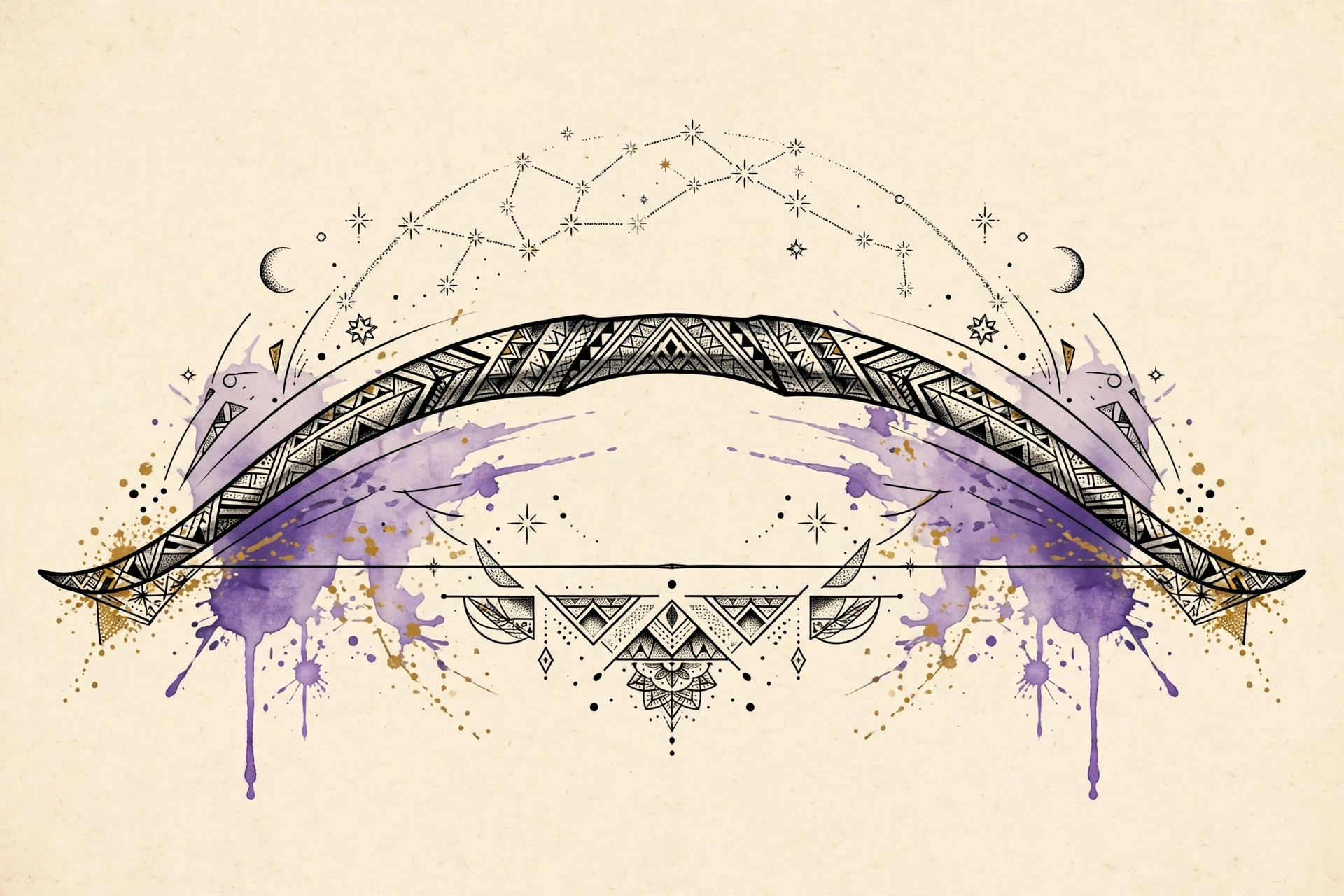
A drawn bow with a nocked arrow on the upper arm, hand size, hiding under a sleeve at work.
A mountain ridge with an arrow flying over it on the upper back, hand size or larger, the wide back giving it room.
A night-sky arrow over a tent and campfire on the thigh, hand size, the long muscle giving the scene room to run.
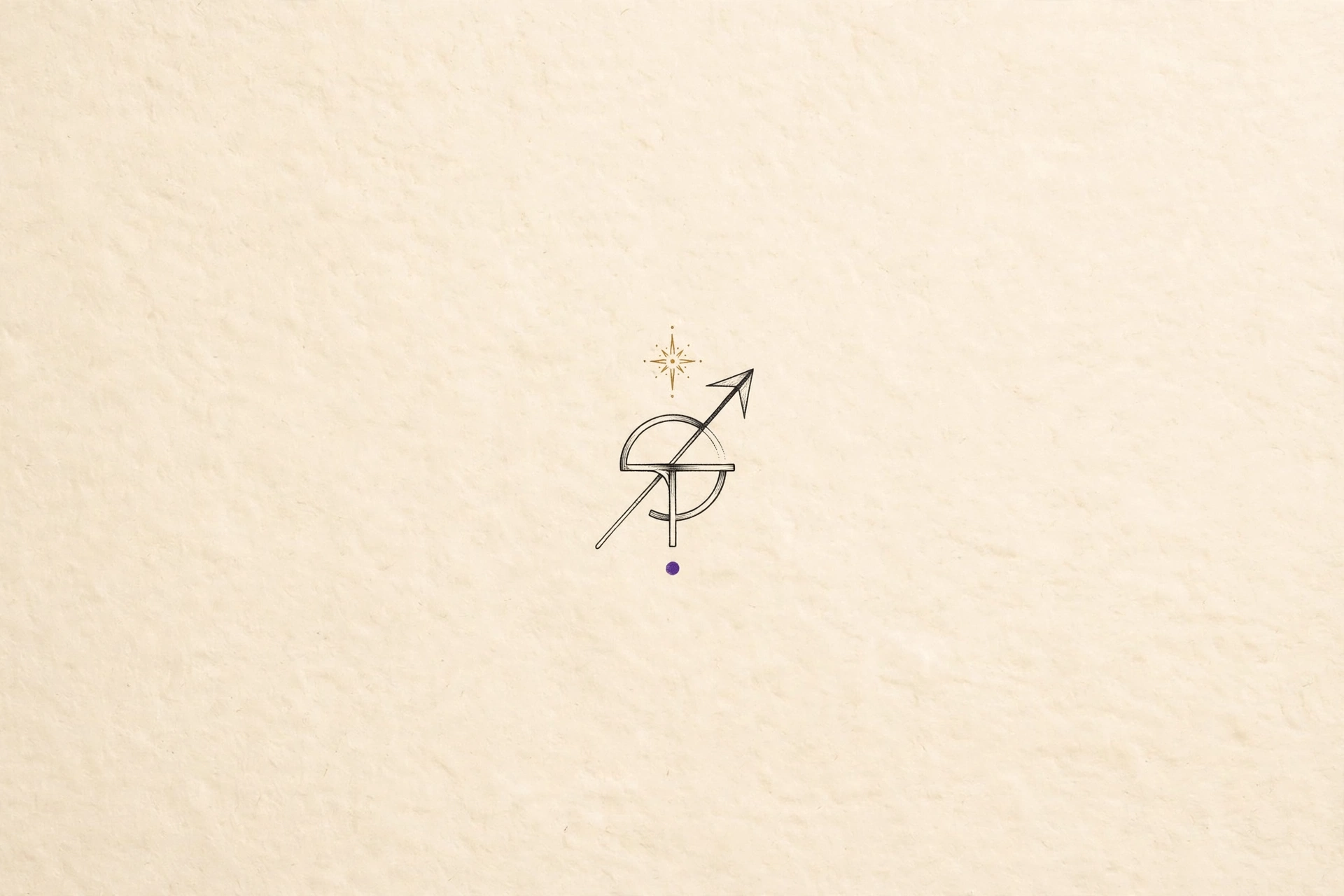
A Jupiter glyph on the inner wrist, two centimetres, quick to heal, with sun fading it sooner than a covered spot.
A small arrow on the ankle, three to four centimetres, with shoes rubbing it while it heals.
A Sagittarius arrow piercing a crescent moon on the ribs, the highest pain of the common spots, with breathing slowing the heal.
A vintage compass rose with a Sagittarius arrow through the centre on the chest, hand size or larger, wide flat skin suiting a centred piece.
A small arrow behind the ear, two centimetres, discreet under hair, fading faster where products reach it.
A constellation arrow on the back of the neck, three centimetres, hiding under a collar.
A centaur archer in dotwork on the back, the widest canvas, with room for detailed shading and indigo in the bowstring.
A Jupiter glyph on a finger, one to two centimetres, the fastest-fading spot, so keep it simple and expect a touch-up.
A large arrow across the shoulder blades with a compass star at its tail, hand size, the flat back keeping the line straight.
Let the spot pick the style. Fine line belongs on the forearm and the wrist, where thin, confident lines keep an arrow readable at a small size. Blackwork belongs on the shoulder and thigh, where solid black gives a bow or archer weight. Watercolour belongs on the forearm and thigh, where a wash of purple can sit behind a crisp arrow. Dotwork belongs on the back, where star fields and constellation arrows gain texture without bulk. One rule holds everywhere: bold lines last, thin lines spread, and no style saves a design squeezed into a spot too small. Keep the tip sharp and the fletching clear, whatever the spot.
| Style | Best size | What to ask your artist |
|---|---|---|
| Fine line | Forearm or wrist | Thin, confident lines keep an arrow readable at a small size. |
| Blackwork | Shoulder or thigh | Solid black gives a bow or archer weight and contrast. |
| Watercolour | Forearm or thigh | Purple washes add fire energy while the linework stays clean. |
Decide in this order. First, who sees it: the forearm, wrist or calf if you want it shown; the ribs, chest, shoulder blade or behind the ear if you want it kept private. Second, the sting: bone hurts, flesh stays steadier. Third, fading: sun on the forearm and wrist, shoes on the ankle and foot, hair products behind the ear, washing all day on the fingers. Those spots lose ink first. Skin under clothes is skin you can protect, so an upper-arm bow can still look sharp at five years while a wrist arrow has softened. Pick the spot for the life you live, not for one photo.
The sting follows the spot. Where the skin sits thin over bone — ribs, ankles, spine, inner wrist, behind the ear — it hurts most. Where there is flesh under the skin — forearm, calf, upper arm, thigh — it is calmer. A wrist glyph is a sharp few minutes. A thigh archer runs for hours of lining and shading. The price tracks size and time, not the spot: a small glyph is quick, a large archer takes hours, purple fill adds more. Bring the design, size and spot to a licensed artist and get a quote for your piece.
Plan the numbers properly: try the Cost Estimator for a size-and-style estimate, and read the Placement Pain Guide before you pick a spot. Only a licensed artist who sees the design and the body part can give you a real quote.
See also: tattoo cost estimator · tattoo placement pain guide.
An arrow points, so check where it points before the needle touches skin. A long arrow drawn for the forearm will not shrink onto the wrist, and a bow drawn for the shoulder will not fit the ankle. Have the artist tape the stencil on, live with it for a day, and study it in a mirror from the front and the side. If the arrow points at the floor, or the tip bends across a bone, move the design while moving it costs nothing.
Once you know the size and the spot, try the design on your own chart. The generator builds one from your birth date so you can see it before you book: /tattoo-generator/.
The generator reads your birth date, your intention and your style, so the design it makes is yours, not a copy of someone else's.
Size (Tiny to Extra Large) and style in, cost range out. Ranges are estimates — an artist quote wins. A 20% tip is shown separately.
All 23 placements from our placement guides — pick a spot, optionally compare a second one, and see its pain range, healing time, fading and size guidance, quoted from the same guide data, with a link to the full placement guide. Ranges only — sources disagree, no single decimal is a fact.
Two sun signs in, an honest reading out — no invented percentages. The tool compares the two signs' elements and ruling planets, tells you where the pairing clicks and where it rubs, and turns it into a matching-tattoo idea with links to both sign guides.
Your Sun, Moon and Rising signs from your birth date and time — all three computed in your browser, with the Moon and Rising honestly labelled approximate. Each sign comes with a short traditional reading and a tattoo angle, plus links to its sign guide and to the wheel and fusion tools.
See the full list on the Sagittarius tattoo ideas main page.
Sagittarius tattoos for women: 13 ideas from an arrow on the forearm to a compass star on the ankle, with placements and pain notes.
Sagittarius tattoos for men: arrow, bow and compass star designs for forearm, shoulder and back, with placements, pain and cost notes.
A Sagittarius symbol tattoo is a diagonal arrow in fine line. See 13 glyph designs, what the symbol means, placements and costs.
13 small Sagittarius tattoo ideas with sizes in cm, top spots and fading notes. Jupiter glyphs, arrows and tiny compass stars that stay readable.
Fire sign tattoos for Aries, Leo and Sagittarius: 13 ideas, placements, pain notes and what fire means in a zodiac tattoo.
The forearm. Flat, simple to heal, simple for the artist, and the pain is steadier than on the ribs or ankle. An arrow, glyph or compass star all sit well there. The wrist is the other gentle option for a first piece.
The fleshy spots: forearm, thigh, upper arm and calf. The bony spots sting: ribs, spine, ankle and inner wrist, where the skin sits thin over bone. Everyone feels it differently, yet flesh is calmer than bone for most people.
Fingers and feet, from washing, rubbing and shoes. The wrist and behind the ear wear sooner too, from sun and hair products. Covered spots age slower, and sunscreen once healed slows fading on any exposed spot.
Through size and time, not through the spot itself. A wrist glyph is quick, a thigh archer takes hours, and purple fill adds time. Take the design, size and hours to a licensed artist for a price on your exact piece.
Yes. The upper arm, shoulder blade, ribs, chest and thigh hide under normal clothes. The wrist, hand and neck show most days, and behind the ear hides under hair. If hiding it matters, pick the spot first and check it against the clothes you wear every day.
Sooner than a covered piece, because the sun reaches it daily. A bold Jupiter glyph holds up longer than a fine-line arrow there, because thicker lines have room to spread. Sunscreen once healed, and a touch-up years later, keep it readable.
AI designs are for inspiration only. Always consult a licensed tattoo artist. Astrology on this site is for inspiration and self-expression. This page does not provide medical advice. Last reviewed: 23 November 2026.