Tattoo Cost Estimator
Size (Tiny to Extra Large) and style in, cost range out. Ranges are estimates — an artist quote wins. A 20% tip is shown separately.
snake chinese zodiac tattoo
Snake Chinese zodiac tattoo: 13 ideas, Snake years, meaning, and placements for the sixth animal of the cycle.
The Snake is the sixth animal of the Chinese zodiac, and it is the quiet thinker of the cycle. Wise, intuitive and graceful, the Snake sheds its skin and starts again — a symbol of renewal that needs no noise to make its point. A Snake tattoo is a line that moves: coils around the forearm, a body down the spine, scales suggested with dots rather than solid fill. This page covers 13 Snake ideas, the years, the meaning and the placements that suit it.
This page sits under horoscope tattoos.
Key takeaways
The Snake is the sixth animal of the Chinese zodiac, and its meaning is built on wisdom. In the traditional reading the Snake stands for intuition, grace and quiet intelligence — the animal that watches, waits and understands before it acts. The Snake sheds its skin and starts again, so it is also linked with renewal and change, a creature that remakes itself without fuss. A Snake tattoo leans on that sleekness. The designs are lines that move: coils around the forearm, a body down the spine, scales suggested with dots rather than drawn in full. It is an animal that suits a long, narrow canvas, because the Snake's beauty is in its movement.
2025, 2013, 2001, 1989 — years of the Snake. The Chinese year starts at Lunar New Year (late January or early February), so someone born in January or early February of one of these years may belong to the previous animal, the Dragon. Check the exact New Year date for your birth year.
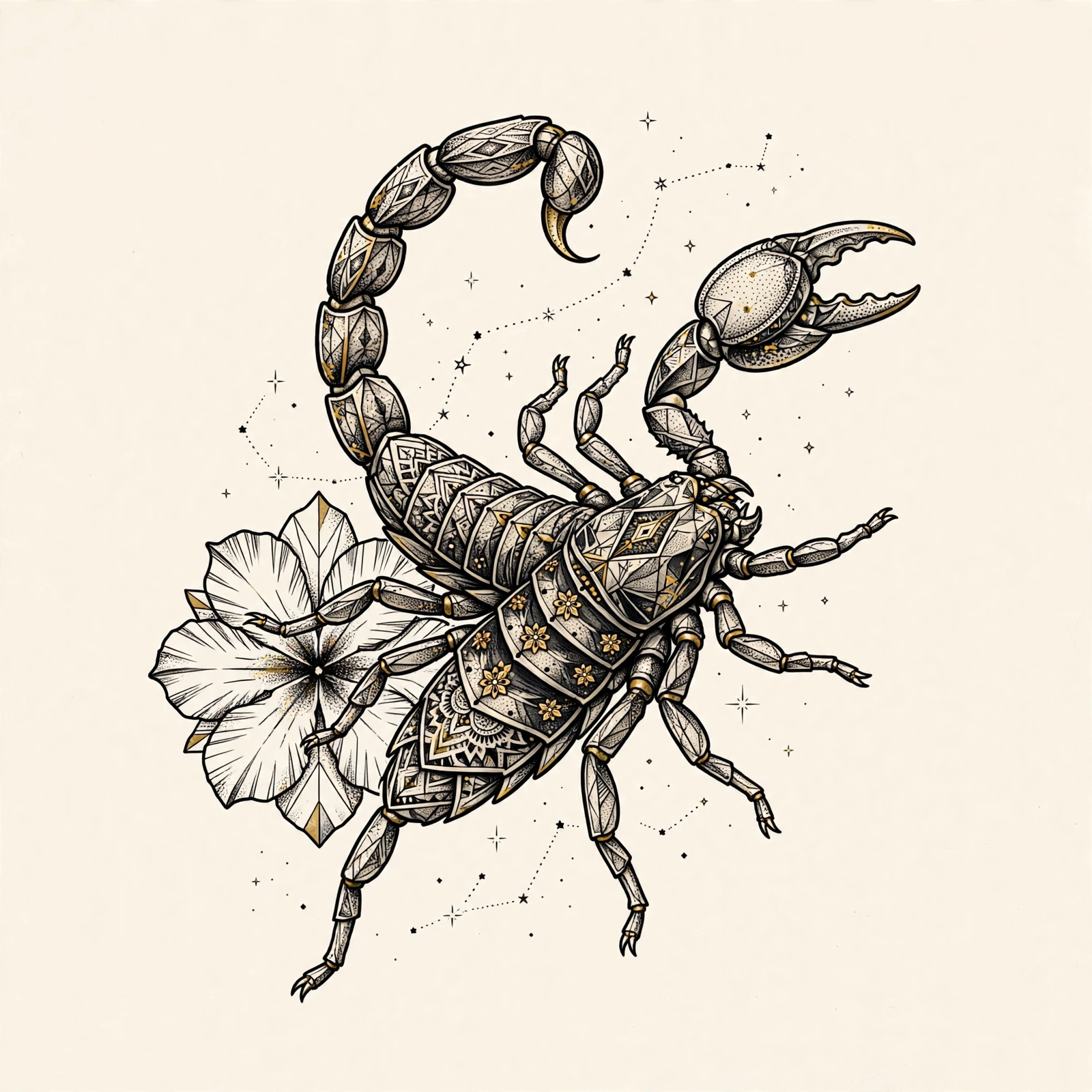


A Snake winding around the forearm in fine black line, the coils following the muscle, the head resting near the wrist.
A Snake running straight down the spine in blackwork, the body a single clean line, the head at the neck.
A Snake and a lotus flower on the shoulder, the flower in soft pink against the black coils.
A Snake coiled around the ankle in fine line, the tail tucked under the head, a small and quiet mark.
A Snake in a circle on the calf, the circle in thin black line, the animal eating its own tail in the old ouroboros shape.
A Snake and a plum blossom branch on the ribs, the blossom in soft pink, the Snake moving upward through the branch.
A Snake in dotwork on the forearm, the scales suggested with dots rather than solid fill, a soft take on a sleek animal.
A Snake in geometric blackwork on the upper arm, the body built from angles, sharp and modern.
A Snake with a small moon on the wrist, the moon in soft gold, a night animal under a night sky.
A Snake birth-year design on the shoulder: the animal above the year in small numerals, the numerals in a clean, plain font.
A Snake in watercolour on the thigh, green and gold washes over black linework, the coils loose and flowing.
A Snake and an apple branch on the chest, the apple in soft red, a nod to the Snake's old stories.
A Snake head in fine line behind the ear, the head small and exact, the body trailing down the neck.
Fine-line minimal is the natural style for a Snake: thin, exact lines that keep the animal sleek and graceful, and that age well if the design stays at two centimetres or larger. Dotwork suits the Snake too, giving the scales a soft grain — dots rather than solid fill, which reads as scales from a distance and ages far better. Blackwork geometric works when the Snake needs to read as a modern mark, the body built from angles, though it loses the flowing quality that suits the animal. Watercolour gives the Snake loose green and gold washes over black linework, though the colour fades faster and needs touch-ups to stay bright. Traditional Chinese style uses cloud motifs around the Snake, echoing ink painting, and it needs an artist who knows the style. Whatever style you pick, keep the scales suggested rather than drawn in full: dots and short strokes read as scales from a distance and age far better than solid fill.
| Style | Best size | What to ask your artist |
|---|---|---|
| Fine-line minimal | Forearm or spine length | Thin, exact lines keep the Snake sleek and graceful, and age well at 2 cm or larger. |
| Dotwork | Forearm length | Soft dots read as scales from a distance and age far better than solid fill. |
| Blackwork geometric | Palm size or larger | Angles turn the Snake into a clean modern mark, though it loses the flow. |
A Snake belongs on a spot with a natural line, because the animal is a line that moves. The forearm is the first choice: the coils can wind around it, the head resting near the wrist, and the session is a single sitting. The spine suits a Snake running straight down the back, the body a single clean line, though the spine is a sharp spot. The ribs suit a Snake moving upward through a blossom branch, the body long and narrow, though the ribs sting. The ankle suits a small Snake coiled around the bone, a quiet mark that shows with open shoes. The calf suits a Snake in a circle, the old ouroboros shape, the animal eating its own tail. The upper arm suits a Snake in geometric blackwork, the body built from angles along the muscle. Behind the ear suits a small Snake head, the body trailing down the neck, a design that hides until hair is tied back. The chest suits a Snake and an apple branch, though the chest is a sharper spot than the shoulder. Pick the line the Snake runs along first, then size it to the body.
A Snake is usually a medium piece, and the size sets both the sting and the bill. A small Snake coiled around the ankle is a short session with a brief sting, usually a shop-minimum job. The ankle itself stings more than the forearm, because the skin is thin and close to bone, but the session is over quickly. A larger Snake winding up the forearm takes longer and costs more, though the forearm is one of the steadier spots, with more flesh under the needle. The spine and the ribs are the sharpest spots for a Snake, so a Snake running down the back or up the ribs is not a gentle session. Behind the ear is the sharpest of the small spots, though the design is so small that the sting does not last long. Any flat figure online is a guess. Take your exact size and placement to a licensed artist for a real quote.
Plan the numbers properly: try the Cost Estimator for a size-and-style estimate, and read the Placement Pain Guide before you pick a spot. Only a licensed artist who sees the design and the body part can give you a real quote.
See also: tattoo cost estimator · tattoo placement pain guide.
Let a Snake follow the body. The animal is a line that moves, so pick a spot with a natural line — the forearm, the spine, the ribs — and let the coils run with it. A Snake drawn across the grain looks stiff; a Snake that follows the muscle looks alive. Keep the scales suggested rather than drawn in full: dots and short strokes read as scales from a distance and age far better than solid fill.
Once you know the size and the spot, try the design on your own chart. The generator builds a design from your birth date so you can see it before you book: /tattoo-generator/.
The generator reads your birth date, your intention and your style, so the design it makes is yours, not a copy of someone else's.
Size (Tiny to Extra Large) and style in, cost range out. Ranges are estimates — an artist quote wins. A 20% tip is shown separately.
12 placements: Wrist, Forearm, Upper Arm, Chest, Back, Ribs, Thigh, Ankle, Neck, Hand, Foot, Inner Arm. Shows pain range, healing and fading for the chosen spot. Ranges only — sources disagree, no single decimal is a fact.
Two zodiac signs in, compatibility score out. Tested live: Aries + Leo = 88% overall (Love 90%, Friendship 85%, Soul Bond 88%, Fire + Fire).
Date of birth plus optional birth time (default 06:00 AM). Generates Sun / Moon / Rising summary. This is the only tool that asks for birth time; the homepage DOB wizard does not.
See the full list on the Horoscope Tattoos pillar page.
Chinese zodiac tattoos: the 12 animals, how the year system works, 14 design ideas, and a full page for every animal.
Ox Chinese zodiac tattoo: 13 ideas, Ox years, meaning, and placements for the second animal of the cycle.
Rooster Chinese zodiac tattoo: 13 ideas, Rooster years, meaning, and placements for the tenth animal of the cycle.
Dragon Chinese zodiac tattoo: 12 ideas, Dragon years, meaning, and placements for the fifth animal of the cycle.
Fine-line zodiac tattoos: 13 delicate ideas across all 12 signs, with the needle, line weight and spots where thin ink survives.
2025, 2013, 2001 and 1989 are the recent Snake years. The Chinese year starts at Lunar New Year, in late January or early February, so someone born in January or early February of one of these years may belong to the previous animal, the Dragon. Check the exact New Year date for your birth year.
In the traditional reading the Snake stands for wisdom, intuition and grace. The Snake sheds its skin and starts again, so it is also linked with renewal and change. People who carry a Snake tattoo usually point to intuition and to quiet intelligence rather than to showiness.
The forearm suits the Snake, because the coils can wind around it. The spine suits a Snake running straight down the back. The ribs suit a Snake moving upward, though the ribs are a sharp spot. The ankle suits a small Snake coiled around the bone. Avoid the fingers: fine lines there soften within a couple of years.
A small Snake on the ankle is usually a shop-minimum job and a short session. A larger Snake winding up the forearm takes longer and costs more. Cost follows size, placement and style, not the animal, so ask a licensed artist for a quote once you know the size and the spot.
Yes. The Snake pairs well with the Ox and the Rooster, the animals the Snake is traditionally said to get along with. A Snake and a flower — a lotus or a plum blossom — is a classic pairing, the sleek animal against something soft.
AI designs are for inspiration only. Always consult a licensed tattoo artist. Astrology on this site is for inspiration and self-expression. This page does not provide medical advice. Last reviewed: 22 November 2026.