Tattoo Cost Estimator
Size (Tiny to Extra Large) and style in, cost range out. Ranges are estimates — an artist quote wins. A 20% tip is shown separately.
star map tattoo
A star map tattoo is the sky on one night — the stars as they stood on a date that matters. See 13 designs, how a map works, placements and costs.
A star map tattoo is the sky on one night, drawn on skin — the stars, the moon and the constellations as they stood at a date that matters to you. It is the most personal constellation design there is, because the sky on your birthday, your wedding night, or the night you met someone will never repeat exactly. This page shows you how a star map works, what makes one honest and what makes one a random scatter, and which placements keep a whole sky readable.
This page sits under constellation tattoos and birth constellation tattoo.
Key takeaways
A star map is a circle of sky: the stars, the moon and the constellations as they stood at one date, one time and one place. The map is drawn the way the sky looked from that spot on that night — the constellations in their real positions, the moon in its real phase, the horizon where it was. That is what makes it a map and not a decoration: the layout is not the artist's choice, it is the sky's. A good map keeps the constellations true to the night, with the bright stars in the right places and the faint ones around them. The usual way to draw it is a round frame with the stars inside, the north at the top, and the date written small underneath. Some maps add the Milky Way as a soft band; some keep it to stars alone. The circle is the signature — a round sky on a round patch of skin.
A star map tattoo usually means a night that mattered — the sky as it stood when something happened, kept on skin so it is never lost. It suits people who want a date they can carry without writing it out: a birthday, a wedding, the night they met someone, the night a child was born. The map is personal in a way a picture is not, because the sky on that night belongs to no one else. Some wear it for a person who is gone, the sky on their last night. Others wear it for a beginning. Either way, the meaning sits in the date, and the stars are the way the date is written. A map drawn from a made-up date means nothing — the honesty is the point.
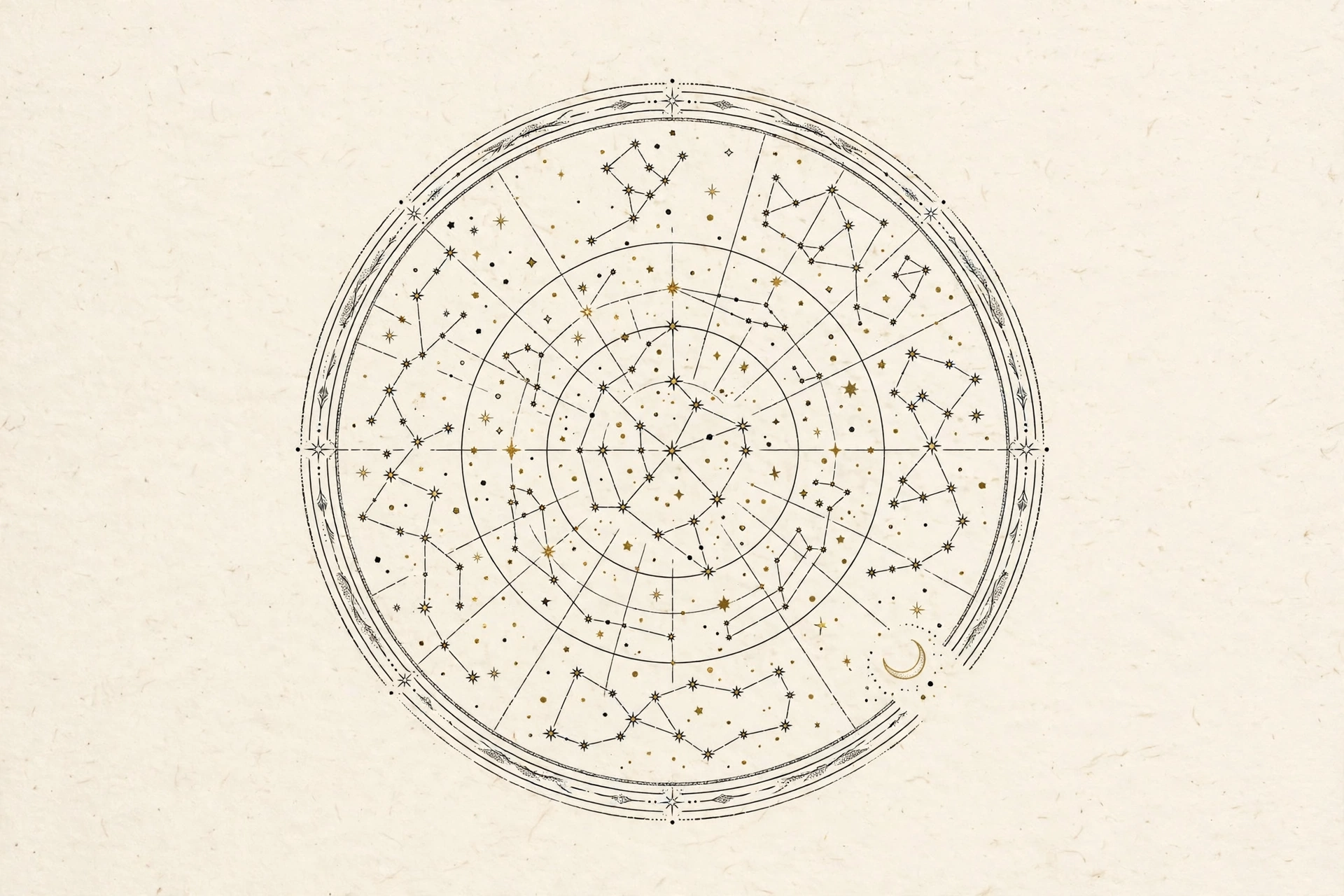
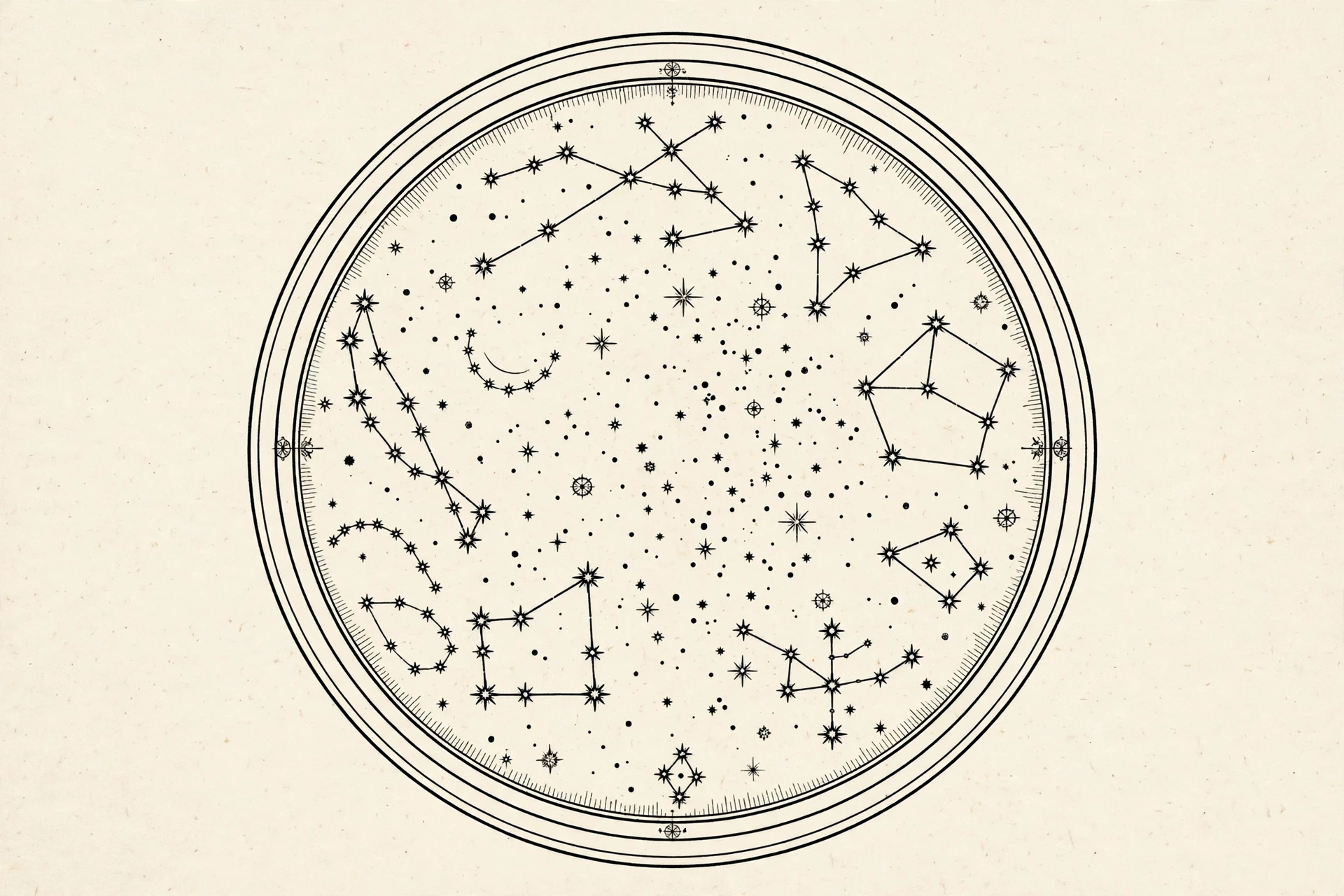
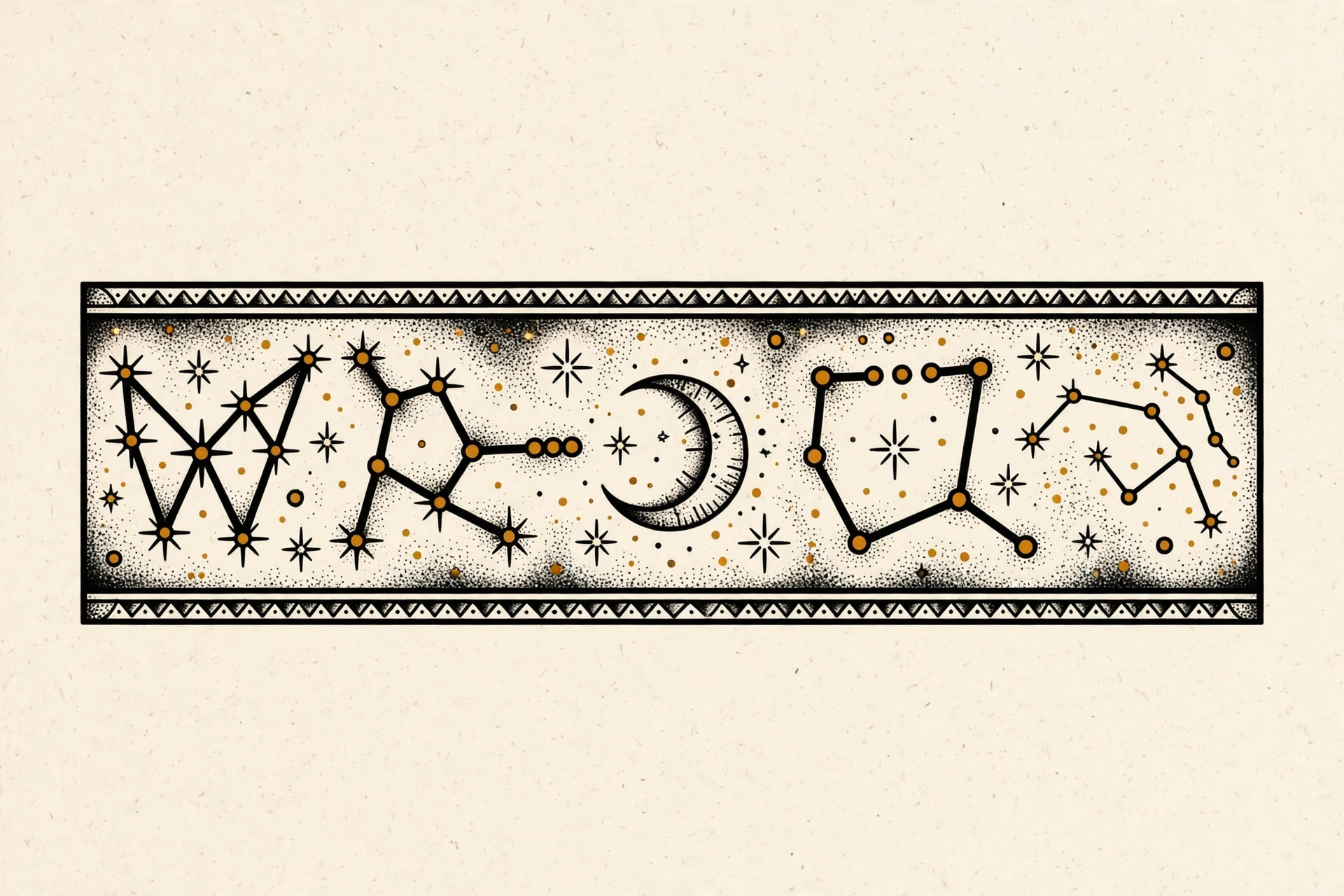
A round star map on the forearm, the sky on a birthday, with the moon as it looked that night.
The map on the upper arm, centred on a birth constellation, with the date in small roman numerals below.
A small arc of stars on the wrist, a slice of the sky on the night two people met.
The full sky on the shoulder blade, large enough to label the constellations in fine script.
A star map on the chest, centred over the heart, the sky on a wedding night.
The map on the back, big enough to show the Milky Way as a soft shaded band across it.
A minimal map behind the ear, a few stars and a crescent moon, the sky on a child's birth night.
A dotwork map on the thigh, the whole sky in dots only, no solid lines, like a chart.
The map paired with coordinates of the place in small type underneath, the latitude and longitude of the night.
A watercolour night sky behind the map on the forearm, deep blue fading to black, stars in white ink.
The map as a bracelet: stars wrapping the wrist, the sky circling the arm like the night itself.
A half map on the ribs, the sky above the horizon line, the ground left blank below.
The map on the ankle, a small circle of stars, the sky on the night of a move to a new home.
Fine-line is the natural style for a star map tattoo. The map is dots and thin lines in a precise layout, and fine-line keeps it delicate and exact. Dotwork is a good second choice: the whole sky becomes dots, which reads like a real chart and softens the design. A watercolour wash behind the stars adds night sky — deep blue fading to black — but keep the wash light so the stars stay readable. Blackwork geometric suits a map with a bold round frame, sharp angles around the circle. Avoid heavy shading and thick outlines; a map is a chart, not a picture, and thick lines crowd the stars. Keep the frame thin, and the stars the star of the show.
| Style | Best size | What to ask your artist |
|---|---|---|
| Fine-line minimal | 5–10 cm | Dots and thin lines keep the map precise and the stars readable. |
| Dotwork | 6–12 cm | The whole sky in dots reads like a real chart on skin. |
| Fine-line with watercolour wash | 6–10 cm | A light blue wash behind the stars adds night sky without hiding them. |
A star map is a circle, so it suits any roundish, fairly flat stretch of skin. The forearm and the upper arm are the classic spots: the map sits in a circle on the arm, with the constellations inside it. The shoulder blade takes a larger map, with room to label the constellations in fine script. The back takes the biggest map of all, with room for the Milky Way as a band across it. The chest suits a map centred over the heart, the sky on a wedding night. The wrist takes only a small arc of stars, not a full map, since a whole sky needs room to breathe. Behind the ear works for the smallest map — a few stars and a crescent moon, the sky on a child's birth night.
A small star map is a quick job. An arc of stars on the wrist usually takes well under an hour, and the pain is mild — the wrist and forearm are forgiving spots. A full round map with many stars, the moon and shading takes hours, and a back piece with a Milky Way band costs more. Cost follows size and detail rather than the idea: a small arc is a shop-minimum job in most studios, while a detailed full-sky map costs more. Ask for the price before you book, and check whether a touch-up is included.
Plan the numbers properly: try the Cost Estimator for a size-and-style estimate, and read the Placement Pain Guide before you pick a spot. Only a licensed artist who sees the design and the body part can give you a real quote.
See also: tattoo cost estimator · tattoo placement pain guide · birth-chart wheel.
Get the date right before you book. A star map means the sky on a real night, so the date and the place must match a night that happened. Ask your artist how they build the map, and check the constellations against a sky chart for that date before the needle touches skin.
Once you know which night the map shows, try the design on your own sign. The generator builds a design from your birth date so you can see it on skin before you book: /tattoo-generator/.
The generator reads your birth date, your intention and your style, so the design it makes is yours, not a copy of someone else's.
Size (Tiny to Extra Large) and style in, cost range out. Ranges are estimates — an artist quote wins. A 20% tip is shown separately.
All 23 placements from our placement guides — pick a spot, optionally compare a second one, and see its pain range, healing time, fading and size guidance, quoted from the same guide data, with a link to the full placement guide. Ranges only — sources disagree, no single decimal is a fact.
Two sun signs in, an honest reading out — no invented percentages. The tool compares the two signs' elements and ruling planets, tells you where the pairing clicks and where it rubs, and turns it into a matching-tattoo idea with links to both sign guides.
Your Sun, Moon and Rising signs from your birth date and time — all three computed in your browser, with the Moon and Rising honestly labelled approximate. Each sign comes with a short traditional reading and a tattoo angle, plus links to its sign guide and to the wheel and fusion tools.
See the full list on the Constellation Tattoos pillar page.
A night sky tattoo is stars, moon and Milky Way as one design. See 13 ideas, how a sky works on skin, the dark between stars, placements and costs.
A North Star tattoo is one fixed star — the point sailors steered by while the sky turned. See 12 designs, the meaning, placements and costs.
A birth constellation tattoo is the sky on the day you were born. See 13 designs, how to find your birth pattern, placements, dates and costs.
An Orion constellation tattoo is the hunter's Belt of three stars, led by Betelgeuse and Rigel. See 12 designs, the hunter myth, placements and costs.
It is a map of the sky on one night — the stars, the moon and the constellations as they stood at a chosen date, time and place. People usually pick a night that matters: a birthday, a wedding, the night they met someone, or the night a child was born. The map is personal because the sky on that night will never repeat.
The date and the place must be real. A star map drawn from a made-up date is just a random scatter, and anyone who checks it will see that. Give your artist the exact date, time and place, and ask how they build the map — a good artist checks it against a sky chart for that night.
The forearm and the upper arm suit a round map, since a circle fits the arm. The shoulder blade and the back take a larger map with the constellations labelled. The chest suits a map centred on the heart. The wrist takes only a small arc of stars, not a full map, since a full sky needs room.
Cost and pain come from size and detail, not from the idea. A small arc of stars is quick and mild, usually a shop-minimum job. A full round map with many stars, the moon and shading takes hours and costs more. Forearms and shoulders are forgiving; ribs and the spine sting more.
Yes — the moon is the usual addition, drawn as it looked on that night: a crescent, a half moon, or full. A constellation that mattered that night is the other common addition. Keep the additions to one or two, so the map stays readable and the sky does not turn into a crowd.
Fine-line suits a map, since it is dots and thin lines in a precise layout. Dotwork softens it and reads like a real sky chart. A watercolour wash behind the stars adds night sky, but keep the wash light so the stars stay readable. Avoid thick outlines; a map is a chart, not a picture.
AI designs are for inspiration only. Always consult a licensed tattoo artist. Astrology on this site is for inspiration and self-expression. This page does not provide medical advice. Last reviewed: 22 November 2026.