Tattoo Cost Estimator
Size (Tiny to Extra Large) and style in, cost range out. Ranges are estimates — an artist quote wins. A 20% tip is shown separately.
finger tattoo fading · Finger Tattoos
Finger tattoo fading starts in 6–12 months: fast skin turnover, constant washing and friction. Why it happens and what actually slows it.
Finger tattoos fade faster than tattoos anywhere else except the feet, and the reason is not bad ink or a bad artist — it is your hands. Finger skin regenerates quickly, you wash your hands all day, and the skin rubs against everything you touch. Expect visible softening in 6–12 months, and plan touch-ups every 1–2 years.
This page sits under Finger Tattoos.
Key takeaways
| What | What to expect |
|---|---|
| Size | 1–3 cm |
| Pain | 7.5/10 (consensus range; one source lists 6.5/10) |
| Healing | 2–3 weeks |
| Fading | Very fast — visible softening in 6–12 months |
Pain is a consensus range — artists and charts disagree on the exact number, so treat it as a range, not a measurement. Only a licensed artist who sees the design and the body part can give you a real quote.
Fingers fade fast because the skin there is built to renew itself quickly and takes constant punishment. Your hands are washed many times a day, they rub against clothes, tools, keyboards and each other, and the skin on your fingers is thin with almost no fat underneath — so ink sits shallow and leaves fast.
Skin turnover is the core of it. The outer layer of skin on your fingers replaces itself faster than the skin on your forearm or upper arm, and each new layer carries a little of the ink away with it. Add soap, hot water, sanitiser and friction, and the ink is being washed and rubbed out from both sides at once.
Sun makes it worse. Hands are almost always uncovered outdoors, so a finger tattoo gets more ultraviolet light than a tattoo under a sleeve — and ultraviolet breaks down ink, especially colour. A finger tattoo that is never protected from the sun will fade noticeably faster than one that gets sunscreen once it is healed.
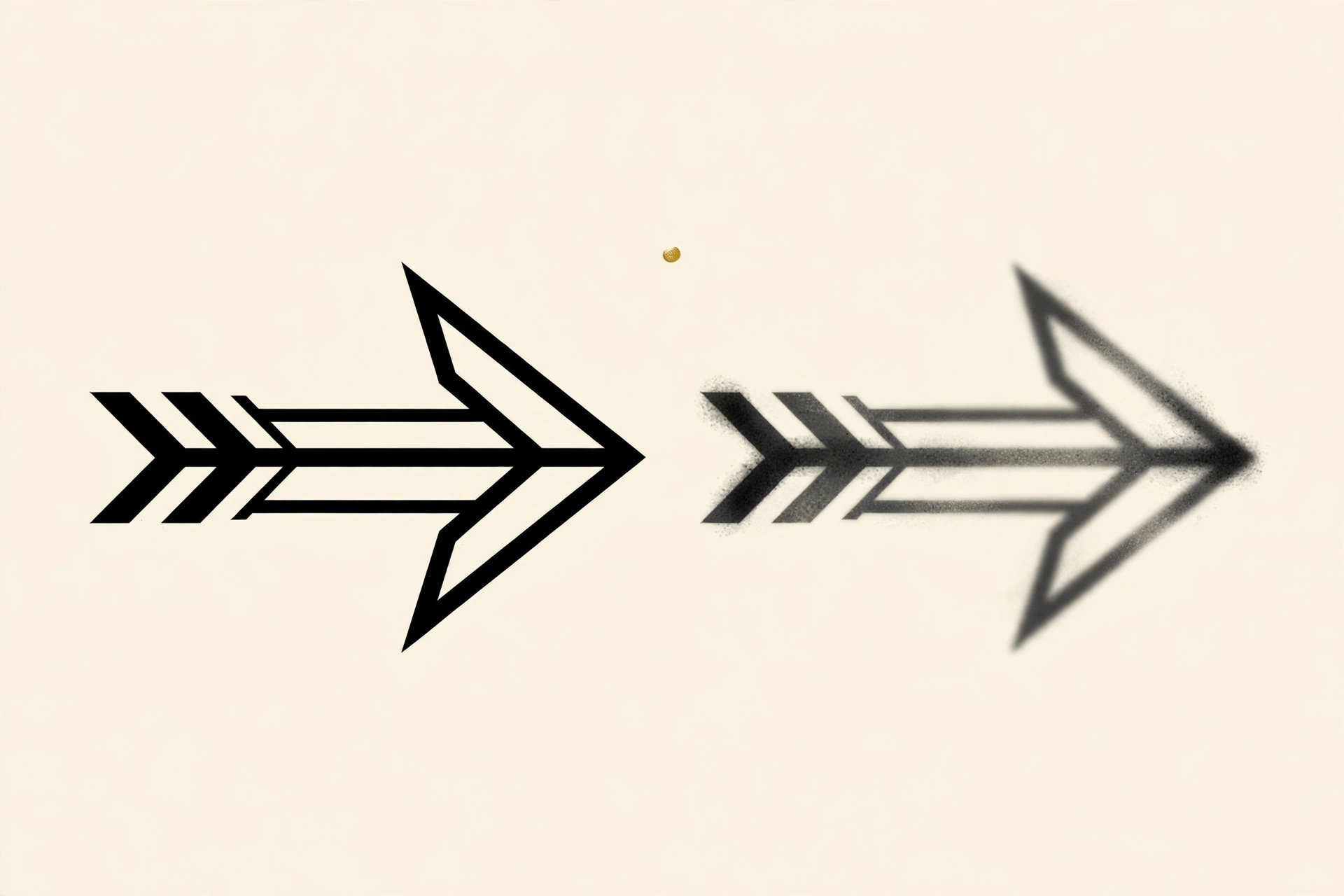
Fine lines fade first, then colour, then shading; bold black outlines hold longest. A thin script letter or a delicate floral will blur into a grey smudge within months, while a thick crescent moon or a bold star can still read clearly after a year.
The pattern is predictable enough to design around. Lines that are close together merge as the ink spreads slightly with age, so detail is the first casualty: the inner lines of a tiny flower disappear, then the outline softens, then the whole shape goes grey. Colour goes next — reds and yellows in particular wash out fast on hands, because the ink particles are smaller and the sun hits them daily.
Bold black is the survivor. A thick black line has enough ink, and enough space around it, that even after a year of fading it still reads as a line. That is why every experienced artist will push you toward bold and simple on fingers, even if the fine-line version looks prettier on day one.
Expect the first visible softening within 6–12 months, with most finger tattoos needing their first touch-up inside the first year. After that, plan on a touch-up every 1–2 years to keep the design readable — and accept that each touch-up thickens the lines a little.
The timeline varies with the design and with your hands. Someone who works with their hands, washes them constantly, or spends long hours in the sun will see fading sooner than someone with a desk job who wears gloves outdoors. But nobody's finger tattoo stays crisp for years without touch-ups — the biology does not allow it.
One honest way to think about it: a finger tattoo is not a permanent picture, it is a picture you maintain. If you are comfortable with that — a short touch-up session every year or two, like a haircut — the fading is manageable. If you want to get a tattoo and forget about it, a finger is the wrong place.
You can slow finger fading, but you cannot stop it. Sunscreen on healed ink, gentle washing, moisturiser, and gloves for manual work all help — but the biggest factor is the design itself: bold black lines fade far slower than fine lines or colour.
Aftercare matters most in the first 2–3 weeks while the tattoo heals. Wash gently with mild soap, moisturise thinly, and do not pick at scabs — picking pulls ink out and is one of the fastest ways to lose a finger tattoo early. Once healed, sunscreen is your best tool: apply it to the tattoo whenever your hands will be in the sun, since ultraviolet is the main fading force you can control.
Day to day, wear gloves for dirty or wet work, and avoid harsh chemicals and prolonged soaking where you can. But be realistic: you cannot stop washing your hands, and you should not try — hygiene comes first. The care routine buys you months, not years, and the design choice matters more than any cream.
Plan on a touch-up every 1–2 years, booked once the tattoo has fully settled after fading — not the moment it looks slightly soft. A touch-up re-lines the design, but it also thickens the lines, so a finger tattoo has a limited number of good touch-ups before it needs simplifying.
The first touch-up is usually the most useful: it restores the lines that faded fastest and shows you how your skin holds ink. After two or three rounds, though, the lines get thick enough that adding more ink starts to close up the gaps in the design, and it can end up looking heavier than you wanted.
At that point the honest options are to simplify the design, let it fade gracefully into a soft shadow, cover it with a slightly larger bold piece, or look at laser removal. Ask your artist which stage your tattoo is at — a good artist will tell you when another touch-up will help and when it will make things worse. And check the shop's policy before you book: many shops do not guarantee finger work, so touch-ups may be charged.
Plan the numbers properly: try the Cost Estimator for a size-and-style estimate, and read the Placement Pain Guide before you pick a spot. Only a licensed artist who sees the design and the body part can give you a real quote.
See also: Tattoo Aftercare Checklist · Tattoo Cover-Up Advisor · Tattoo Generator.
The generator reads your birth date, your intention and your style, so the design it makes is yours, not a copy of someone else's.
Size (Tiny to Extra Large) and style in, cost range out. Ranges are estimates — an artist quote wins. A 20% tip is shown separately.
All 23 placements from our placement guides — pick a spot, optionally compare a second one, and see its pain range, healing time, fading and size guidance, quoted from the same guide data, with a link to the full placement guide. Ranges only — sources disagree, no single decimal is a fact.
Two sun signs in, an honest reading out — no invented percentages. The tool compares the two signs' elements and ruling planets, tells you where the pairing clicks and where it rubs, and turns it into a matching-tattoo idea with links to both sign guides.
Your Sun, Moon and Rising signs from your birth date and time — all three computed in your browser, with the Moon and Rising honestly labelled approximate. Each sign comes with a short traditional reading and a tattoo angle, plus links to its sign guide and to the wheel and fusion tools.
See the full list on the Finger Tattoos main page.
Are finger tattoos worth it? Only if you accept fast fading and regular touch-ups. The honest pros, cons and costs before you book.
Finger tattoo ideas for women and men: 10 bold, simple designs at 1–3 cm that survive fading. Hearts, moons, glyphs and bands that hold.
Finger tattoo touch-ups every 1–2 years keep bold designs readable. When to book, what a touch-up can fix, and when to stop re-lining.
Ring finger tattoo ideas: thin bands, crescents, initials and zodiac glyphs at 1–3 cm. Bold, simple designs that survive daily wear.
A tiny zodiac glyph on your finger works at 1–5 cm — if you pick the bold version. Which glyphs hold, which blur, and the fine-line warning.
Finger skin regenerates fast, hands are washed many times a day, and the skin rubs against everything. Add daily sun exposure and thin skin over bone, and ink leaves faster than anywhere else except the feet.
Expect visible softening in 6–12 months and a touch-up every 1–2 years. Bold black designs last longest; fine lines and colour can blur within months. It rarely vanishes entirely — it fades into a soft shadow.
It slows fading but cannot stop it. Sunscreen on healed ink protects against ultraviolet, which is a major fading force on uncovered hands. Washing and friction do the rest, and no cream prevents those.
Yes, usually by re-lining it in a touch-up. But each touch-up thickens the lines, so after a few rounds the design may need simplifying or covering with a slightly larger bold piece instead of another re-line.
No. Fine lines and colour fade fastest, bold black holds longest. Hands that do manual work, get washed constantly or spend long hours in the sun fade sooner than hands that do not.
Wait until it has fully healed and settled, then judge it in natural light. Touching up too early, while the skin is still settling, wastes a session. Most artists want to see the faded result before deciding what to re-line, so bring the tattoo in daylight and let them judge the true faded state.
AI designs are for inspiration only. Always consult a licensed tattoo artist. Astrology on this site is for inspiration and self-expression. This page does not provide medical advice. Last reviewed: 24 November 2026.