Tattoo Cost Estimator
Size (Tiny to Extra Large) and style in, cost range out. Ranges are estimates — an artist quote wins. A 20% tip is shown separately.
tiger chinese zodiac tattoo
Tiger Chinese zodiac tattoo: 13 ideas, Tiger years, meaning, and placements for the third animal of the cycle.
The Tiger is the third animal of the Chinese zodiac, and it is the one that does not wait. Brave, fierce and independent, the Tiger is the guardian animal of Chinese tradition — the one that wards off harm and stands its ground. A Tiger tattoo is a bold piece: stripes, claws, amber and black, an animal that needs a long muscle to run along. This page covers 13 Tiger ideas, the years, the meaning and the placements that suit it.
This page sits under horoscope tattoos.
Key takeaways
The Tiger is the third animal of the Chinese zodiac, and its meaning is built on courage. In the traditional reading the Tiger stands for bravery, independence and fierce protection — the animal that acts first, guards its own, and does not back down. In Chinese tradition the Tiger is a guardian, an animal whose image is said to ward off harm, and Tiger images have been placed at doorways and on children's clothing for that reason for centuries. A Tiger tattoo leans on that fierceness. The designs are bold and dynamic: a Tiger mid-stride, claws out, stripes in amber and black, an animal that needs a long muscle to run along.
2022, 2010, 1998, 1986 — years of the Tiger. The Chinese year starts at Lunar New Year (late January or early February), so someone born in January or early February of one of these years may belong to the previous animal, the Ox. Check the exact New Year date for your birth year.

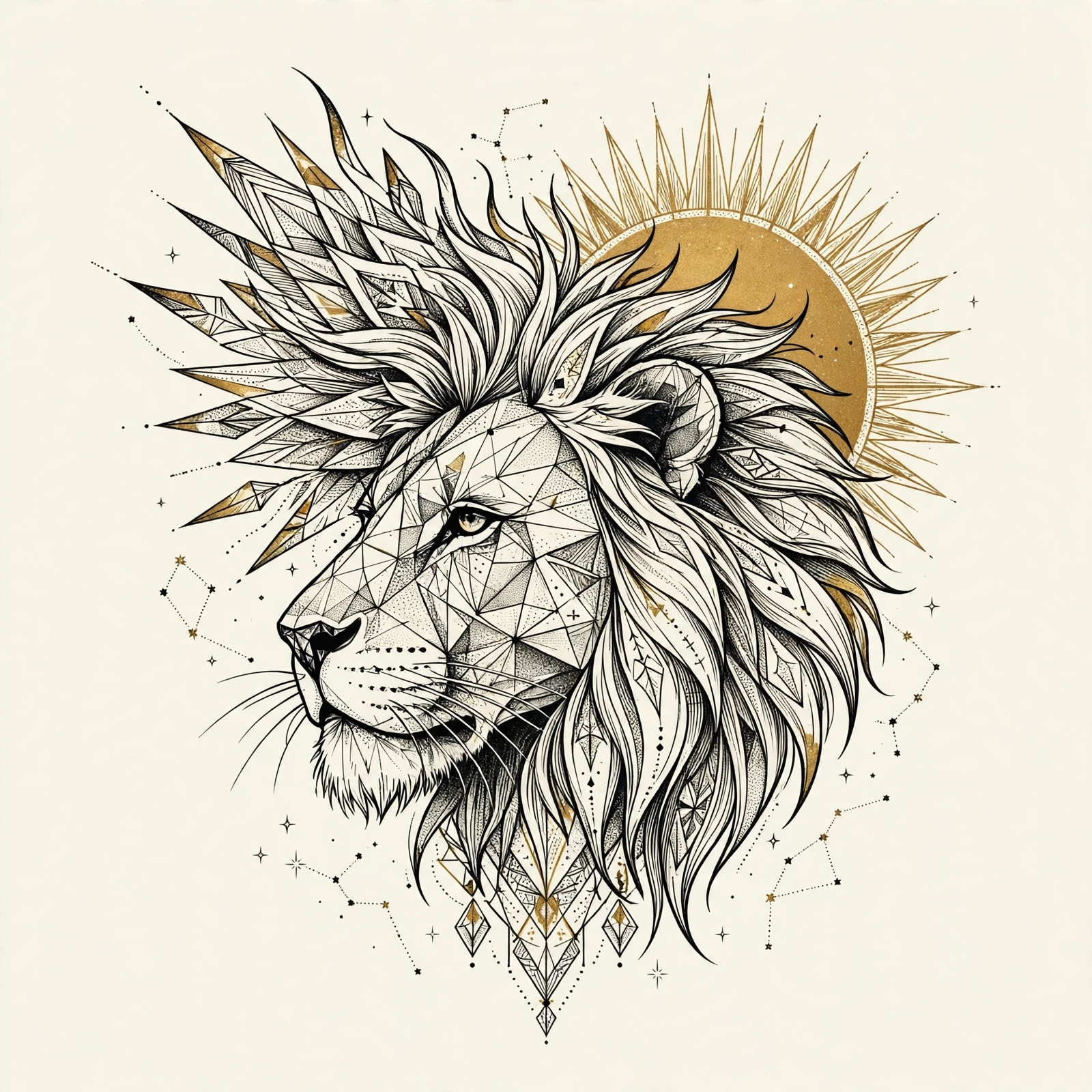

A Tiger mid-stride across the forearm in black and amber, claws out, the stripes following the line of the arm.
A Tiger head on the shoulder in bold colour, amber eyes and black stripes, the head sized to fill the muscle.
A Tiger and bamboo stalk on the thigh, the animal moving through the bamboo, the stalks in fine green line.
A Tiger eye on the wrist, the eye alone in amber and black, a small and intense mark.
A Tiger leaping down the ribs in blackwork, the body long and narrow, following the ribs.
A Tiger in a circle on the back, the circle in thin black line, the animal coiled inside it.
A Tiger paw print on the ankle in blackwork, the pads solid, the claws sharp, a small and quiet Tiger.
A Tiger and a plum blossom on the shoulder blade, the blossom in soft pink against the black stripes.
A Tiger in geometric blackwork on the calf, the body built from triangles, sharp and modern.
A Tiger birth-year design on the upper arm: the animal above the year in small numerals, the numerals in a clean, plain font.
A Tiger and a full moon on the chest, the moon in soft gold behind the Tiger's head.
A Tiger in traditional Chinese style on the back, red ink accents and cloud motifs around the animal.
A Tiger cub on the forearm in fine line, the cub small and soft, a gentler take on a fierce animal.
Bold colour is the natural style for a Tiger: amber and black together read as a tiger at a glance, while black alone can read as any big cat. The eyes in particular suit colour, because an amber eye against black stripes is the detail people notice first. Blackwork suits a Tiger when the design needs to read as a graphic mark — the body in solid black with the stripes cut out as negative space, sharp and modern. Fine-line geometric works when the Tiger needs to be a contemporary piece, the body built from triangles, though it loses the warmth that colour gives the animal. Traditional Chinese style uses red ink accents and cloud motifs around the Tiger, echoing ink painting, and it needs an artist who knows the style. Watercolour gives the Tiger soft washes over black linework, though the colour fades faster and needs touch-ups to stay bright. Whatever style you pick, give the Tiger direction — a Tiger that fights the muscle looks stiff, while a Tiger that runs with it looks alive.
| Style | Best size | What to ask your artist |
|---|---|---|
| Bold colour | Palm size or larger | Amber and black together read as a tiger at a glance, and the eyes carry the design. |
| Blackwork | Palm size or larger | Solid black with stripes as negative space makes a sharp, modern Tiger. |
| Traditional Chinese | Palm size or larger | Red ink and cloud motifs echo ink painting around the Tiger. |
The Tiger needs a long muscle to run along, so pick the spot by the direction the animal moves. The forearm is the first choice: a Tiger mid-stride across it, claws out, the stripes following the line of the arm, and the session is a single sitting. The thigh suits a larger Tiger, a full body with room for the stripes and the tail. The shoulder suits a Tiger head, the head sized to fill the muscle and read from across a room. The ribs suit a Tiger moving upward, the body long and narrow, though the ribs are one of the sharpest spots. The back suits the largest Tigers, a full animal with bamboo or a moon behind it. The calf suits a Tiger in geometric blackwork, the body built from triangles along the muscle. The chest suits a Tiger and a full moon, though the chest is a sharper spot than the shoulder. Pick the line the animal runs along first, then size it to the muscle.
A Tiger is usually a medium to large tattoo with colour, and the colour adds both time and sting. A medium Tiger on the forearm is a single session of a few hours, with the usual forearm ache that builds slowly. A large Tiger across the back or thigh is a longer job — more time under the needle, more soreness the next day, and a price that grows with the hours. The ribs and the spine are the sharpest spots for a large piece, so a Tiger running down the ribs is not a gentle session. The shoulder and the thigh usually feel steadier, because there is more flesh under the needle. Any flat figure online is a guess. Take your exact size, placement and style to a licensed artist and ask what a touch-up costs before you book.
Plan the numbers properly: try the Cost Estimator for a size-and-style estimate, and read the Placement Pain Guide before you pick a spot. Only a licensed artist who sees the design and the body part can give you a real quote.
See also: tattoo cost estimator · tattoo placement pain guide.
A Tiger needs direction. Pick the line the animal moves along — across the forearm, down the thigh, up the ribs — and let the stripes follow it. A Tiger that fights the muscle looks stiff; a Tiger that runs with it looks alive. Colour helps the Tiger more than most animals: amber and black together read as a tiger at a glance, while black alone can read as any big cat.
Once you know the size and the spot, try the design on your own chart. The generator builds a design from your birth date so you can see it before you book: /tattoo-generator/.
The generator reads your birth date, your intention and your style, so the design it makes is yours, not a copy of someone else's.
Size (Tiny to Extra Large) and style in, cost range out. Ranges are estimates — an artist quote wins. A 20% tip is shown separately.
12 placements: Wrist, Forearm, Upper Arm, Chest, Back, Ribs, Thigh, Ankle, Neck, Hand, Foot, Inner Arm. Shows pain range, healing and fading for the chosen spot. Ranges only — sources disagree, no single decimal is a fact.
Two zodiac signs in, compatibility score out. Tested live: Aries + Leo = 88% overall (Love 90%, Friendship 85%, Soul Bond 88%, Fire + Fire).
Date of birth plus optional birth time (default 06:00 AM). Generates Sun / Moon / Rising summary. This is the only tool that asks for birth time; the homepage DOB wizard does not.
See the full list on the Horoscope Tattoos pillar page.
Chinese zodiac tattoos: the 12 animals, how the year system works, 14 design ideas, and a full page for every animal.
Horse Chinese zodiac tattoo: 13 ideas, Horse years, meaning, and placements for the seventh animal of the cycle.
Dog Chinese zodiac tattoo: 13 ideas, Dog years, meaning, and placements for the eleventh animal of the cycle.
Dragon Chinese zodiac tattoo: 12 ideas, Dragon years, meaning, and placements for the fifth animal of the cycle.
Fire sign tattoos for Aries, Leo and Sagittarius: 13 ideas, placements, pain notes and what fire means in a zodiac tattoo.
2022, 2010, 1998 and 1986 are the recent Tiger years. The Chinese year starts at Lunar New Year, in late January or early February, so someone born in January or early February of one of those years may belong to the previous animal, the Ox. Check the exact New Year date for your birth year.
In the traditional reading the Tiger stands for courage, independence and fierce protection. It is the animal that acts first and asks later, and it is linked with warding off harm — a guardian animal in Chinese tradition. People who carry a Tiger tattoo usually point to bravery and to standing their ground.
The forearm and the thigh suit the Tiger, because the animal needs a long muscle to run along. The shoulder suits a Tiger head, and the ribs suit a Tiger moving upward. The back suits the largest Tigers. Small spots do not suit the Tiger — a tiny tiger loses the stripes that make it a tiger.
A Tiger is usually a medium to large piece with colour, so it costs more than a small glyph. A medium Tiger on the forearm is a single session of a few hours. A large Tiger across the back or thigh takes longer and costs more. Cost follows size, placement and style, not the animal, so ask a licensed artist for a quote once you know the size and the spot.
Yes. The Tiger pairs well with the Horse and the Dog, the animals the Tiger is traditionally said to get along with. A Tiger and Horse pair, both in motion, works well on the forearm or thigh. A Tiger and a bamboo stalk is a classic pairing too, the animal in its own landscape.
AI designs are for inspiration only. Always consult a licensed tattoo artist. Astrology on this site is for inspiration and self-expression. This page does not provide medical advice. Last reviewed: 22 November 2026.