AI Tattoo Generator
Generate a design for this placement — your sign, your intention, your style. Free, no sign-up.
collarbone tattoos
Collarbone tattoos: horizontal script and floral ideas, high pain along the bone, healing moderate. Keep lettering spaced — bone curvature distorts tight script.
Generate a design for this placement →
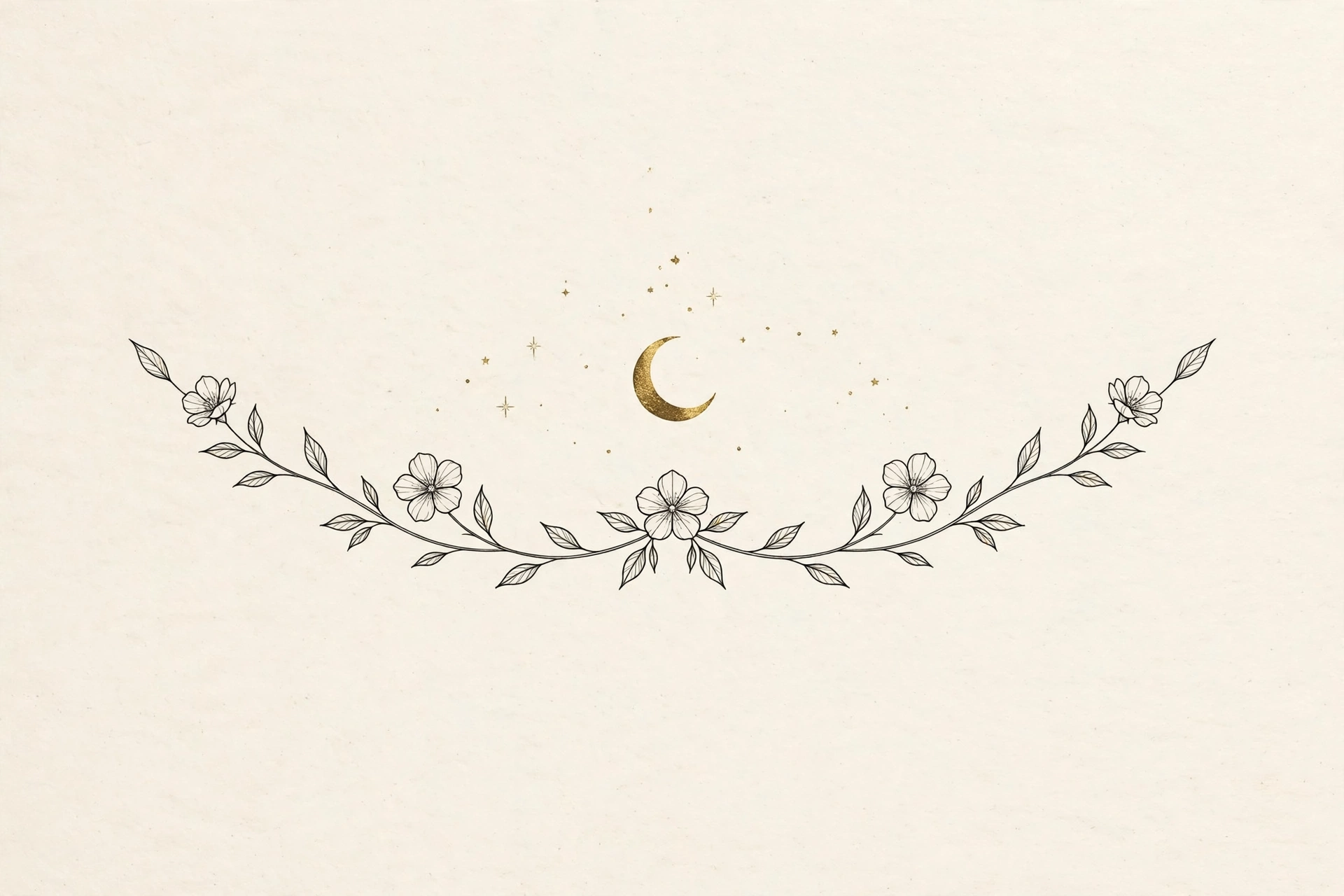
A collarbone tattoo is a design that follows the line of the collarbone — usually horizontal script, a floral stem, or a small constellation that traces the bone from the centre of the chest toward the shoulder. It suits people who want an elegant, visible piece that shows in open necklines and hides under a normal shirt.
Key takeaways
| What | What to expect |
|---|---|
| Size | 8-15 cm |
| Pain | High (grouped with sternum by studio guides) |
| Healing | Moderate |
| Fading | Moderate |
Pain is a consensus range — artists and charts disagree on the exact number, so treat it as a range, not a measurement. Only a licensed artist who sees the design and the body part can give you a real quote.
Horizontal script and floral designs that follow the collarbone line suit it best. The collarbone is a long, slightly curved horizontal strip, 8–15 cm, so a word, a short phrase, or a flowering stem that traces the bone reads naturally — while a round or vertical design fights the shape.
Script is the classic collarbone tattoo, and the bone itself explains why. The collarbone runs almost horizontally across the upper chest, which is the natural direction for reading — a single word, a name, or a short phrase set along the bone reads like a line of text on a page. The key is spacing: the bone curves, so letters set too tightly will distort as they follow the curve, and letters set too far apart will look disconnected. A good artist spaces the lettering to the bone, not to the page.
Floral designs work the same way, following the line instead of crossing it. A flowering stem that traces the collarbone, with buds and leaves spaced along its length, uses the bone as a branch — and a single flower at the inner end, near the throat, with the stem running outward toward the shoulder, gives the design a clear direction. Small birds, stars or dots scattered along the line can work too, as long as they follow the bone rather than sitting on top of it at random.
What does not suit the collarbone is a design that ignores the line. A round mandala, a portrait or a vertical design will either sit awkwardly across the bone or slide off it onto the chest or the shoulder, and it will look like it landed in the wrong place. Keep the design horizontal, keep it following the bone, and let the collarbone itself be the frame.
Yes — a collarbone tattoo is high pain along the bone, and studio guides group it with the sternum for pain. The collarbone sits right under thin skin with almost no padding, so the needle works directly over bone, and the vibration carries along the bone itself.
The pain is concentrated exactly where the bone is. The collarbone is a thin, hard ridge that sits close to the surface, and the skin over it is thin with very little fat underneath — so the needle has nowhere to go but bone. The vibration travels along the bone, which is why people describe the sensation as sharp and buzzy rather than a dull ache, and why the pain can be felt in the shoulder and the neck as well as at the needle.
The good news is the size. Most collarbone tattoos are small to medium, 8–15 cm, and a single line of script or a short floral stem is a relatively quick session — the intensity is high but it does not last for hours the way a large chest piece does. That makes it a manageable placement for people who already have a tattoo and know how they handle bone pain, and a challenging one for a first tattoo.
Breathing and stillness help here too. The collarbone moves when you breathe, shrug or turn your head, so the artist will ask you to relax your shoulders and breathe slowly while they work. Try not to tense up — a tight shoulder pulls the skin taut and makes the needle feel sharper, while a relaxed shoulder lets the artist work with the skin rather than against it.
Collarbone tattoos usually run 8–15 cm, and the rule for lettering is to keep it spaced — the bone's curvature distorts tight script. Letters that are too close together blur into each other as they follow the curve, so give each letter room to breathe and size the whole piece to your own bone, not to a photo.
Start by measuring your own collarbone, not someone else's tattoo. Collarbones vary in length and in how sharply they curve, and a design that fits one person perfectly can look stretched or cramped on another. Your artist should stencil the design on your actual collarbone and have you look at it in a mirror, turn your head, and raise your arms — the design should read cleanly in all of those positions, not just while you stand still.
Spacing is the detail that makes or breaks collarbone script. The bone curves gently, and letters set tight against each other will distort as they follow that curve — an 'm' can close up, an 'o' can pinch, and a whole word can turn muddy. Letters with generous spacing, and a font with open, clear shapes, survive the curve far better than a tight, ornate script. The same applies to floral work: buds and leaves spaced along the stem read better than a dense cluster that has to bend around the bone.
Think about one collarbone or both. A single collarbone tattoo is the classic choice, and it suits a word, a stem or a small constellation on its own. A symmetrical pair — the same design mirrored on both collarbones — is bolder and more decorative, and it suits ornamental or floral work that frames the neckline. If you want a pair, consider doing one first and living with it before committing to the second: the pair looks best when both sides are planned together, but there is no rush to finish it in one sitting.
A collarbone tattoo shows in open necklines and hides under a normal crew-neck shirt, which makes it one of the more flexible visible placements. The practical problems are bra straps, bag straps and necklaces, which all cross the collarbone and rub the fresh ink while it heals.
Visibility is a dial you control with your neckline. A crew-neck shirt covers a collarbone tattoo completely; a scoop neck or a v-neck shows the top of it; an off-the-shoulder top shows the whole design. That makes it a good choice for people who want a tattoo they can show or hide depending on the day — visible at a party, invisible at work, without any effort beyond choosing a shirt.
Straps are the real nuisance, and they matter most during healing. Bra straps sit directly on the collarbone, bag straps cross it, and a heavy necklace rests on it — all of them rub the fresh tattoo for hours a day. While it heals, which takes a moderate amount of time, choose soft, wide straps or go strapless where you can, carry your bag on the other shoulder, and leave necklaces off until the skin has fully healed. Once healed, normal straps are fine, but a heavy bag worn on the same shoulder every day will still wear on the ink over the years.
Sun is the other long-term factor. The collarbone catches sun whenever you wear an open neckline outdoors, and fading here is moderate — faster than a covered spot, slower than a hand or a foot. Sunscreen once the tattoo is healed is the simplest protection, and it is worth making a habit of it: a collarbone tattoo that gets sun every summer without protection will soften noticeably within a few years.
A single word in a clean, open typeface, set along the collarbone with generous letter spacing.
A flowering stem tracing the collarbone, with three small buds and one open flower near the shoulder.
A small constellation following the collarbone line, stars spaced along the bone.
A short phrase in fine script, running from the centre of the chest toward the shoulder.
A pair of small birds flying along the collarbone, one near the throat and one near the shoulder.
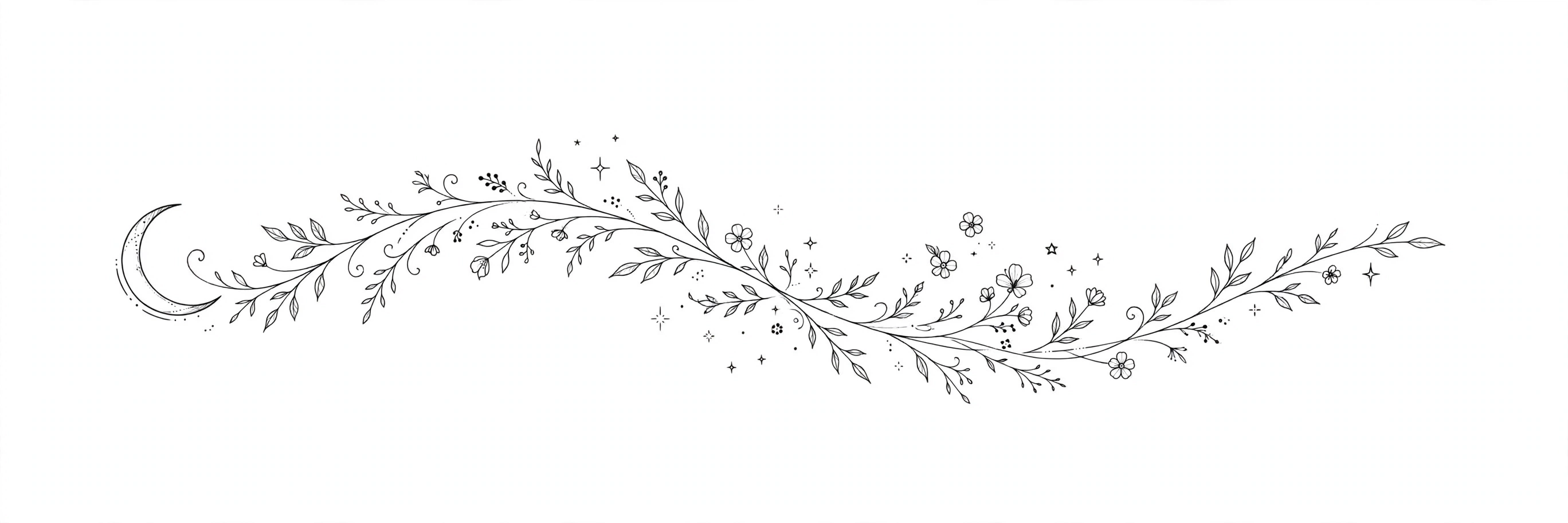
A delicate vine with tiny leaves, following the curve of the collarbone exactly.
A symmetrical pair of small floral sprigs, mirrored on both collarbones to frame the neckline.
A zodiac glyph on the inner collarbone, near the throat, drawn bold and simple.
A row of three tiny stars spaced along the collarbone, growing slightly larger toward the shoulder.
A small feather lying along the collarbone, quill pointing toward the centre of the chest.
The collarbone suits zodiac designs that follow a horizontal line, because the bone itself runs across the body like a line of writing. A single glyph placed on the inner collarbone, near the throat, is the classic choice — one bold symbol, drawn with thick strokes so it stays readable on thin skin over bone. A small constellation can trace the bone too, with your sign's stars spaced along its length so the figure follows the body's own curve, and a line of horizontal script — your sign's name, a date, a short word — reads naturally here. Keep it to one idea and keep the lines bold, and treat the sign as personal symbolism rather than a forecast.
Generate a design for this placement — your sign, your intention, your style. Free, no sign-up.
Size (Tiny to Extra Large) and style in, cost range out. Ranges are estimates — an artist quote wins.
12 placements: Wrist, Forearm, Upper Arm, Chest, Back, Ribs, Thigh, Ankle, Neck, Hand, Foot, Inner Arm. Shows pain range, healing and fading for the chosen spot. Ranges only — sources disagree, no single decimal is a fact.
Hand tattoos: back-of-hand ideas, pain 7.5/10, healing 2-3 weeks, fastest fading. Highly visible — a job-stopper for many people.
Leg tattoos: hub for thigh, calf, shin, knee, ankle and foot. Outer thigh and calf are low-pain first-tattoo spots; shin is bony at 7.5/10.
Thigh tattoos: large floral and animal ideas, pain 4-4.5/10 outer thigh, healing 3-5 weeks. Outer thigh is low pain and ages well; inner thigh is high pain.
Yes — high pain along the bone, grouped with the sternum by studio guides.
8-15 cm. Keep lettering spaced — bone curvature distorts tight script.
Horizontal script and floral designs that follow the collarbone line.
Start with one. A single collarbone tattoo suits a word, a stem or a small constellation on its own, and a symmetrical pair — the same design mirrored on both sides — is bolder and more decorative. Do one first, live with it, and add the second later if you still want the pair.
Fading is moderate. The collarbone catches sun in open necklines and takes friction from bra straps, bag straps and necklaces, so it fades faster than a covered spot. Sunscreen once healed, and bold enough lines, keep it looking sharp for years.
Not until it has fully healed. Necklaces rest directly on the collarbone and rub the fresh ink, and chains can catch on healing skin. Leave necklaces off during healing, and choose soft, wide bra and bag straps that do not press on the tattoo.
AI designs are for inspiration only. Always consult a licensed tattoo artist. This page does not provide medical advice. Last reviewed: 24 November 2026.