Tattoo Cost Estimator
Size (Tiny to Extra Large) and style in, cost range out. Ranges are estimates — an artist quote wins. A 20% tip is shown separately.
sternum tattoo ideas · Sternum Tattoos
Sternum tattoo ideas that fit a small, centred chest canvas: mandalas, glyphs, ornamental centrepieces. Pain, sizing and fading explained.
The sternum gives you a small, centred canvas — 8-20 cm of flat skin over the breastbone — and the best sternum tattoo ideas are built for exactly that shape. Symmetrical designs, small glyphs, ornamental centrepieces: anything that mirrors itself on the body's midline. Wide designs and portraits do not belong here.
This page sits under Sternum Tattoos.
Key takeaways
| What | What to expect |
|---|---|
| Size | 8-20 cm |
| Pain | 8/10 (8.5/10 in one table; consensus range, sources disagree) |
| Healing | 3-5 weeks |
| Fading | Moderate |
Pain is a consensus range — artists and charts disagree on the exact number, so treat it as a range, not a measurement. Only a licensed artist who sees the design and the body part can give you a real quote.
A sternum tattoo idea works when it is small, centred and symmetrical. The sternum is a narrow canvas — 8-20 cm of flat skin over the breastbone — so designs that mirror themselves on the body's midline read as intentional, while wide or off-centre designs look like a mistake.
Judge every idea against the width of the breastbone. The sternum is narrower than it looks in photos, and a design that spreads past it onto the softer chest tissue will warp as the skin moves. That is why the classic sternum pieces are all compact: a mandala, a glyph, a small ornamental centrepiece. The design should sit on the bone, not around it.
Symmetry does the heavy lifting. A mirrored design looks finished even when it is simple, because the body itself is symmetrical at the midline. A single off-centre element can work as an accent — a star beside a moon, a small glyph above a mandala — but the core of the piece should be centred.
In traditional astrology, the sternum suits compact zodiac pairings: a glyph with its constellation, or a glyph with its element. The Sun, Moon and Rising trio also fits, stacked in a short vertical line. Keep the astrology honest — these are symbols of how you see yourself, an interpretation for self-expression, not a prediction about your life.
The sternum's best designs fall into three groups: ornamental, zodiac and script. Ornamental means mandalas and geometric centrepieces. Zodiac means a glyph with its constellation or element. Script means one word or a short date running vertically down the breastbone.
Ornamental designs are the most forgiving. A mandala or geometric centrepiece fills the 8-20 cm canvas cleanly, and dotwork suits the thin skin over the bone. If you want a piece that looks impressive without needing a personal meaning, ornamental is the safest choice.
Zodiac designs suit the sternum when they are kept small and stacked. A glyph at the top with its constellation in fine dots below it uses the vertical space well. A glyph with its element — a small flame, wave, leaf or breeze line — adds meaning without adding width. Avoid full zodiac animals here: a ram or lion needs room the sternum does not have.
Script works only when it is short. One word, a name, a date in Roman numerals — anything longer crowds the chest and the letters blur as the skin moves. If the quote matters to you, put it on the spine or the forearm instead, where it has room to breathe.
Fine-line, blackwork dotwork and minimal geometric styles age best on the sternum, because clean lines and dots survive the constant movement of the chest better than soft shading or colour. Watercolour and realism are the risky choices — they soften fastest on skin that moves with every breath.
Dotwork is the sternum's natural style. Fine dots build shade without the solid fill that hurts most over bone, and dotwork mandalas keep their detail as they age. Blackwork suits bolder centrepieces, but heavy solid fill over the breastbone is painful and can heal unevenly.
Fine-line works for glyphs and small symbols, provided the lines are not too thin and not too close together. Lines spread slightly with age, and on a chest that moves constantly, tight fine-line work blurs faster than it would on a still placement. Give the design room.
Colour is an accent here, not a main event. A gold dot at the centre of a mandala, a single red thread, a small crimson flame — these add warmth without the fading risk of a full-colour piece. The chest sees sun in low necklines, and colour fades faster than black in the sun.
A sternum tattoo is easy to hide and easy to show, which is its real advantage: it disappears under most clothing and appears in a low neckline, at the beach, or in a backless top. That makes it a good choice if you want a tattoo you control — visible when you choose, invisible when you do not.
Hiding a sternum tattoo is simple. A design that stops above the underbust and stays centred on the breastbone is covered by almost any top, including a crew neck. The only designs that show are ones that reach the collarbones or spread wide across the chest, so keep the piece modest if hiding it matters to you.
Showing it is equally simple, and that is the point. A low neckline, a swimsuit, a dress with a deep front — the sternum appears in exactly the outfits where a tattoo looks intentional. Unlike a wrist or hand tattoo, it never shows by accident at work or in a formal setting.
The trade-off is sun. A sternum tattoo that shows in low necklines also catches sun, and the chest is one of the most sun-exposed areas of the body. Once healed, sunscreen is not optional if you want the piece to stay sharp — fading on the sternum is moderate, and sun is the main reason why.
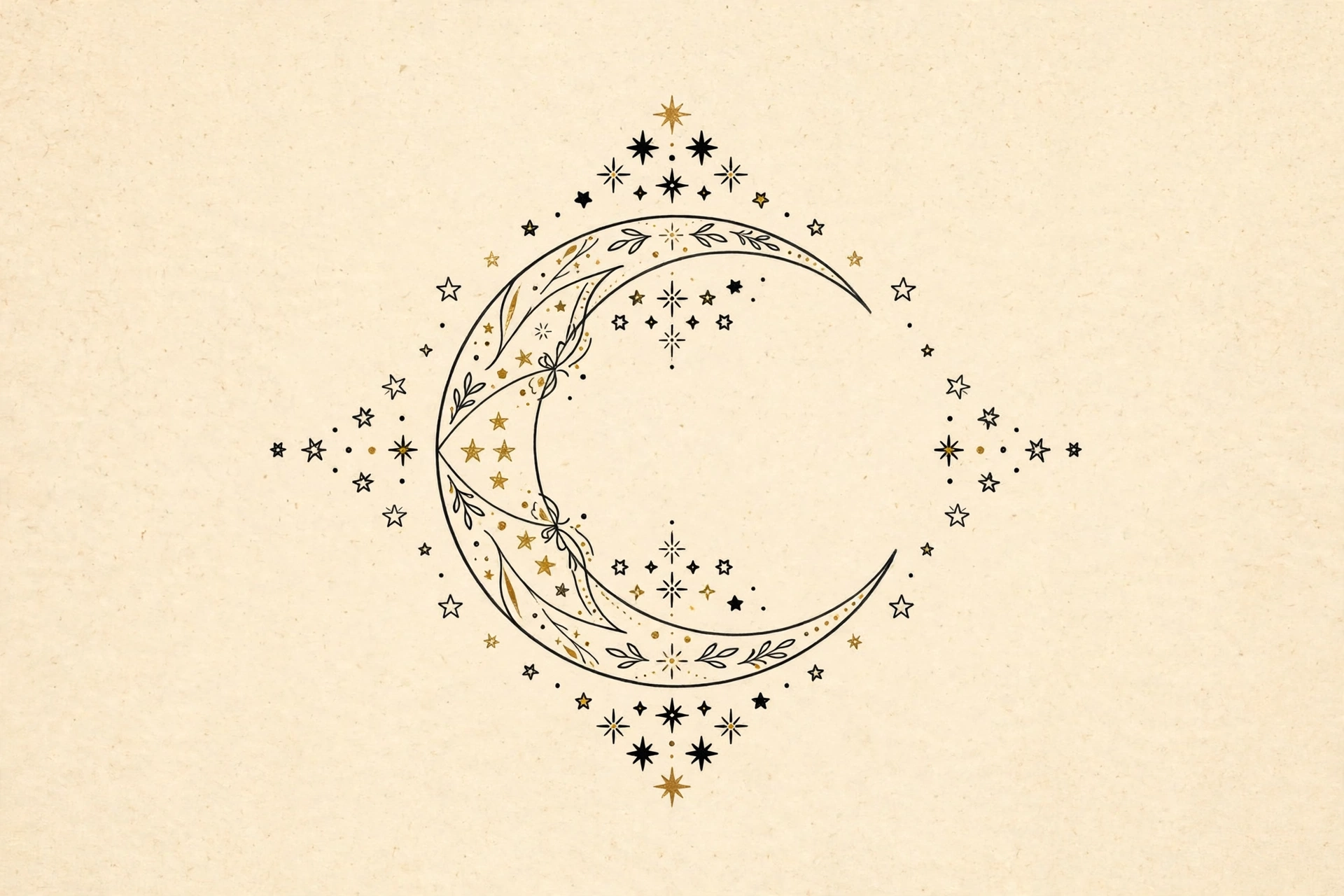
A small mandala centred on the sternum, blackwork dotwork with a single gold dot at its heart.
Your zodiac glyph with its constellation in fine dots, stacked vertically down the breastbone.
A glyph with its element — flame for fire, wave for water, leaf for earth, breeze for air — in fine-line blackwork.
A Sun+Moon+Rising trio: three small glyphs in a vertical line, in traditional astrology a personal sequence, not a prediction.
A tiny ornamental pendant: a diamond or teardrop of fine lines hanging from an invisible chain at the top of the sternum.
A lotus in fine line, petals opening symmetrically, sized to sit comfortably between the collarbones and the underbust.
A crescent moon with a small star, centred on the sternum, in fine black line with gold accents.
A geometric star or sacred-geometry design, thin lines and dotwork, no wider than the breastbone itself.
A single word in small, clean lettering running vertically down the sternum — a name, a date, a word you live by.
A mirrored pair of fine-line wings or leaves curving away from the centre line, kept small so the symmetry reads at a glance.
Plan the numbers properly: try the Cost Estimator for a size-and-style estimate, and read the Placement Pain Guide before you pick a spot. Only a licensed artist who sees the design and the body part can give you a real quote.
See also: Tattoo Generator · Tattoo Placement Pain Guide · Birth Chart Generator.
The generator reads your birth date, your intention and your style, so the design it makes is yours, not a copy of someone else's.
Size (Tiny to Extra Large) and style in, cost range out. Ranges are estimates — an artist quote wins. A 20% tip is shown separately.
12 placements: Wrist, Forearm, Upper Arm, Chest, Back, Ribs, Thigh, Ankle, Neck, Hand, Foot, Inner Arm. Shows pain range, healing and fading for the chosen spot. Ranges only — sources disagree, no single decimal is a fact.
Two zodiac signs in, compatibility score out. Tested live: Aries + Leo = 88% overall (Love 90%, Friendship 85%, Soul Bond 88%, Fire + Fire).
Date of birth plus optional birth time (default 06:00 AM). Generates Sun / Moon / Rising summary. This is the only tool that asks for birth time; the homepage DOB wizard does not.
See the full list on the Sternum Tattoos main page.
Ornamental sternum tattoos: symmetrical mandalas, geometric centrepieces and mirrored linework. Pain, sizing and how to place one well.
How much does a sternum tattoo hurt? The consensus range, why bone and nerves make it sting, and how to get through the session.
Under-boob tattoos: designs that follow the underbust curve, honest pain guidance, healing in the fold and what fades fastest.
The best designs are small to medium and symmetrical: a mandala, a glyph with its constellation, a small ornamental centrepiece, or a Sun+Moon+Rising trio. Wide designs and portraits fail here — the sternum is narrow and the skin curves away on both sides.
Most sternum tattoos are 8-20 cm. Smaller than 8 cm looks lost on the chest; larger than 20 cm runs into the collarbones or the underbust. Measure against your own chest rather than copying a size from a photo.
Yes — the consensus range is around 8/10, with one table of sources at 8.5/10. It is one of the most painful common placements, because the skin is thin over bone and close to nerve endings. Most people describe a sharp, intense pain rather than a dull ache.
Usually, yes. The chest is usually covered, and a design that stops above the underbust disappears under most clothing. Pieces that reach the collarbones or spread wide are harder to hide, so keep the design centred and modest if hiding it matters.
Fading is moderate. The chest sees sun in low necklines and the skin moves with every breath, so fine lines can soften over the years. Sunscreen once healed and a touch-up after some years will keep it sharp.
A single session of one to three hours is normal for a piece of 8-20 cm. Larger ornamental work with heavy dotwork may need a second session, but most sternum pieces are finished in one sitting.
AI designs are for inspiration only. Always consult a licensed tattoo artist. Astrology on this site is for inspiration and self-expression. This page does not provide medical advice. Last reviewed: 24 November 2026.