Tattoo Cost Estimator
Size (Tiny to Extra Large) and style in, cost range out. Ranges are estimates — an artist quote wins. A 20% tip is shown separately.
half vs full sleeve tattoo · Full Sleeve Tattoos
Half vs full sleeve tattoo: cost, hours, sessions and pain compared. A full sleeve is $2,000–$12,000; a half sleeve costs less and skips the sorest zones.
A half sleeve covers the upper arm or forearm; a full sleeve runs shoulder to wrist. The difference is not just size — it is cost, time, pain and how much of your arm is on show every day. If you are torn between the two, the deciding question is simple: how much of your arm do you want tattooed?
This page sits under Full Sleeve Tattoos.
Key takeaways
| What | What to expect |
|---|---|
| Size | 35 cm+ (XL class) |
| Pain | 3–8/10 by zone (consensus range, sources disagree) |
| Healing | Multi-session; months to complete and settle |
| Fading | Slow on the outer arm, fast at the wrist and hand |
Pain is a consensus range — artists and charts disagree on the exact number, so treat it as a range, not a measurement. Only a licensed artist who sees the design and the body part can give you a real quote.
A half sleeve covers either the upper arm or the forearm, while a full sleeve covers the whole arm from shoulder to wrist. The full sleeve is roughly double the skin, double the hours and double the cost — and it includes the elbow, wrist and inner arm, the three sorest zones on the arm.
Think of it as a question of commitment, not just coverage. A half sleeve is one large piece with a clear boundary: it ends at the elbow or starts there. You can hide it under a short sleeve or show it off, and it heals as a single project. A full sleeve has no boundary — it is the whole arm, and every part of it is visible whenever your sleeves are up. That changes how you dress, how you heal and how much you spend. It also changes the design: a half sleeve needs one strong idea, while a full sleeve needs a theme that can carry 35 cm or more of skin without repeating itself. If you are unsure, the half sleeve is the safer first step — it can always grow.
A full sleeve costs $2,000–$12,000 as a research range for 15–50 hours of work. A half sleeve costs meaningfully less — roughly half the skin means roughly half the hours — and it avoids the slow, careful work around the elbow and wrist.
The cost gap is bigger than the area gap suggests. The elbow, wrist and inner arm take longer per square centimetre than the flat outer arm: the skin is thin, the artist works slowly, and the sessions get shorter because the area is sore. A half sleeve on the outer upper arm is almost all flat, fast skin. So a half sleeve is not just half the price — it is often the best value per hour of tattooing. Budget the same way for both: save the full range before you start, ask for a written quote, and ask what touch-ups are included. A half sleeve abandoned for money reasons is still a finished-looking piece; a full sleeve abandoned halfway is an outline waiting for its ending.
A full sleeve takes 15–50 hours across 4–8 sessions over 3–12 months, while a half sleeve takes roughly half that — fewer sessions, fewer months, and no slow work around the elbow and wrist. The calendar matters as much as the needle time: healing between sessions sets the pace for both, and popular artists book weeks ahead.
A half sleeve usually finishes in a handful of sessions spread over a few months. The outline goes in first, then shading and colour, and the skin between sessions is all flat, forgiving arm — it heals steadily and predictably. A full sleeve adds the hard parts: the elbow creases every time you bend your arm, the wrist is thin and bony, and the inner arm is sensitive, so each of those sections heals more slowly and needs shorter, gentler sessions. That is why full sleeves stretch toward a year even when the hours are modest. If your calendar is the constraint, the half sleeve wins clearly. If your patience is the constraint, remember the full sleeve is a year of your life either way — the question is whether you want the whole arm at the end of it.
The full sleeve hurts more overall, because it includes the elbow, wrist and inner arm — the sorest zones, where pain runs toward the top of the 3–8/10 range. A half sleeve on the outer upper arm sticks to the calmest skin on the arm, so most of its hours feel steadier.
Pain on the arm is not one number; it is a map. The outer upper arm and outer forearm are the easy ground — fleshy, flat, and far from bone. The inner arm is thinner and more sensitive. The elbow is bone with almost no padding, and every bend pulls at fresh ink. The wrist is the same story on a smaller scale. A full sleeve crosses all of it, so even people who found the upper arm easy will meet the hard zones before the sleeve is done. A half sleeve lets you choose your ground. If pain is your main worry, an outer upper-arm half sleeve is the gentlest large piece you can get, and it is also the easiest to hide while it heals. Take breaks when you need them — a good artist would rather pause than tattoo a flinching arm.
Choose the full sleeve if you are sure of the theme, can afford the whole range, and want the arm fully covered. Choose the half sleeve if it is your first large piece, your budget is tight, or you want to keep some bare skin.
Ask yourself three honest questions. First, the theme: can you name one idea that fills a whole arm, or do you have one strong image that fits the upper arm? Second, the money: can you save the full $2,000–$12,000 range before you start, or would a half sleeve let you finish without stretching? Third, the visibility: are you comfortable with tattooed wrists and hands showing at work, at family events, in every photo? If any answer is no, start with the half sleeve. Plan it so it can extend — a theme with flow, like a forest or a zodiac wheel, grows naturally down the arm. A half sleeve planned as a first stage looks deliberate; a full sleeve started without conviction looks unfinished. There is no wrong answer, only a wrong order.
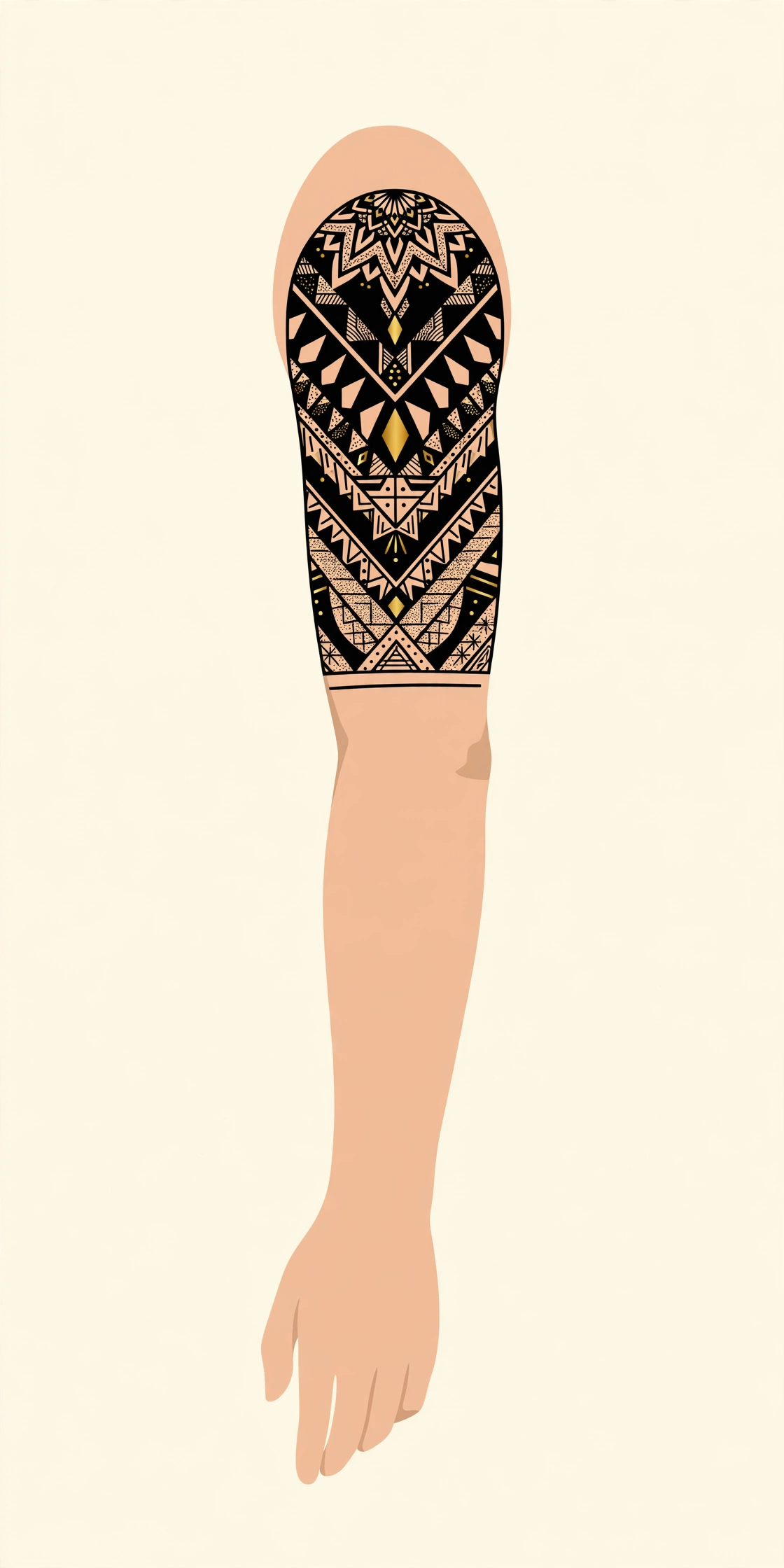
Plan the numbers properly: try the Cost Estimator for a size-and-style estimate, and read the Placement Pain Guide before you pick a spot. Only a licensed artist who sees the design and the body part can give you a real quote.
See also: Tattoo Cost Estimator · Tattoo Placement Pain Guide · AI Tattoo Generator.
The generator reads your birth date, your intention and your style, so the design it makes is yours, not a copy of someone else's.
Size (Tiny to Extra Large) and style in, cost range out. Ranges are estimates — an artist quote wins. A 20% tip is shown separately.
All 23 placements from our placement guides — pick a spot, optionally compare a second one, and see its pain range, healing time, fading and size guidance, quoted from the same guide data, with a link to the full placement guide. Ranges only — sources disagree, no single decimal is a fact.
Two sun signs in, an honest reading out — no invented percentages. The tool compares the two signs' elements and ruling planets, tells you where the pairing clicks and where it rubs, and turns it into a matching-tattoo idea with links to both sign guides.
Your Sun, Moon and Rising signs from your birth date and time — all three computed in your browser, with the Moon and Rising honestly labelled approximate. Each sign comes with a short traditional reading and a tattoo angle, plus links to its sign guide and to the wheel and fusion tools.
See the full list on the Full Sleeve Tattoos main page.
A full sleeve tattoo costs $2,000–$12,000 and takes 15–50 hours over 4–8 sessions. What sets the price, and how to budget for it.
10 full sleeve tattoo ideas planned as one piece — zodiac wheel, forest, ocean, geometric and more. How to pick a theme that flows shoulder to wrist.
A full sleeve takes 15–50 hours across 4–8 sessions over 3–12 months. Where the months go, what slows it down, and how to finish faster.
Sleeve gap fillers join a full sleeve into one flowing piece. Stars, dots, leaves, clouds and more — what works, what to avoid, and when to add them.
A zodiac full sleeve turns your arm into your birth chart — wheel, animal and constellations. How to plan one, what it needs, and what it costs.
A half sleeve covers the upper arm or the forearm; a full sleeve runs from shoulder to wrist. The full sleeve covers roughly twice the skin, so it takes roughly twice the hours and costs roughly twice as much — plus the elbow, wrist and inner arm, which are the sorest zones.
A full sleeve runs $2,000–$12,000 as a research range, for 15–50 hours of work. A half sleeve costs meaningfully less because it covers about half the skin and skips the elbow and wrist — but only your artist's quote gives you an exact figure for either.
A full sleeve takes 15–50 hours across 4–8 sessions over 3–12 months. A half sleeve takes roughly half that time, often in fewer sessions, because there is less skin to cover and no elbow or wrist to work around.
The full sleeve, because it includes the elbow, wrist and inner arm — the sorest zones on the arm, where pain runs toward the top of the 3–8/10 range. A half sleeve on the outer upper arm avoids those spots entirely, so it is usually the gentler experience.
Yes — a half sleeve is the natural first stage. Many artists plan it that way on purpose, leaving the forearm open so the sleeve can grow later. Just make sure the half sleeve's theme can extend, or the join will show.
Choose the full sleeve if you are sure of the theme, can afford the whole range, and want your arm fully covered. Choose the half sleeve if it is your first large piece, your budget is tight, or you want to keep the option of showing bare skin at work.
AI designs are for inspiration only. Always consult a licensed tattoo artist. Astrology on this site is for inspiration and self-expression. This page does not provide medical advice. Last reviewed: 24 November 2026.