Tattoo Cost Estimator
Size (Tiny to Extra Large) and style in, cost range out. Ranges are estimates — an artist quote wins. A 20% tip is shown separately.
back of hand tattoo · Hand Tattoos
Back of hand tattoo: what suits it, how much it hurts (7.5/10), and why it fades fastest. Small, bold designs that hold up — and what to avoid.
The back of the hand is one of the boldest places to get tattooed — and one of the least forgiving. The skin is thin over bone and tendon, pain runs high at around 7.5/10, and ink fades faster here than almost anywhere else. That is why the designs that work are small, bold and simple.
This page sits under Hand Tattoos.
Key takeaways
| What | What to expect |
|---|---|
| Size | 4–10 cm |
| Pain | 7.5/10 (consensus range, sources disagree) |
| Healing | 2–3 weeks |
| Fading | Fast — the fastest-fading placement; sun and washing wear ink down |
Pain is a consensus range — artists and charts disagree on the exact number, so treat it as a range, not a measurement. Only a licensed artist who sees the design and the body part can give you a real quote.
Small, bold and simple designs suit the back of the hand. The canvas is only 4–10 cm, the skin is thin over bone, and ink fades faster here than almost anywhere else — so the best designs are one clear idea with thick lines and solid shapes.
The hand punishes detail. Thin lines spread with age, and the constant movement of the hand — plus sun and washing — wears ink down faster than on the forearm or upper arm. That is why artists push back when someone asks for a detailed portrait or a line of script on the back of the hand: the design that looks perfect on day one is a blur in a few years. Bold is not a style preference here, it is a survival rule. Thick outlines, solid black shapes and open space between elements hold their edge while fine work softens. Keep it to one idea. Two symbols crowded onto the back of the hand merge into each other as they age, while one strong symbol — a mandala, a moon, a glyph — stays readable from across a room.
Most back-of-hand designs sit in the 4–10 cm range — large enough to hold bold lines, small enough to fit the hand without crowding the knuckles or the wrist. A design that spans the whole back of the hand reads best; a tiny design in the middle looks lost
Size on the hand is a trade-off between readability and fading. Go too small and the lines have nowhere to go — they spread and merge, and the design loses its shape. Go too big and the design spills onto the fingers, where the skin is thinnest and the ink fades quickest, or onto the wrist, where it creases. The sweet spot is a design that fills the flat back of the hand and stops at the knuckles. A mandala centred on the hand works because the shape matches the canvas. A crescent moon works because it is simple at any size. If your idea needs more room than the hand gives, it belongs on the forearm — a good artist will tell you so, and you should listen. The hand rewards restraint: one bold design, well placed, beats a crowded one every time.
Yes — the back of the hand fades faster than almost any other placement. Sun and hand-washing wear the ink down every day, and the skin itself renews quickly. Bold, simple designs hold up longest, many shops do not guarantee hand work, and a touch-up sooner than on a forearm piece is normal, not a failure.
Fading on the hand is not a flaw in the tattoo; it is the nature of the spot. Your hands are in the sun, in water, in soap and in friction all day, and each of those wears the ink a little. Colour fades first, then fine lines, then thin shading — which is why blackwork with thick lines is the safest choice here. Sunscreen once healed is the single most useful habit: it slows the sun's share of the fading more than any aftercare product. Wash gently while it heals, moisturise thinly, and keep it out of harsh soaps. And go in with honest expectations. If your artist says hand work may need a touch-up within a year or two, believe them — and ask what the touch-up policy is before the first session, not after the fading starts.
A zodiac glyph with its constellation, a glyph with your element, or a Sun, Moon and Rising trio all suit the hand — one clear idea, bold enough to survive the fading. Keep the glyph large and the constellation simple, so it reads at a glance.
The hand suits zodiac work because zodiac symbols are already simple. A glyph is a few bold strokes, and that is exactly what the hand needs. Add the constellation in fine dots trailing toward the wrist, and the design gains a story without gaining clutter. The element pairing is the second option: a glyph with a small flame for fire signs, a wave for water, a leaf for earth, a breeze line for air. It says more than the glyph alone, and it still fits the space. The Sun, Moon and Rising trio is the most personal of the three — three small marks that together say more than any one of them. Whichever you choose, keep it to one idea and let the artist draw it bold. Astrology here is interpretation and self-expression, not a prediction — the design means what you decide it means.
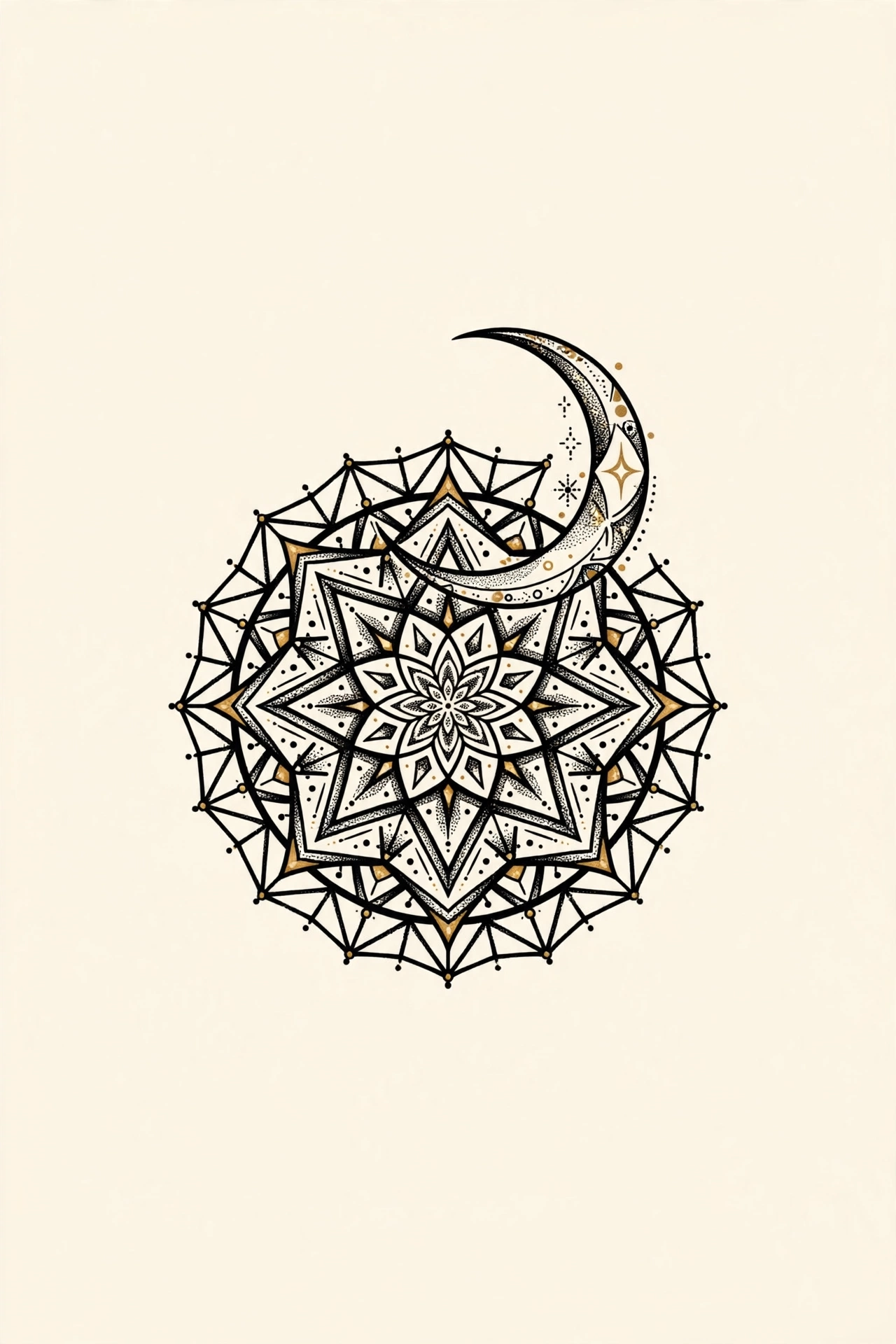
A bold geometric mandala centred on the back of the hand, with thick lines and open space between the petals.
A crescent moon with a single gold star, small and clean, sitting between the knuckles and the wrist.
Your zodiac glyph in bold black, with its constellation in fine dots trailing toward the wrist.
A snake coiling across the back of the hand, its body following the line of the fingers.
A single eye in blackwork, bold and symmetrical, with fine rays spreading toward the fingers.
A small rose in black and grey, with thick outlines and solid shading that will hold as it fades.
A sun and moon pair — half sun, half moon — split across the centre of the hand.
An ornamental pattern of dots and lines, symmetrical and geometric, like a piece of jewellery that never comes off.
A moth or butterfly in blackwork, wings spread across the hand, with the body running down the middle finger line.
A minimal mountain and star scene, small and bold, with three peaks and a single star above them.
Plan the numbers properly: try the Cost Estimator for a size-and-style estimate, and read the Placement Pain Guide before you pick a spot. Only a licensed artist who sees the design and the body part can give you a real quote.
See also: Tattoo Placement Pain Guide · Tattoo Aftercare Checklist · AI Tattoo Generator.
The generator reads your birth date, your intention and your style, so the design it makes is yours, not a copy of someone else's.
Size (Tiny to Extra Large) and style in, cost range out. Ranges are estimates — an artist quote wins. A 20% tip is shown separately.
All 23 placements from our placement guides — pick a spot, optionally compare a second one, and see its pain range, healing time, fading and size guidance, quoted from the same guide data, with a link to the full placement guide. Ranges only — sources disagree, no single decimal is a fact.
Two sun signs in, an honest reading out — no invented percentages. The tool compares the two signs' elements and ruling planets, tells you where the pairing clicks and where it rubs, and turns it into a matching-tattoo idea with links to both sign guides.
Your Sun, Moon and Rising signs from your birth date and time — all three computed in your browser, with the Moon and Rising honestly labelled approximate. Each sign comes with a short traditional reading and a tattoo angle, plus links to its sign guide and to the wheel and fusion tools.
See the full list on the Hand Tattoos main page.
Finger vs hand tattoo: pain (8.5/10 vs 7.5/10), fading, size and healing compared. Which one holds up better — and which should you get first?
10 hand tattoo ideas that actually hold up — mandala, moon, zodiac glyph, snake and more. Bold, simple designs for the fastest-fading spot on the body.
Hand tattoos and work: which jobs accept them, how hard they are to cover, and what to check before you get one. An honest guide, no sugar-coating.
Hand tattoo pain is around 7.5/10 — sharp, not dull, because the skin is thin over bone. Which parts hurt most, how it compares, and how to cope.
A small, bold design in the 4–10 cm range, with thick lines and solid shapes. Fine detail blurs fast on the hand, so the best back-of-hand tattoos are simple at first glance and interesting up close — a mandala, a crescent moon, a bold glyph.
Pain is high — around 7.5/10 as a consensus range — because the skin is thin over bone and tendon, with dense nerves close to the surface. Most people describe it as sharp rather than dull, and the session is short, which helps.
Faster than almost anywhere else. Sun and hand-washing wear the ink down, and many shops do not guarantee hand work for that reason. Bold, simple designs hold up longest; expect a touch-up sooner than on a forearm piece.
Think carefully before you do. Hands are visible in every handshake, every photo and most workplaces, and covering one takes effort. If your job or your plans could change, a wrist or forearm piece gives you the same visibility with an easier exit.
A small glyph, a crescent moon, a single bold symbol — or your zodiac glyph with its constellation in fine dots. Keep it to one clear idea; two symbols crowded onto the back of the hand blur into each other as they age.
Keep it clean, moisturised thinly and out of the sun, and wash your hands gently while it heals — no harsh soaps, no scrubbing. This is general information, not medical advice; if it is not healing, see a healthcare professional.
AI designs are for inspiration only. Always consult a licensed tattoo artist. Astrology on this site is for inspiration and self-expression. This page does not provide medical advice. Last reviewed: 24 November 2026.