AI Tattoo Generator
Generate a design for this placement — your sign, your intention, your style. Free, no sign-up.
shoulder tattoos
Shoulder tattoos: cap vs blade ideas, pain 3.5-4/10, healing 3-4 weeks. Round designs for the cap, draped designs for the blade.
Generate a design for this placement →
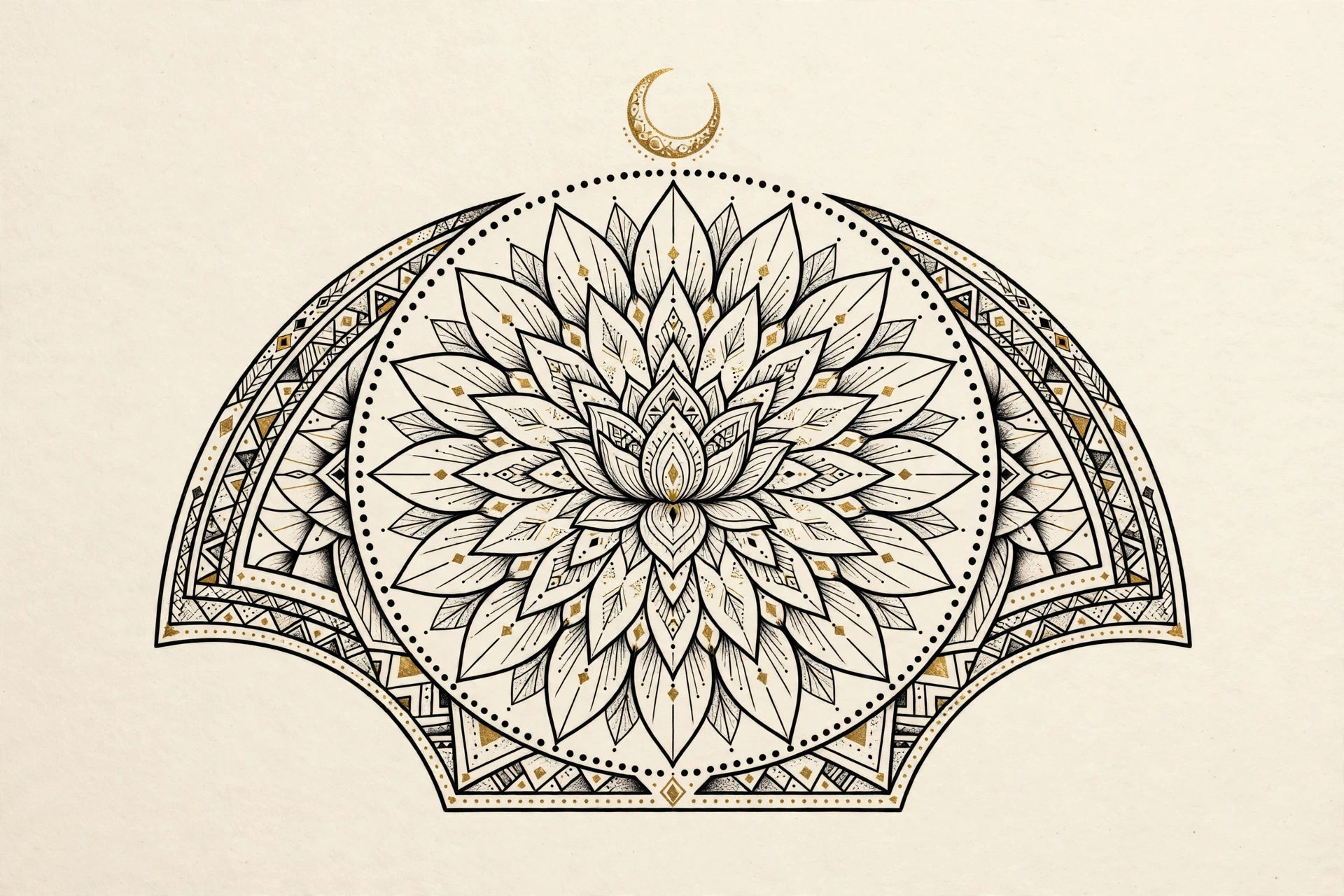
A shoulder tattoo sits on the cap or the blade, usually 8–18 cm across. It suits someone who wants a versatile piece — a round design on the cap, a large draped design on the blade — that is easy to show in summer, easy to hide with a sleeve, and easy to heal.
Key takeaways
| What | What to expect |
|---|---|
| Size | 8-18 cm |
| Pain | 3.5-4/10 |
| Healing | 3-4 weeks |
| Fading | Slow |
Pain is a consensus range — artists and charts disagree on the exact number, so treat it as a range, not a measurement. Only a licensed artist who sees the design and the body part can give you a real quote.
The shoulder has two very different canvases: the round cap and the flat blade. Round designs suit the cap, while large draped designs suit the blade, and the choice shapes everything about the tattoo — its size, its style and how it moves with you.
The shoulder cap is the rounded top of the arm, where the deltoid muscle curves. It suits designs that are round or that wrap around the curve: a mandala, a sun, a compass, a circular constellation map, a flower seen from above. The cap moves when you raise your arm, so the design needs to look good from the front, the side and the back.
The shoulder blade is the flat area on the upper back, and it is one of the largest flat canvases on the body. It suits designs that drape and spread: wings, large florals, animals, scenes that flow across the back. A design on the blade stays flatter and more stable than one on the cap, so it can carry more detail.
Many people use both. A design that starts on the cap and drapes onto the blade — a floral that spills over the shoulder, wings that spread from the cap across the back — can be striking, but it needs an artist who understands how the two surfaces meet and how the design will look when you move.
Shape is the key to a good shoulder tattoo. A design that follows the shape of the skin it sits on will always look better than a design that fights it, and the shoulder rewards designs that are built around its curves.
On the cap, think circles and curves. A mandala centred on the cap, a sun with rays spreading across the deltoid, a compass rose, a circular star map — all of these use the roundness of the cap instead of ignoring it. A design that is square or rectangular on the cap can look awkward, because the skin curves away from it on every side.
On the blade, think drape and flow. A floral branch that spreads across the blade, wings that open across the upper back, a large animal that fills the flat area — these designs use the blade's size and flatness. The blade can also carry a design that is meant to be seen from behind, such as a scene or a symmetrical piece centred on the spine.
Scale matters on both. A tiny design on the shoulder blade can look lost on such a large canvas, while a design that is too large for the cap can spill awkwardly onto the chest or the upper arm. Ask your artist to draw the design on your shoulder and check it in a mirror from several angles before you commit.
Shoulder pain is low to moderate, reported in the 3.5–4/10 range, with the cap usually feeling easier than the blade edge. Healing takes about 3–4 weeks, and the shoulder is easy to hide with a sleeve and easy to heal because it is a stable, well-protected area.
The cap is generally the more comfortable part of the shoulder. The muscle underneath cushions the needle, and the skin is relatively thick. The blade edge, where the bone is closer to the surface, can feel sharper, especially near the spine or the top of the shoulder blade.
Healing is straightforward. The shoulder does not bend and fold as much as a joint, it is easy to reach for cleaning and moisturising, and it is protected from sun by clothing for much of the day. The main caution is clothing that rubs — a tight bra strap, a heavy bag strap or a rough shirt seam can irritate a fresh tattoo, so choose soft, loose clothing while it heals.
Hiding a shoulder tattoo is easy. A short sleeve covers the blade completely and most of the cap, and a long sleeve covers it all. That makes the shoulder a good choice if you want a substantial tattoo that you can show when you choose and hide when you need to.
Shoulder tattoos are usually 8–18 cm, which is enough for a proper panel but not so large that the design loses its shape. The shoulder ages well — fading is slow here — because the area is usually covered, the skin is stable, and it is not rubbed by shoes, watches or hand washing.
Blackwork and fine line both suit the shoulder, but for different reasons. Blackwork uses the shoulder's size and stability to build bold, lasting shapes, while fine line suits the cap's curves and the blade's flatness when the lines are spaced generously. Colour also holds up well here, protected from sun by clothing for much of the day.
The main aging risk is sun in summer, when the shoulder is often uncovered. A shoulder tattoo that is protected from sun will keep its lines and colour noticeably longer than one left exposed, so sun protection is worth the habit even though the shoulder is not as exposed as the forearm or the hand.
Think about how the tattoo will look in ten years, not just on day one. A design with bold shapes, generous spacing and a clear silhouette will age better than a design that relies on very fine lines or pale colours alone. The shoulder gives you room to be bold — use it.
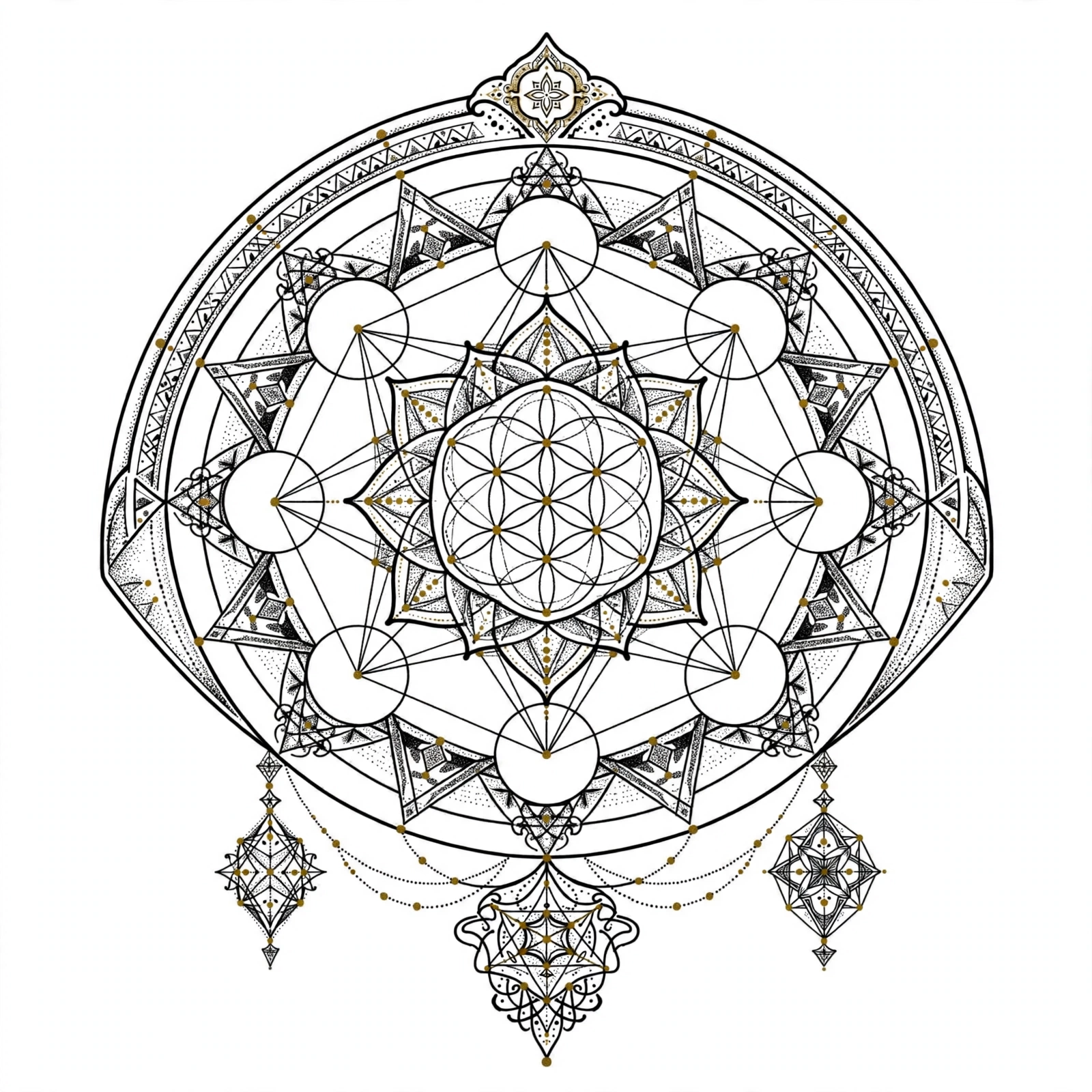
A mandala centred on the shoulder cap, with a clear central shape and evenly spaced pattern lines radiating across the curve of the deltoid.
A sun with long rays spreading across the shoulder cap, the disc centred on the cap and the rays following the curve of the arm.
Wings draped across the shoulder blade, spreading from the cap across the upper back, with layered feathers drawn large enough to show detail.
A large peony on the shoulder blade, with the bloom centred on the flat area and leaves draping toward the spine and the arm.
A compass rose on the shoulder cap, with long north and south points following the arm and shorter east and west points across the cap.
A branch of cherry blossom draping from the cap onto the blade, with five or six blooms and a few falling petals scattered across the back.
A wolf's head on the shoulder blade, using the flat area for the face and letting the fur taper naturally toward the edges.
A celestial map on the shoulder cap, with a circle of stars and a crescent moon, drawn to follow the roundness of the cap.
A butterfly with open wings across the shoulder blade, the body centred near the spine and the wings spreading symmetrically.
A geometric animal — a stag or an eagle built from clean lines — on the shoulder cap, bold enough to read from across a room.
The shoulder is a natural home for zodiac designs because its round cap suits a circular idea. A wheel of the twelve signs, a circular constellation map, or a single sign drawn inside a circle all sit beautifully on the cap, following its curve instead of fighting it. The blade suits a different approach: a larger zodiac animal draped across the flat area, or a constellation spread across the upper back where it has room to breathe. In astrology, the signs and their constellations are read as an interpretation of character and timing, not as a fixed prediction, so choose the symbol that feels like yours.
Generate a design for this placement — your sign, your intention, your style. Free, no sign-up.
Size (Tiny to Extra Large) and style in, cost range out. Ranges are estimates — an artist quote wins.
12 placements: Wrist, Forearm, Upper Arm, Chest, Back, Ribs, Thigh, Ankle, Neck, Hand, Foot, Inner Arm. Shows pain range, healing and fading for the chosen spot. Ranges only — sources disagree, no single decimal is a fact.
Back tattoos: full-back and upper-back ideas, pain 4.5-5.5/10, healing 3-5 weeks. Best canvas for symmetry and large scenes, including birth-chart wheels.
Spine tattoos: long narrow vertical ideas, pain 7.5/10, healing 3-6 weeks (sources disagree). Narrow and long only — split large pieces into sessions.
Neck tattoos: side, back-of-neck and throat ideas, pain 7.5/10, healing 2-4 weeks. Highly visible — save for later, not a first tattoo.
Low to moderate pain, reported 3.5-4/10. The cap is usually lower pain than the blade edge.
Round designs suit the cap; large draped designs suit the blade.
Yes — easy to cover with a sleeve, easy to heal.
The cap is usually the easier of the two, because the muscle cushions the needle. The blade edge can feel sharper, especially near the spine or the top of the shoulder blade, where bone is closer to the surface. Overall shoulder pain is reported in the 3.5–4/10 range.
Yes — the shoulder is a natural starting point for a sleeve. A design on the cap can flow down the upper arm, and a design on the blade can extend across the back. Tell your artist if a sleeve is a possibility, so the shoulder piece leaves room to grow.
Try to sleep on the opposite side for the first few nights, and wear a soft, loose shirt that does not rub the fresh tattoo. Healing takes about 3–4 weeks. Keep the tattoo clean and moisturised following your artist's guidance, and avoid heavy bag straps on that shoulder while it heals.
AI designs are for inspiration only. Always consult a licensed tattoo artist. This page does not provide medical advice. Last reviewed: 24 November 2026.