AI Tattoo Generator
Generate a design for this placement — your sign, your intention, your style. Free, no sign-up.
finger tattoos
Finger tattoos: tiny glyph and ring-finger ideas, pain 6.5-7.5/10, why they fade in 6-12 months, and when to plan a touch-up. With zodiac glyph options.
Generate a design for this placement →
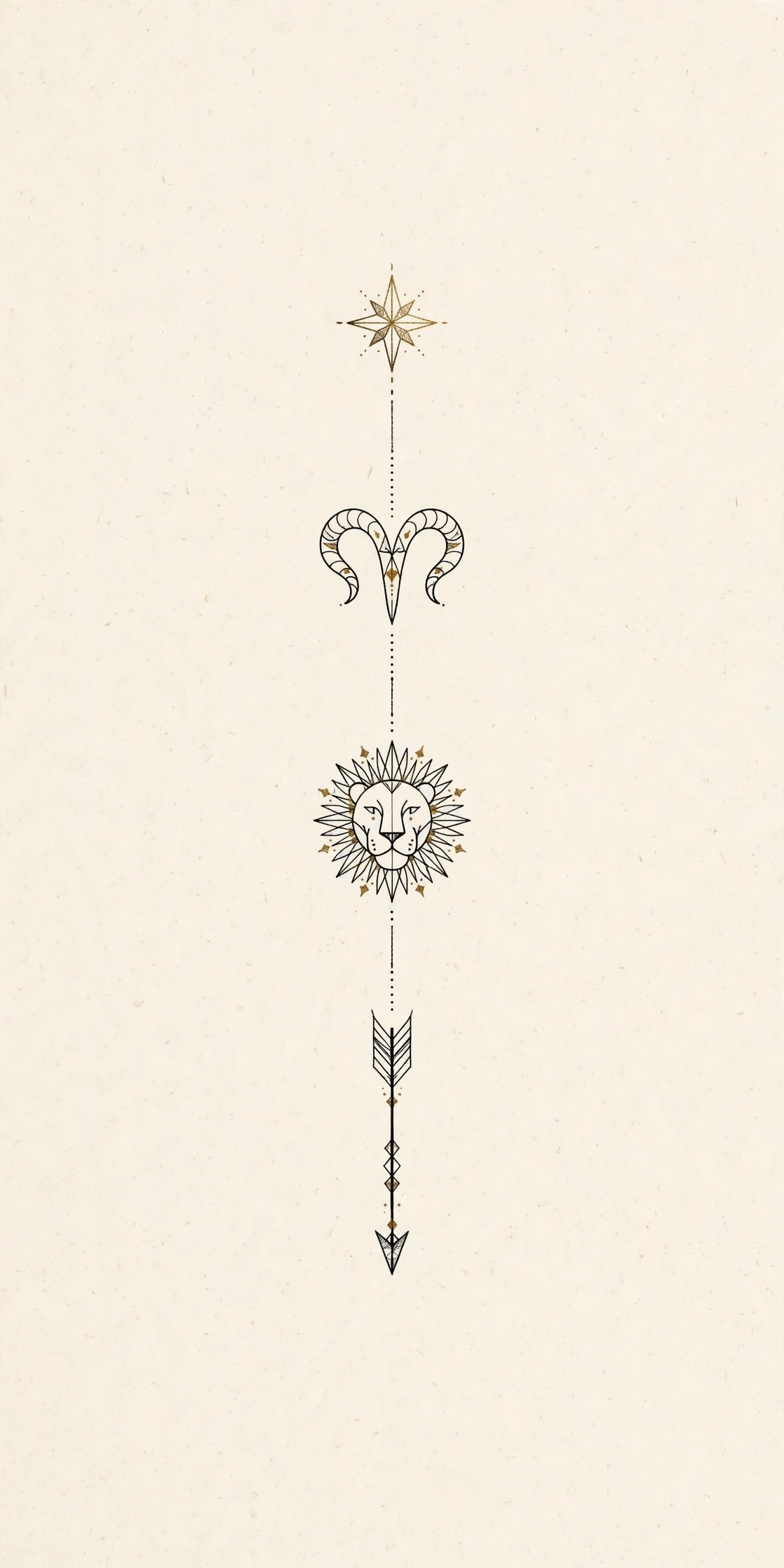
A finger tattoo is a tiny, highly visible tattoo on one finger, usually just 1–3 cm across. It suits someone who wants a small, personal symbol — a ring-finger mark, a single initial, a tiny star — and who accepts that it will soften and need touch-ups sooner than a tattoo on the arm.
Key takeaways
| What | What to expect |
|---|---|
| Size | 1-3 cm |
| Pain | 6.5-7.5/10 |
| Healing | 2-3 weeks |
| Fading | Very fast — expect fading in 6-12 months |
Pain is a consensus range — artists and charts disagree on the exact number, so treat it as a range, not a measurement. Only a licensed artist who sees the design and the body part can give you a real quote.
A finger tattoo works when the design is bold, simple and readable at a glance. At 1–3 cm there is no room for fine detail, small lettering or shading that relies on thin lines, so the best designs are single symbols, thick outlines and strong shapes.
Think of a finger tattoo like a stamp, not a drawing. A solid heart, a crescent moon, a star, a single letter or a simple ring band can all read clearly at this size. Anything with tiny inner lines, a face, or a word in small script will crowd together as the skin moves and the ink settles.
Placement within the finger matters too. The side of a finger and the top of a finger hold up differently from the inside, where skin bends and rubs constantly. A design on the top or side of a finger, kept away from the creases, usually stays clearer for longer than one wrapped around a joint.
Ask your artist to show the design at true size before you commit. If you cannot read it at arm's length on paper, you will not read it on a finger in a year. Going slightly bolder than feels necessary at the start is often the choice that still looks like the intended design later.
Finger tattoos fade faster than almost any other placement because the skin on the hands regenerates quickly and is washed, rubbed and exposed to sun all day. Expect visible softening within 6–12 months, and plan on touch-ups every 1–2 years if you want the design to stay crisp.
Everyday life is the main cause. Hand washing, soap, sanitiser, gloves, typing, gripping and sunlight all wear at the ink, and the thin skin over bone gives the ink little cushion. That is normal for this placement, not a sign that the artist did something wrong.
A touch-up is usually a short session that re-lines and re-fills the design. Some artists include a first touch-up in the price and some charge separately, so ask before you book. Keep the design simple and the touch-up stays simple too — a bold symbol can be refreshed in minutes, while a faded piece of fine detail often cannot be saved by re-lining alone.
Sun protection helps more than most aftercare products once healing is finished. A finger tattoo that is covered or protected from sun in the first weeks, and kept moisturised as it heals over 2–3 weeks, starts from a better place than one exposed to sun and water straight away.
Finger tattoos hurt more than their size suggests, with pain reported in the 6.5–7.5/10 range, because the skin is thin and sits directly over bone. Healing takes about 2–3 weeks, during which hand washing, work and everyday grip all need a little extra care.
The session itself is usually short, which helps — a small finger design is often finished quickly, so the discomfort does not last long. The bony knuckle and the sides of the fingers tend to feel sharper than the fleshier top of a finger, and the needle vibration can feel strange close to the bone.
Healing is fiddly rather than difficult. You will still need to wash your hands, so follow your artist's aftercare guidance on keeping the tattoo clean without soaking it, and avoid picking at any flaking skin. Jobs that involve constant hand washing, chemicals, gloves or heavy manual work can make the first two weeks harder, so it is worth timing the appointment around your work if you can.
Visibility is part of the decision. A finger tattoo is hard to hide, and many workplaces still notice hand tattoos, so think about the ring finger, the side of a finger and the top of a finger separately — some spots are easier to cover with a ring or by the way you hold your hand than others.
A design that ages well on a finger is one that would still make sense if every line got slightly thicker and softer. Choose a shape with a clear silhouette, leave space between elements, and accept that a finger tattoo is a small statement, not a miniature version of a large piece.
Good starting points are a single bold symbol, a simple ring band, a tiny animal silhouette, a star or moon, or one initial in a clean, chunky letterform. Designs that rely on contrast between a filled shape and plain skin tend to hold up better than designs that rely on thin outlines alone.
Avoid the temptation to squeeze a meaningful sentence, a detailed flower or a portrait onto a finger. The idea may feel important, but the skin cannot carry that much information at 1–3 cm. A single word in large, well-spaced letters is the most that text can usually manage, and even that needs an artist who is honest about how it will age.
Bring reference images, but be ready for your artist to simplify them. A good artist will redraw a detailed idea into a bolder version rather than tattooing the original at a size where it cannot survive. That conversation is the difference between a finger tattoo you still like in two years and one you wish you had kept simpler.
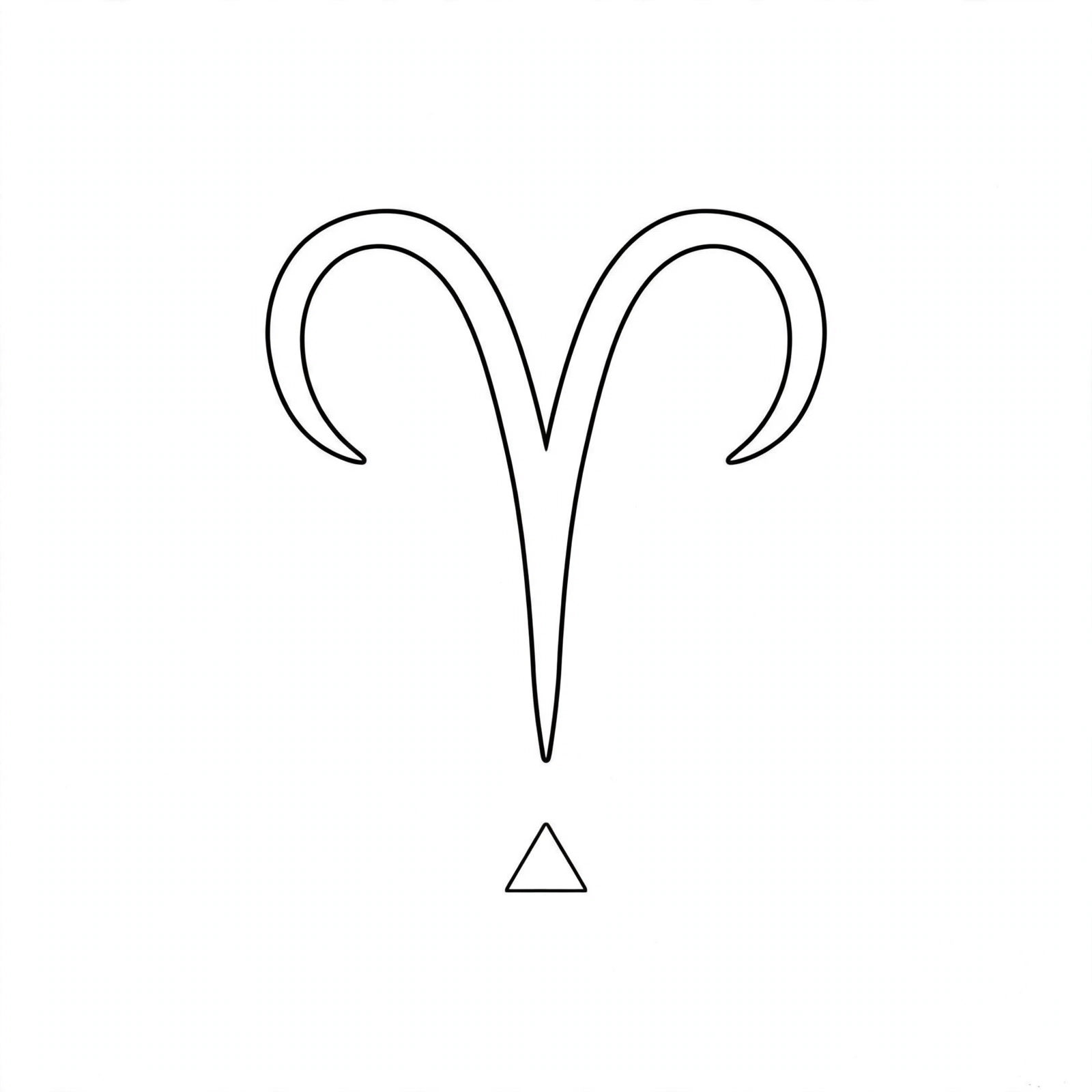
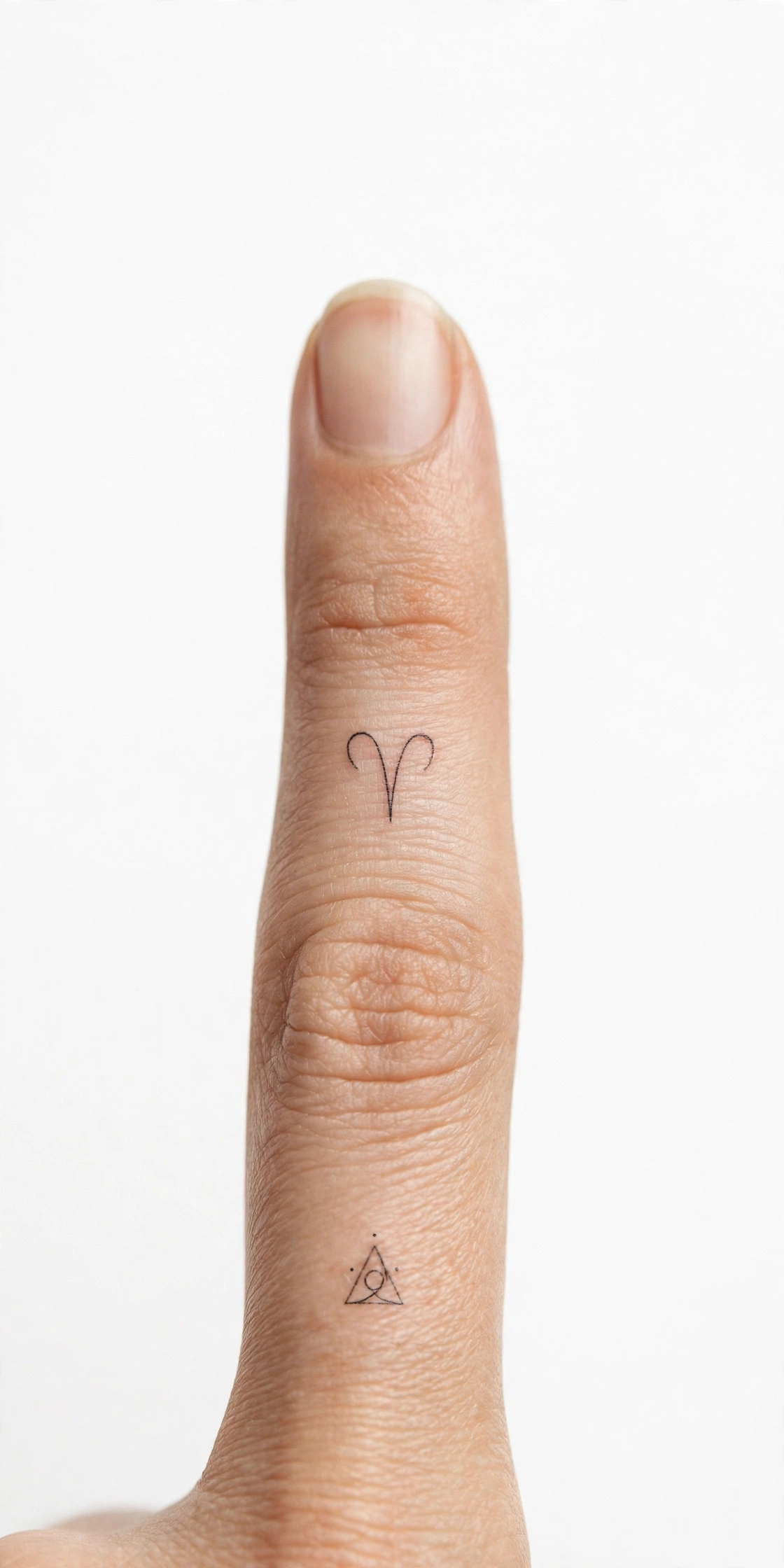
A solid black ring band around the ring finger, worn as a permanent wedding or commitment band with a small gap at the palm side so it does not rub constantly.
A single crescent moon on the side of the index finger, with a thick outline and a filled-in curve so it stays readable as it softens.
A tiny filled star on the top of the middle finger, placed between the knuckles so the shape is not distorted when the finger bends.
One bold initial on the ring finger in a clean, chunky letterform, large enough that the letter is still clear at arm's length.
A small heart outline with a thick line on the side of the little finger, simple enough to refresh in a single short touch-up.
A tiny snake coiled once around the base of a finger, drawn as a single bold line with a clear head and tail rather than detailed scales.
A small sun with short, thick rays on the top of the index finger, using a solid disc so the design reads as a sun even after softening.
A tiny lightning bolt on the side of the thumb, kept straight and bold so the zigzag shape survives movement and washing.
A single dot-and-line constellation of three stars down the side of a finger, with generous spacing between the dots so they do not merge.
A small olive branch or single leaf on the ring finger, drawn with one thick stem and two or three solid leaves, no fine veins.
Finger tattoos and zodiac designs go well together because a zodiac symbol is already a simple, recognisable shape — and simplicity is exactly what a finger needs. A single sign glyph, such as the ram's horns for Aries or the scales for Libra, can sit neatly on a finger at 1–3 cm if drawn boldly, with thick lines and no tiny inner detail. Many people choose their own sign, or a partner's or child's sign, on the ring finger as a quiet personal mark. In astrology, the sign is read as an interpretation of personality and timing, not a fixed prediction, so pick the design because you like the symbol and what it means to you.
Generate a design for this placement — your sign, your intention, your style. Free, no sign-up.
Size (Tiny to Extra Large) and style in, cost range out. Ranges are estimates — an artist quote wins.
12 placements: Wrist, Forearm, Upper Arm, Chest, Back, Ribs, Thigh, Ankle, Neck, Hand, Foot, Inner Arm. Shows pain range, healing and fading for the chosen spot. Ranges only — sources disagree, no single decimal is a fact.
Existing tattoo type in, cover-up direction out. Types: Black & Grey, Coloured Ink, Outline Only, Old & Faded.
How old is your tattoo? Dropdown with 6 ages. Returns a dated aftercare guide for that stage. Artist instructions win over any checklist; red-flag list included.
Wrist tattoos: inner-wrist fine-line ideas, pain 5.5-6/10, healing 2-3 weeks, and why sun and watch straps fade them faster.
Forearm tattoos: inner vs outer forearm ideas, pain 3.5-4.5/10, healing 2-3 weeks, and how to size a design so lines do not merge.
Upper arm tattoos: bicep and outer-arm ideas, pain 3-6/10 depending on inner vs outer, and how to leave room for a sleeve later.
Yes. Skin regenerates fast and constant washing and friction fade them, often in 6-12 months. Plan touch-ups every 1-2 years.
Pain is reported in the 6.5-7.5/10 range — thin skin over bone. Sources disagree on the exact number, so treat it as a range.
Bold, simple symbols only. Fine detail does not hold at 1-3 cm.
You can, but it is a demanding first tattoo. The pain is reported in the 6.5–7.5/10 range, it is very visible, and it will need touch-ups sooner than most placements. Many artists suggest a first tattoo somewhere easier to heal and hide, then a finger tattoo once you know how your skin heals.
Keep it clean and moisturised following your artist's guidance, avoid soaking it in water, and try not to pick at flaking skin. Healing takes about 2–3 weeks. Hand washing is unavoidable, so wash gently, pat dry, and protect the tattoo from sun while it heals.
Partly. A ring can cover a tattoo placed under the band, but the tattoo will still show above and below the ring, and the band itself can rub the ink. If covering it matters, talk to your artist about placing the design where a ring hides the most of it.
AI designs are for inspiration only. Always consult a licensed tattoo artist. This page does not provide medical advice. Last reviewed: 24 November 2026.