Tattoo Cost Estimator
Size (Tiny to Extra Large) and style in, cost range out. Ranges are estimates — an artist quote wins. A 20% tip is shown separately.
Tattoo Ideas for Men · Tattoo Ideas
Tattoo ideas for men across forearm, chest, back and sleeve — blackwork, geometric, traditional and zodiac designs, with honest notes on pain, visibility and how each ages.
Good tattoo ideas for men start with the canvas, not the picture: a strong forearm or upper-arm design you can build on, a chest or back piece planned properly, or a small first tattoo with genuine weight behind it. Blackwork, geometric pattern, traditional and Japanese work all reward that kind of planning.
This page sits under Tattoo Ideas.
Key takeaways
| What | What to expect |
|---|---|
| Classic starting placements | Forearm, upper arm and calf for visibility and control |
| Big-piece placements | Chest and back, usually planned across sessions |
| Cost band (Medium) | $200–1000, usually 2 to 5 hours |
| Cost band (Large) | $500–2000, usually 4 to 8 hours |
| Shop minimum | Usually $80–$150 for small first pieces |
A design reads as masculine when it uses weight, structure and scale: thick lines, solid black, symmetry or subjects like animals, compasses and architecture. That is a visual language, not a rule, and plenty of men choose fine line or floral work and wear it just as well.
Look at the designs men actually keep choosing and a pattern emerges. They tend to favour clear silhouettes over decoration, structure over softness, and pieces that follow muscle rather than sit on top of it. That fit between design and body is a large part of what makes a tattoo look settled rather than pasted on.
Treat that as a starting point, not a fence. If the design you want is a fine-line sprig for your grandfather's garden or a small glyph behind your ear, the honest answer is to get the tattoo you will still want at fifty. Confidence reads better than any category, and artists see men booking delicate work every week without anyone questioning it.
The forearm and upper arm are the working canvas for most men: flat enough for detailed work, easy to show or cover with a sleeve of cloth, and natural to extend. A half sleeve planned as one composition always looks better than separate pieces joined up afterwards.
Start by deciding whether the arm is one project or a collection. A planned sleeve has a single style, a background that ties the elements together, and a flow that follows the arm's movement. Japanese waves, blackwork pattern and traditional panels all work this way. A collection, by contrast, grows piece by piece, and can look great too, as long as you accept the patchwork character and keep the styles compatible.
Cost follows size and time. On this site's bands, Medium work runs $200–1000 over roughly 2 to 5 hours, and Large work $500–2000 over 4 to 8 hours, with Extra Large pieces taking the same band across longer or repeated sessions. A full sleeve is therefore a staged budget as much as a staged design, and most artists are happy to build it in sittings you can plan around.
Chest and back pieces are the big commitments: the most room, the longest sessions and the designs hardest to change later. They reward patience. Book an artist whose large-scale work you have seen healed, expect the design to be drawn for your body's symmetry, and plan sittings before you start.
The back is the largest flat canvas on the body, which is why it carries full Japanese scenes, large mandalas and detailed black and grey work so well. The chest is more shaped, rising and falling with the muscle, and the best chest pieces are drawn symmetrically around the sternum so the design moves naturally when you do. Both areas let an artist work at a scale where detail survives for decades.
Pain is part of the honest conversation here. The chest is usually manageable across the muscle and sharper near the sternum and collarbone, while the back varies, with the spine and shoulder blades feeling keener than the fleshier lower back. None of that should put you off, but it should shape the plan: shorter sittings and clear breaks.
The best first tattoos for men are medium-small, well placed and finished properly: a forearm emblem, an upper-arm design or a calf piece with bold lines and room around it. Avoid starting on hands, neck or ribs, and choose a subject you can explain in one sentence without embarrassment.
Your first tattoo teaches you three things: how your skin takes ink, how you handle the chair, and whether the studio experience suits you at all. A forearm or upper-arm piece gives you those answers at low risk. It is easy to watch being done, easy to care for, and easy to extend if you catch the bug, which many men do within the year.
Keep the first design simpler than your ambition. A compass, a laurel, a mountain line or your zodiac glyph drawn as a strong emblem will heal cleanly and age honestly. Read zodiac imagery as personal symbolism, a marker of temperament as you interpret it, not as fate. If you later want the big back piece, you will book it knowing exactly what you are signing up for.
Visibility is a practical decision, not a character test. Forearms show in short sleeves, hands and necks show almost always, and upper arms, chest and back stay private under normal clothing. Know your industry's real expectations, not its rumoured ones, before placing anything you cannot cover.
Workplaces have loosened considerably, but they have not loosened evenly. Many offices, trades and customer-facing roles accept forearm tattoos without comment, while some uniformed, legal and client-heavy settings still expect them covered. The safest research is direct: look at people already doing your job, or ask, before the design goes somewhere a long sleeve cannot rescue in summer.
Decide which kind of tattoo this is, public or private, before you decide where it goes, and the placement choice usually makes itself.
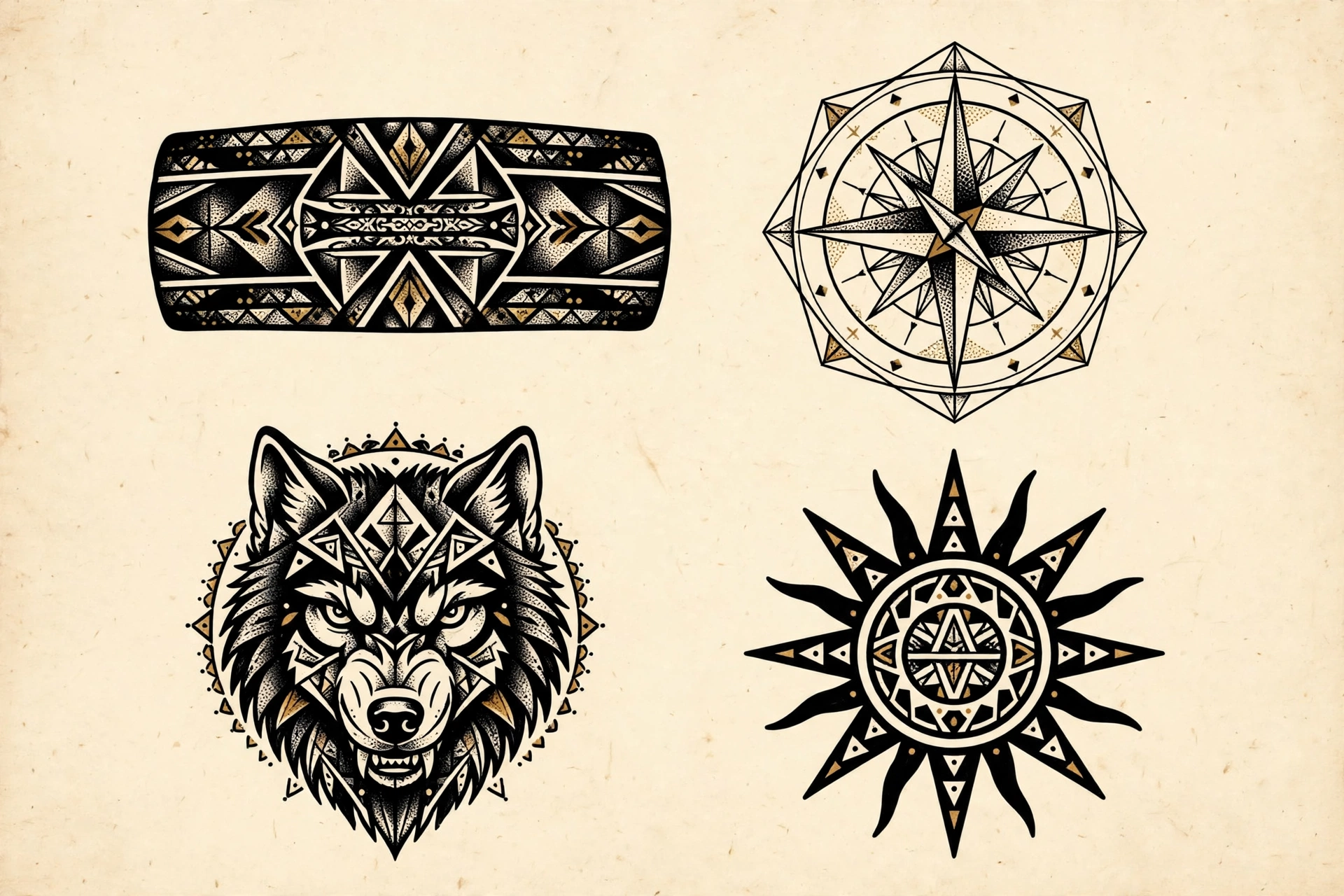
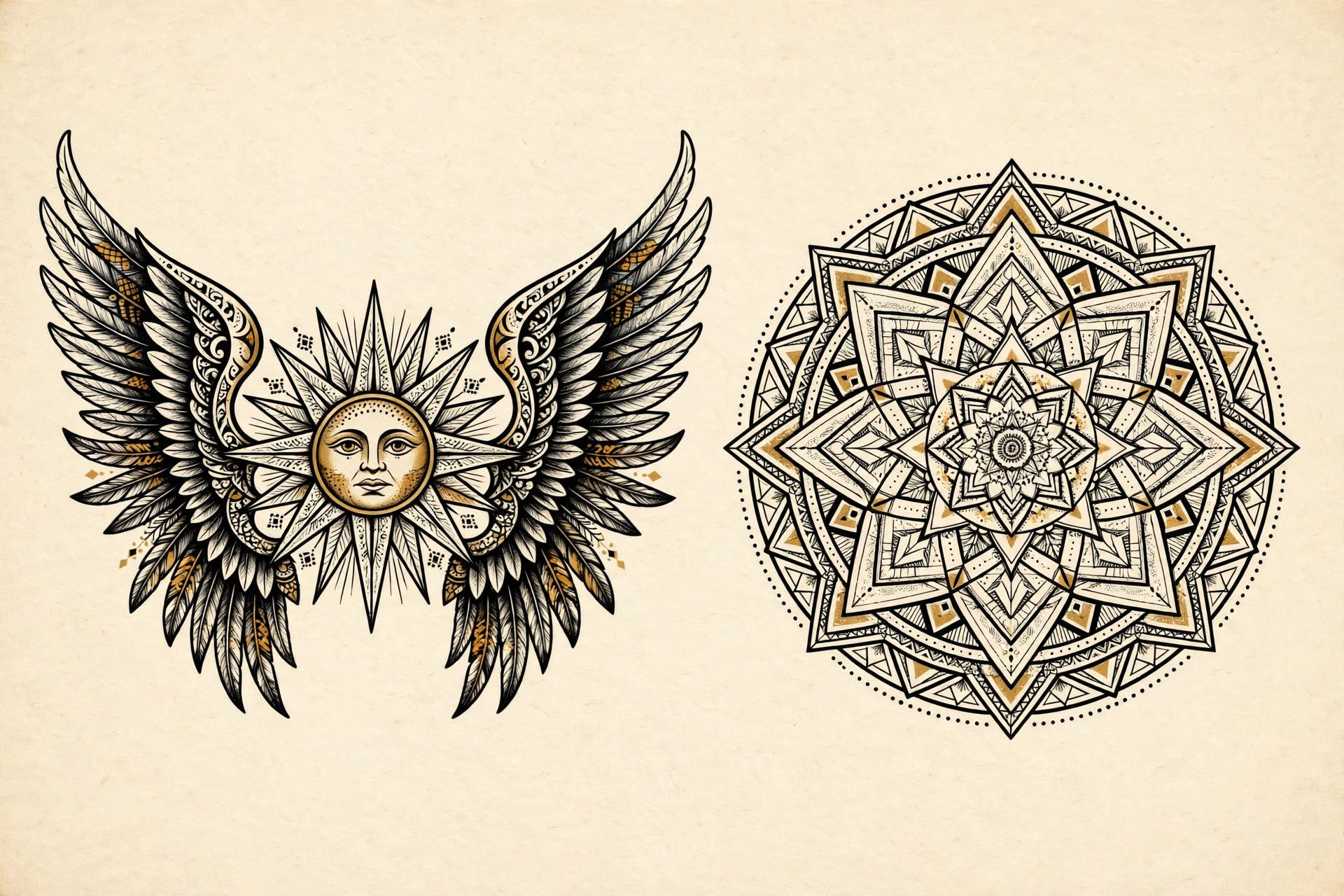
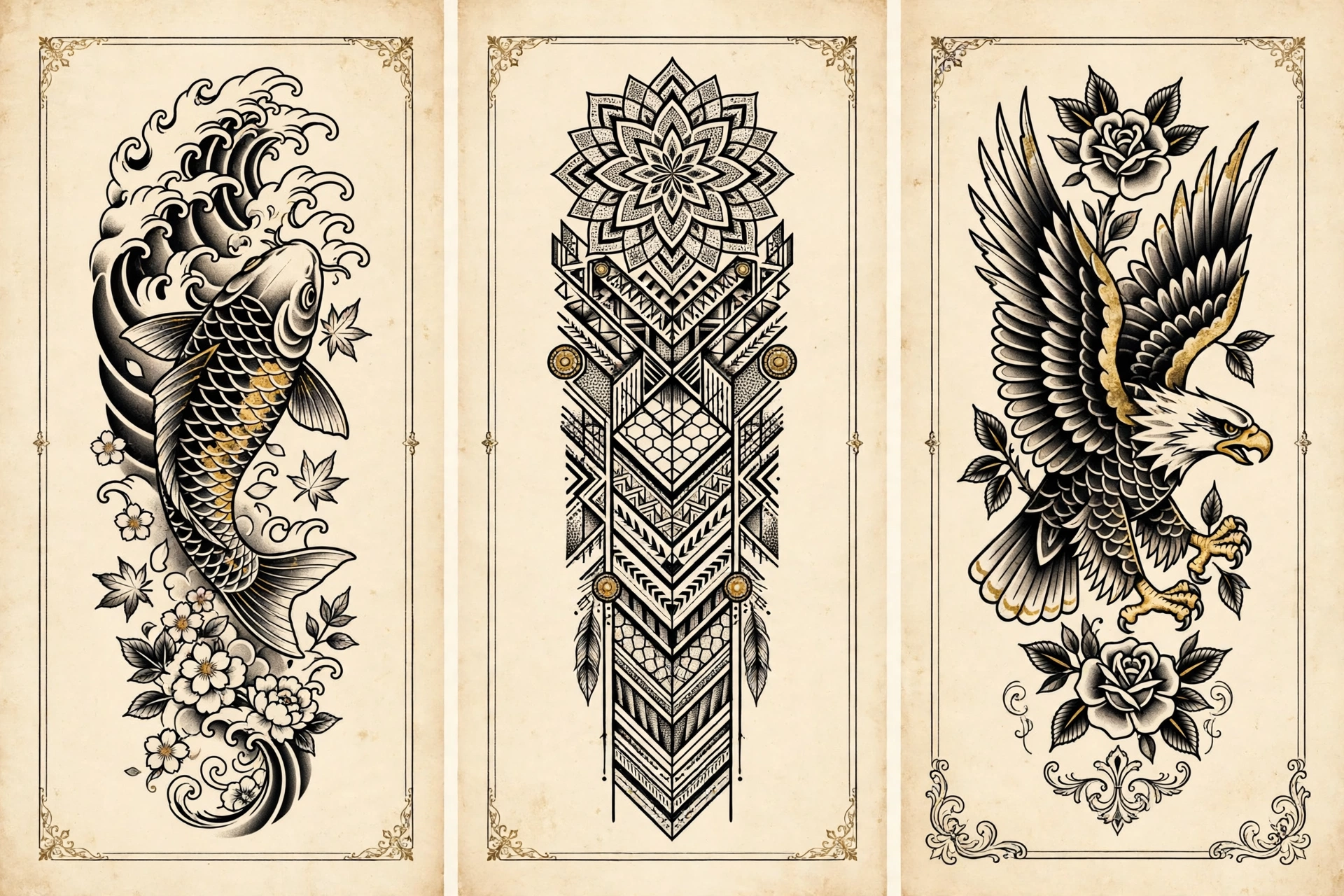
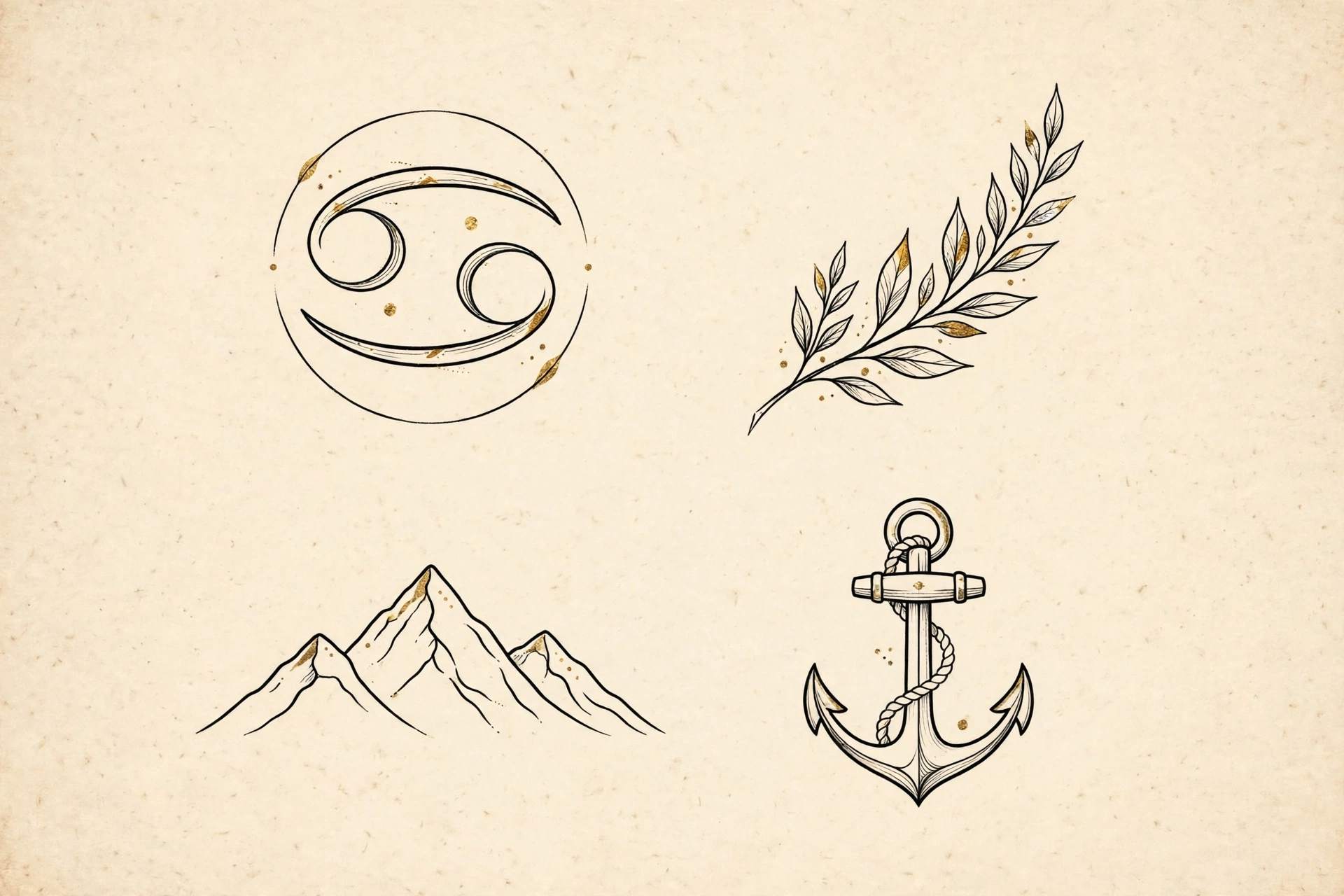
Bold blackwork forearm band built from thick geometric pattern, wrapping the forearm with clean negative-space breaks.
Compass rose in black and grey on the inner forearm, with long clear points and a solid centre for easy reading.
Blackwork wolf head on the upper arm, heavy solid shadow on one side and open skin on the other for contrast.
Geometric chest piece centred on a sun disc, mirrored across the sternum with dotwork fading toward the shoulders.
Large back mandala between the shoulder blades, built from concentric circles and thick outer linework.
Japanese half sleeve of waves and a single koi, planned as one flowing composition from shoulder to elbow.
Traditional eagle in strong colour on the chest or upper arm, with the thick outlines that keep it bold for decades.
Mountain ridge linework across the forearm, one continuous horizon with a small solid sun above the highest peak.
Roman-inspired laurel branch curving around the bicep, drawn in bold linework with a few solid leaves.
Anchor and rope design on the calf, sized large enough to keep the rope curve open and readable.
Zodiac glyph set into a thick armband, the sign symbol as the centrepiece of a blackwork geometric pattern.
Skull and dagger traditional pairing on the thigh, a roomy placement that suits bold colour and heavy shading.
Minimal topographic map lines of a meaningful place, spread across the inner forearm in clean black linework.
Lion head in black and grey on the shoulder, using the curve of the deltoid to frame the mane.
See also: Zodiac Tattoos for Men · Upper Arm Tattoo Ideas · Tattoo Placement Pain Guide.
The generator reads your birth date, your intention and your style, so the design it makes is yours, not a copy of someone else's.
Size (Tiny to Extra Large) and style in, cost range out. Ranges are estimates — an artist quote wins. A 20% tip is shown separately.
All 23 placements from our placement guides — pick a spot, optionally compare a second one, and see its pain range, healing time, fading and size guidance, quoted from the same guide data, with a link to the full placement guide. Ranges only — sources disagree, no single decimal is a fact.
Two sun signs in, an honest reading out — no invented percentages. The tool compares the two signs' elements and ruling planets, tells you where the pairing clicks and where it rubs, and turns it into a matching-tattoo idea with links to both sign guides.
Your Sun, Moon and Rising signs from your birth date and time — all three computed in your browser, with the Moon and Rising honestly labelled approximate. Each sign comes with a short traditional reading and a tattoo angle, plus links to its sign guide and to the wheel and fusion tools.
See the full list on the Tattoo Ideas main page.
Small tattoo ideas that stay readable for years — tiny symbols, fine-line florals, mini moons and meaningful micro designs, with the placements where small ink ages best.
Tattoo ideas for women from fine-line florals and sternum pieces to bold blackwork — collarbone, rib, spine and ankle designs with honest notes on pain and how they age.
Celestial tattoo ideas — minimalist moon and star designs, constellations, sun-and-moon pairs and zodiac sky art — with the meanings behind each and where they sit best.
The forearm and upper arm are the usual answers. Both are relatively forgiving to sit through, easy to show or cover, and large enough for a design with real presence. Many men start with a forearm band, a compass, a small blackwork animal or a glyph, then build around it later.
Size and time decide it. On this site's cost bands, a Medium piece runs $200–1000 for about 2 to 5 hours, a Large piece $500–2000 for 4 to 8 hours, and Extra Large work sits in the same price band with longer or multiple sessions. Tip is shown separately, and small pieces still carry a shop minimum, usually $80–$150.
A full sleeve is rarely one sitting. Most men build it in stages: an upper-arm piece first, then the forearm, then connecting background or pattern work.
It depends on the area. The outer forearm and upper arm are usually manageable, the chest varies, and the sternum, ribs and spine tend to feel sharper because the skin sits close to bone.
Think in terms of control rather than hiding. Short sleeves cover the upper arm but not the forearm, and dress codes vary widely between trades, offices and services. If your work is strict, start above the elbow or on the chest or back, and test reactions before committing the hands, neck or full forearm.
Yes, provided the first piece is placed with the bigger picture in mind. Tell your artist you may expand later, keep a note of the inks and style used, and leave natural space around the design. A well-planned single piece can become the anchor of a sleeve or back piece years afterwards.
AI designs are for inspiration only. Always consult a licensed tattoo artist. Astrology on this site is for inspiration and self-expression. This page does not provide medical advice. Last reviewed: 25 November 2026.