Small Tattoo Ideas: Tiny Designs With Real Meaning
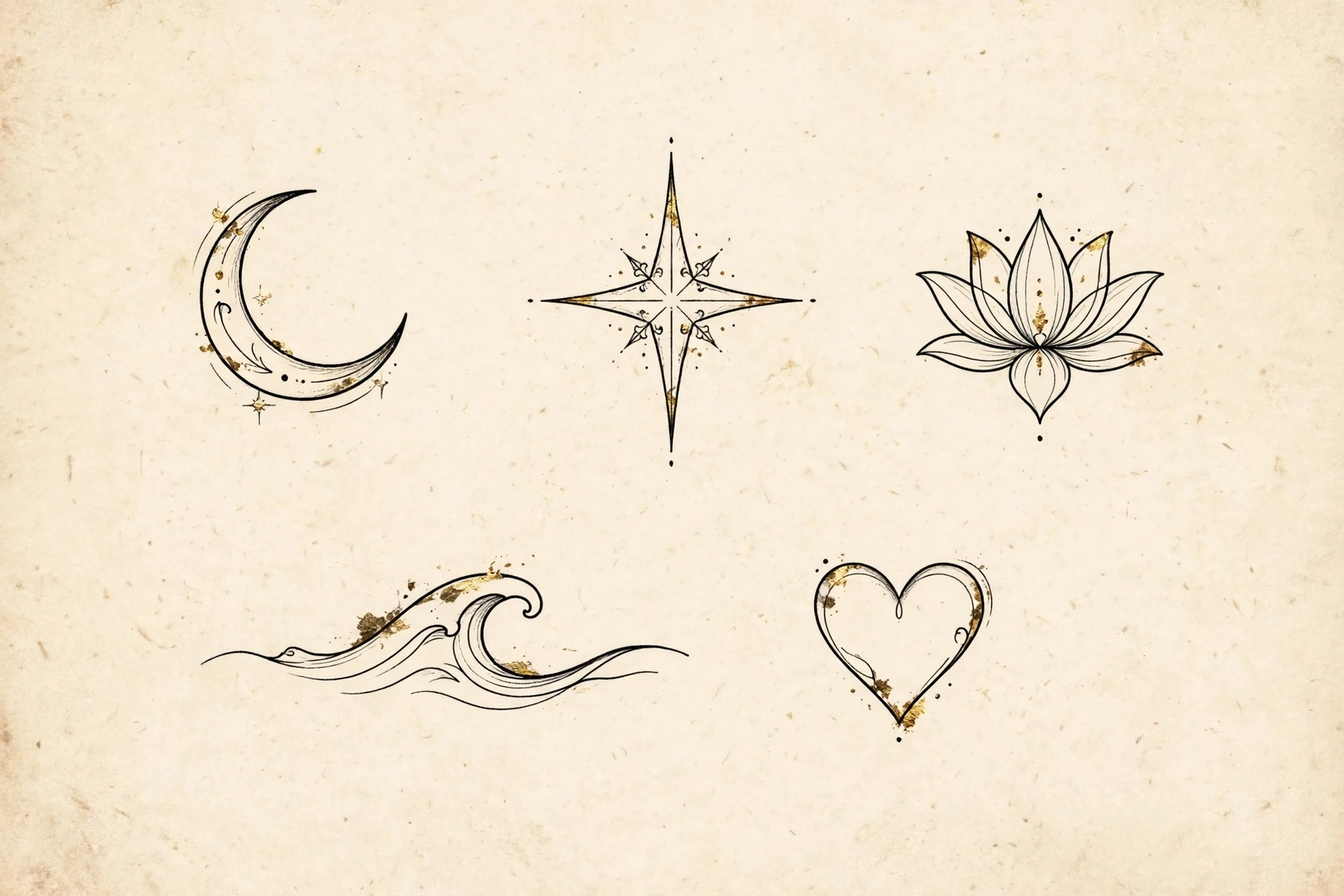
Small tattoo ideas that stay readable for years — tiny symbols, fine-line florals, mini moons and meaningful micro designs, with the placements where small ink ages best.
Tattoo Ideas
Tattoo ideas organised by size, style, meaning and your star sign — small designs, ideas for men and women, and celestial art, each one ready to make your own.
The best tattoo ideas start with something you want to remember, not a picture you happened to save. This hub organises designs by size, style, placement and meaning, including zodiac and celestial art, so you can shortlist honestly and then make one idea unmistakably, personally yours.
Key takeaways
| What | What to expect |
|---|---|
| Ways to browse here | By size, by style, by placement and by meaning |
| Small design cost guide | Tiny designs often fall in the $50-$250 band; small designs in the $50-$500 band, before tip |
| Shop minimum | Most shops charge a minimum, usually $80-$150, even for tiny work |
| Larger design cost guide | Medium designs often fall in the $200-$1000 band; large and extra large in the $500-$2000 band |
| Best first step | Shortlist three ideas, then test each one at real size on the placement you want |
Starting with meaning means asking what the tattoo should still say in ten years, then choosing imagery that carries it. A birth flower, a moon phase, a place or a personal symbol will outlast a copied screenshot, because the reason stays even when trends move on.
Most regret does not come from bad linework. It comes from choosing a design because it looked good on someone else, in a style that was having a moment, without ever asking what it was supposed to mark. Meaning does not have to be heavy or dramatic. It can be a year that changed you, a person you carry with you, a city you left, or simply a quality you want to be reminded of on hard days.
Write the meaning down in one plain sentence before you look at any pictures. Then browse with that sentence beside you and notice which images actually answer it. A lotus might answer a sentence about starting again, a snake might answer one about shedding an old life, and a small constellation might answer one about family. When the sentence and the symbol agree, you have an idea worth developing rather than a screenshot worth copying.
Astrology can help here, as long as you treat it as interpretation and personal meaning rather than fact or instruction. Your star sign, birth chart themes or the moon phase on a meaningful date can suggest colours, symbols and placements that feel personal. Enjoy that layer for what it is: a way of making the design yours, not a promise about what the tattoo will do.
Size decides what a tattoo can honestly show. Tiny and small designs suit single symbols and clean shapes, medium pieces allow a subject with supporting detail, and large or statement work gives room for scenes, portraits and layered stories that need breathing space to stay readable.
Small tattoos are not just big tattoos shrunk down. At tiny scale, closely packed detail merges as ink settles over the years, so the strongest small ideas use one clear subject, generous spacing and lines with room around them. A single flower stem, a crescent moon, a small wave or a zodiac glyph all work because each one reads at a glance. If an artist suggests going slightly larger, they are usually protecting the design, not upselling you.
Medium pieces are the flexible middle ground: a forearm flower arrangement, a snake winding around an ankle, or a sun and moon pairing with room for shading. Statement pieces, such as a back piece, a full sleeve or a large thigh design, reward patience and planning. They cost more, take longer and often happen over several sessions, so sketch the whole composition early, even if you complete it in stages.
Budget honestly alongside size. On this site the cost estimator groups work as Tiny at $50-$250, Small at $50-$500, Medium at $200-$1000, and Large and Extra Large at $500-$2000, with most shops applying a minimum usually between $80 and $150. Those bands are a planning guide, not a quote, and your artist's own pricing always decides.
Style is the visual language your idea is told in. Fine line feels delicate and quiet, blackwork is bold and graphic, traditional work is built to stay readable, and watercolour feels soft and painterly. The right choice depends on your subject, your placement and your tolerance for touch-ups.
The same rose becomes four different tattoos in four different styles. In fine line it is a whisper, all hairline stem and gentle curve. In traditional style it is bold, saturated and unmistakable across a room. In blackwork it turns graphic and dramatic, and in a neo-traditional treatment it gains softer shading and a wider palette. None of these is the correct rose. Each one suits a different person, wardrobe and placement.
Think about ageing before you commit to a look. Bold outlines and solid areas of black tend to hold their readability well, while very pale colour, tiny detail and hairline work usually need more care and may need refreshing sooner. That is not a reason to avoid delicate styles. It is a reason to choose them with open eyes, on placements that rub less, and with an artist whose healed work you have actually seen.
If you cannot name the style you keep saving, use the Tattoo Styles hub to learn the vocabulary, then try the Style Finder Quiz to narrow it down. Bringing your artist three references in one consistent style is far more useful than bringing thirty screenshots in ten different ones.
Placement shapes an idea as much as style does. Curved, moving and sun-exposed areas change how a design sits and ages, while flatter, sheltered spots preserve detail more gently. Match the shape of the design to the shape of the body part, and the tattoo will look intentional.
Good placement is a conversation between design and anatomy. Long, vertical subjects such as snakes, stems and script follow the spine, the forearm and the side of the leg naturally. Round designs such as suns, mandalas and moon phases sit happily on a shoulder, a hip or between the shoulder blades. Wrapping designs belong on wrists, ankles and upper arms, where the movement becomes part of the artwork.
Also be honest about daily life. Hands, fingers and feet rub, wash and shed skin constantly, so work there usually fades faster and needs more maintenance. Areas that see a lot of sun need consistent protection once healed. And visibility matters in both directions: some people want a tattoo they can show at work, while others specifically want one that stays private under ordinary clothing.
The placement guides under the tattoos section walk through individual body parts in detail, including pain, healing and fading for each one. Read the guide for your shortlisted spot before your consultation, so you can ask your artist specific questions instead of general ones.
An idea becomes yours when at least one element could only belong to you: your birth flower instead of a generic rose, your constellation, a coordinate, a handwriting sample or a date rendered your way. One personal element is enough; you do not need to redesign everything.
Start from a design you love, then change one thing with intent. Swap the flower for your birth flower or the flower from a place that matters to you. Add the moon phase from a night you remember, worked quietly into a border or background. Use your own star sign glyph, a family member's initial in their handwriting, or a small symbol from your own heritage that you have taken time to understand properly.
Work with your artist rather than around them. A good artist will redraw a reference into something original, adjust it to your body, and tell you honestly if an element will not age well at your chosen size. Expect to pay for that drawing time and respect it: original artwork is the difference between wearing a copy and wearing a piece made for you.
Finally, sit with the near-final design for a few days before booking. Print it at real size, tape it where it will live, and look at it in ordinary light while doing ordinary things. If it still feels right when the excitement has cooled, that is the idea to book.
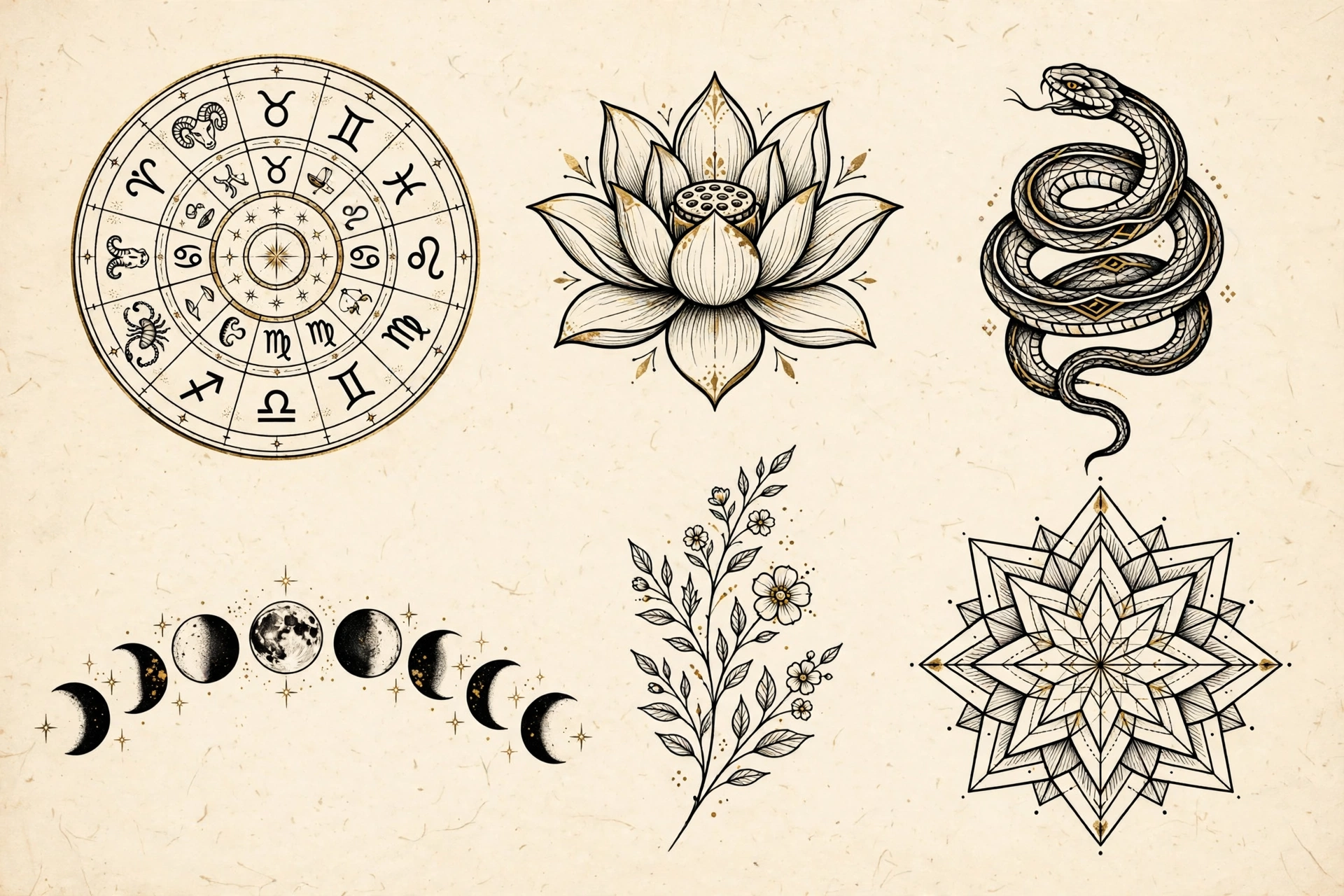
A crescent moon cradling your star sign glyph, fine line, behind the ear or on the inner wrist.
Your birth flower as a single stem with one leaf, sized to follow the collarbone or forearm.
Moon phases in a gentle arc across the shoulder blade, marking a season of change.
A small coiled snake around the ankle, symbolising a chapter you have shed and left behind.
A sun and moon pair split across matching placements, one for energy and one for rest.
A tiny lotus at the sternum or wrist as a daily reminder of growing through difficulty.
Your constellation joined by dotted lines, with one star picked out slightly larger for someone special.
A single-line wave on the ribs or foot for a place by the water that shaped you.
A protective eye worked into a small ornamental design for the inner arm or ankle.
A butterfly with one wing formed from small flowers, for change that happened gradually.
A phoenix in miniature, bold enough to stay readable, rising along the side of the forearm.
A dragon curled into a neat circle on the shoulder, drawn in clean blackwork lines.
Four starting points cover most of what people ask for — small designs, ideas chosen by men, ideas chosen by women, and the celestial family. Every guide inside is a full page with its own designs, placements and honest aging notes.
Small tattoo ideas that stay readable for years — tiny symbols, fine-line florals, mini moons and meaningful micro designs, with the placements where small ink ages best.
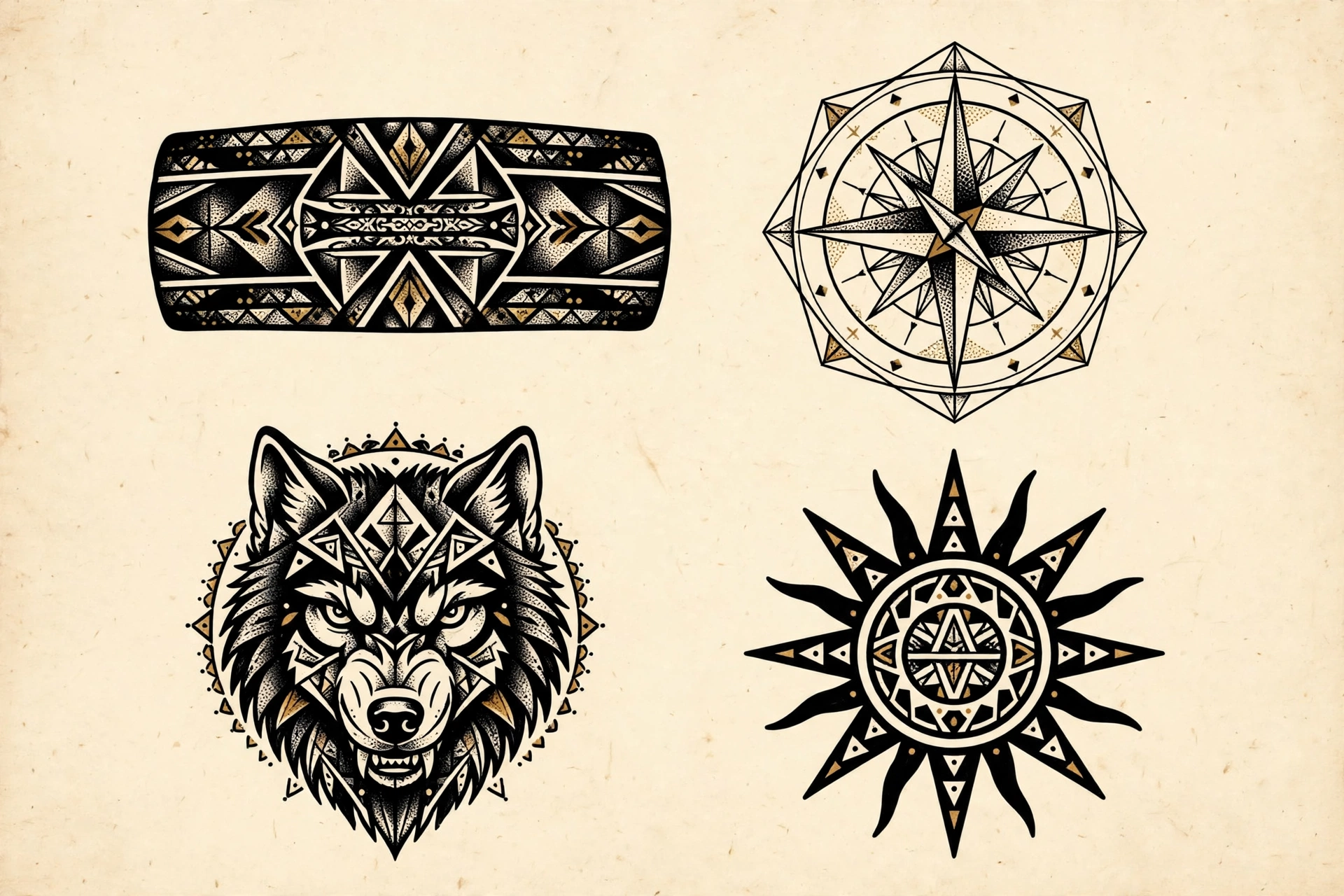
Tattoo ideas for men across forearm, chest, back and sleeve — blackwork, geometric, traditional and zodiac designs, with honest notes on pain, visibility and how each ages.
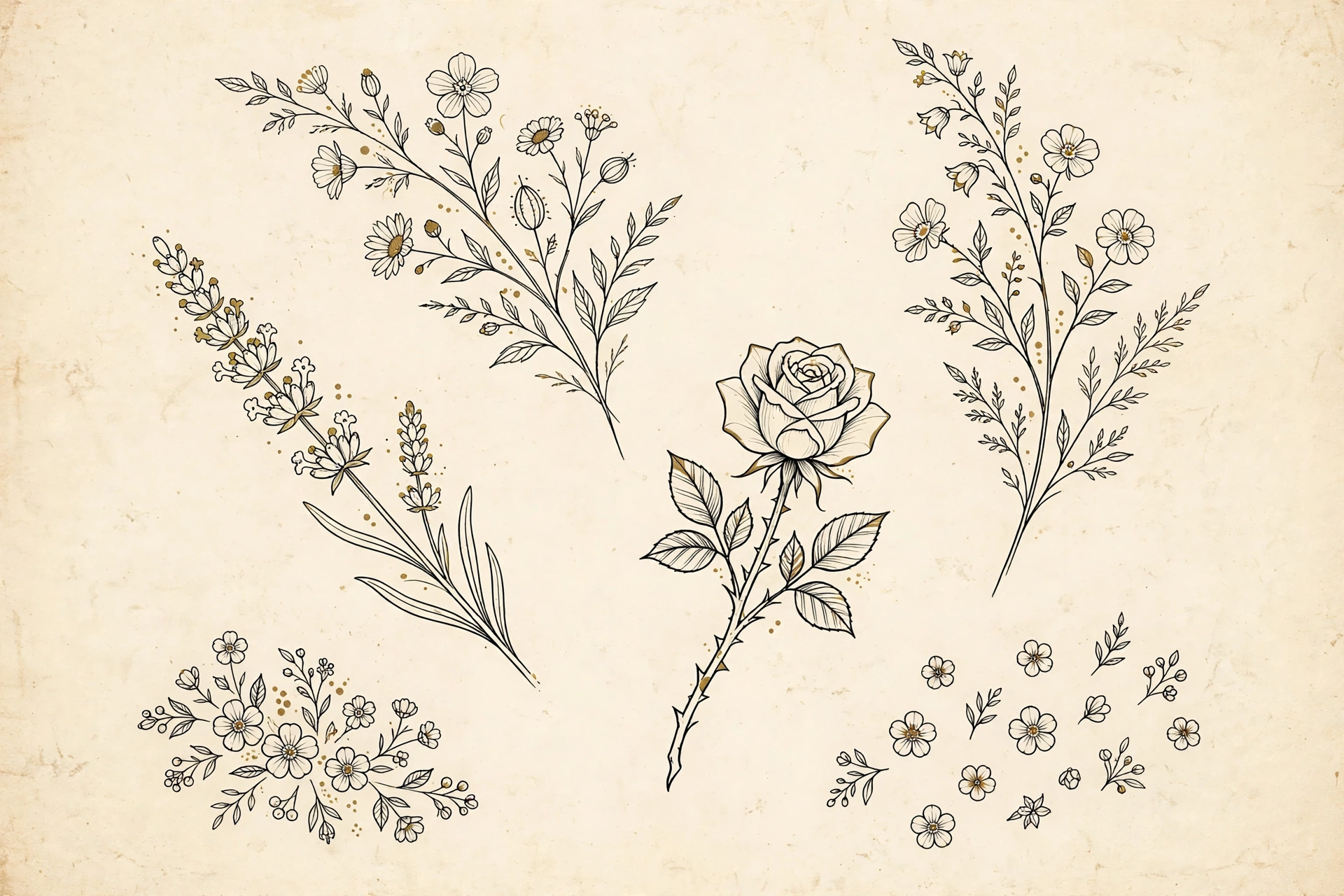
Tattoo ideas for women from fine-line florals and sternum pieces to bold blackwork — collarbone, rib, spine and ankle designs with honest notes on pain and how they age.
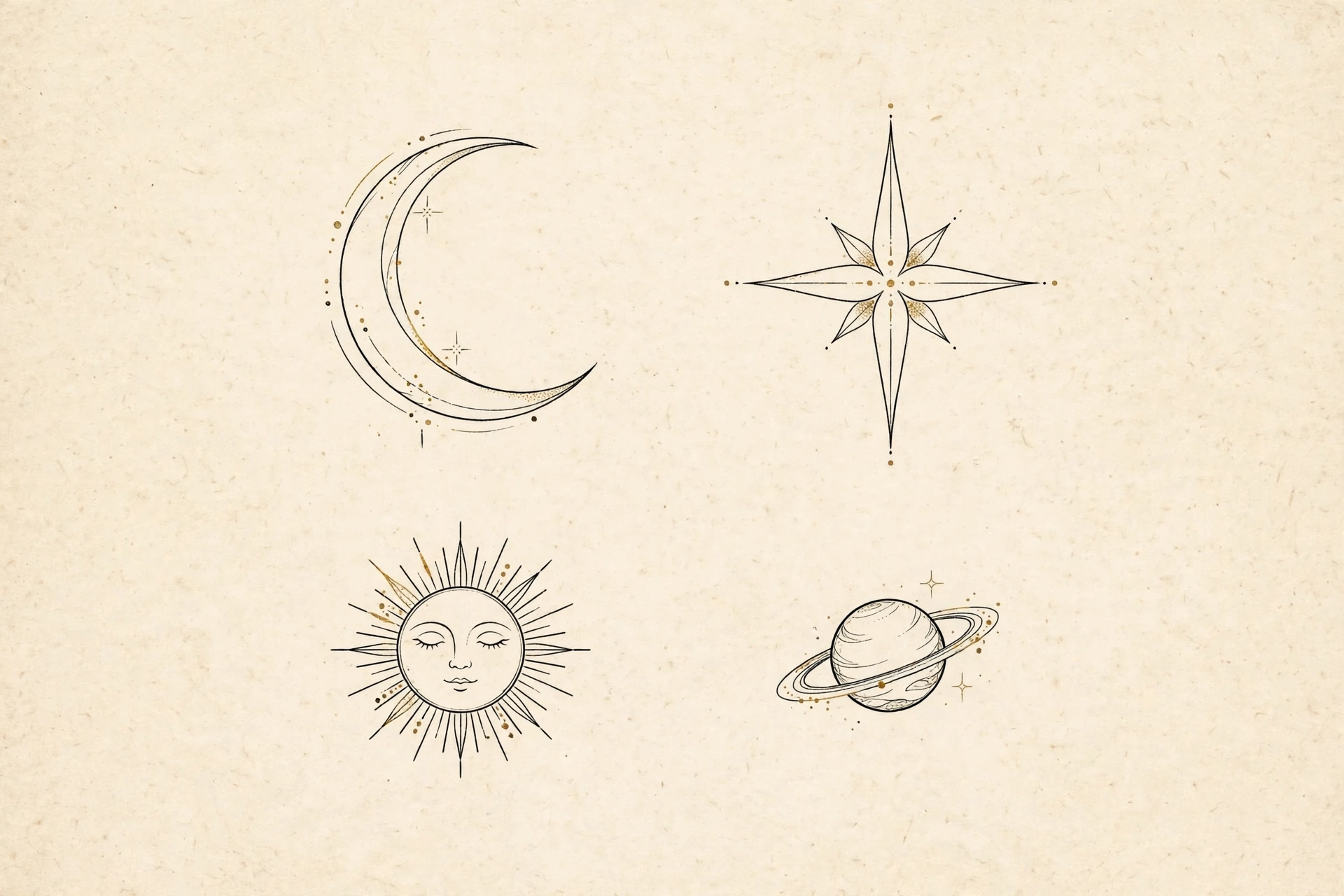
Celestial tattoo ideas — minimalist moon and star designs, constellations, sun-and-moon pairs and zodiac sky art — with the meanings behind each and where they sit best.
See also: Tattoo Style Finder Quiz · Zodiac Tattoo Ideas · Tattoo Styles · Tattoo Meanings.
The generator reads your birth date, your intention and your style, so the design it makes is yours, not a copy of someone else's.
Size (Tiny to Extra Large) and style in, cost range out. Ranges are estimates — an artist quote wins. A 20% tip is shown separately.
All 23 placements from our placement guides — pick a spot, optionally compare a second one, and see its pain range, healing time, fading and size guidance, quoted from the same guide data, with a link to the full placement guide. Ranges only — sources disagree, no single decimal is a fact.
Two sun signs in, an honest reading out — no invented percentages. The tool compares the two signs' elements and ruling planets, tells you where the pairing clicks and where it rubs, and turns it into a matching-tattoo idea with links to both sign guides.
Your Sun, Moon and Rising signs from your birth date and time — all three computed in your browser, with the Moon and Rising honestly labelled approximate. Each sign comes with a short traditional reading and a tattoo angle, plus links to its sign guide and to the wheel and fusion tools.
Twenty tattoo styles explained in plain language — fine line, blackwork, traditional, realism, watercolor and more — how each one ages, where it sits best, and how to choose.
What tattoo symbols mean — protection signs, sun, moon, star, lotus, rose, butterfly, phoenix, dragon and snake — the meanings behind each design before you wear it for life.
Learn before you ink: placement guides for small designs, pain and healing guides for every body part, medical tattoo information and cultural symbol guidance — honest, sourced from practice.
Give each idea the same three tests. Does it still mean something when you describe it in one sentence, does it suit the placement at a readable size, and would you still choose it if nobody else ever saw it? The idea that passes all three usually wins clearly.
It is better not to. Use it as a starting reference, then ask your artist to redraw it with your own element, sizing and placement in mind. You get a piece that fits your body, respects the original artist's work, and does not look like a duplicate of a stranger's tattoo.
A small or medium design with one clear subject, on a placement that is easy to care for while healing and easy to cover if you want. Choose something personally meaningful rather than fashionable, and pick an artist whose healed work in that style you have seen.
On this site's estimator, tiny designs fall in the $50-$250 band and small designs in the $50-$500 band, but most shops apply a minimum usually between $80 and $150. Complexity, colour and the artist's experience move the price, so treat the bands as planning guides and confirm with your studio.
Only if that connection genuinely means something to you. Many people enjoy weaving in a sign glyph, ruling planet symbol or birth flower as a personal layer. Treat astrology as interpretation and personal meaning, and never let it overrule a design you actually love looking at.
Favour clear shapes, enough spacing between lines and detail sized for the placement. Ask to see healed photos, not only fresh ones, and ask your artist directly what they would simplify. A design that reads clearly from a short distance today has the best chance of reading clearly in years to come.
AI designs are for inspiration only. Always consult a licensed tattoo artist. Astrology on this site is for inspiration and self-expression. This page does not provide medical advice. Last reviewed: 25 November 2026.