Tattoo Cost Estimator
Size (Tiny to Extra Large) and style in, cost range out. Ranges are estimates — an artist quote wins. A 20% tip is shown separately.
Neo-Traditional Tattoos · Tattoo Styles
Neo-Traditional tattoos explained — traditional bones with a wider palette and softer shading. How the style ages, the placements that suit it, and design ideas to take to your artist.
Neo-traditional takes the bones of old-school tattooing — bold outlines and designs that read from across the room — and gives them a wider palette, softer shading and far more detail. It is traditional's more decorative descendant: still built to last, but with room for elegance, depth and personal storytelling.
This page sits under Tattoo Styles.
Key takeaways
| What | What to expect |
|---|---|
| Line | Bold main outlines with finer interior lines — varied weight is a signature of the style |
| Colour | Wide, often muted or jewel-toned palette with smooth gradients, far beyond the old limited inks |
| Aging | Ages very well thanks to strong outlines and solid contrast; softer shading and pale tones may need refreshing first |
| Best placements | Upper arm, forearm, thigh, calf and chest — areas with room for a detailed, self-contained design |
Neo-traditional is defined by what it keeps and what it adds. It keeps traditional tattooing's bold black outline and clear, readable composition, then adds varied line weights, a much wider colour palette, smooth blended shading and decorative detail that classic traditional work never attempted.
The classic subjects are familiar — animals, flowers, daggers, faces, birds — but they are drawn with more dimension. A neo-traditional fox has fur texture, layered petals around it, and shading that turns from deep shadow to a soft highlight. Framing elements like leaves, gems, banners and ornamental flourishes are part of the design language, not extras.
The style also borrows gracefully from illustration and art nouveau: elegant curves, decorative borders and a sense that the piece was composed like a picture, not just stamped like a symbol. That makes it a favourite for people who love the confidence of traditional tattooing but want something more personal and refined in its details.
Neo-traditional ages well because its foundation is the same bold outline that has kept traditional tattoos readable for generations. The parts that change first are the refinements: the palest tones, the finest interior lines and the softest shading blends will soften over the years while the structure stays strong.
This is a fair trade and most wearers accept it happily. A neo-traditional piece at ten years old usually looks like a slightly mellower version of itself — the animal still reads, the flowers still frame it, and only the most delicate touches have relaxed. A colour refresh can restore the original richness if you want it.
The style's one real demand is size. The extra detail that makes neo-traditional beautiful needs room to survive: fur marks, petal lines and small decorative elements packed into a tiny design will merge as the ink settles. Artists who know the style will insist on a minimum size for a detailed subject, and that insistence is protecting your tattoo's future.
Neo-traditional suits placements that give a complete design room to sit as one picture: the upper arm and forearm, the thigh and calf, and the chest or shoulder for larger framed pieces. It works best where the skin is fairly flat, so the composition keeps the shape it was drawn with.
The upper arm is the classic home — a rounded canvas that suits a framed animal portrait or floral arrangement and can later grow into a sleeve of matching pieces. The thigh offers even more room and suits the style's larger, more elaborate compositions, while staying easy to cover. Forearm pieces read beautifully because the design faces the world as you move.
Because each neo-traditional piece is a self-contained picture, collectors often place several across the body with skin gaps between them, like a gallery. That patchwork approach suits the style well. What suits it less is wrapping a detailed composition around a joint, where bending skin distorts the drawing every time you move.
Neo-traditional pieces are usually Medium at $200–1000 or Large at $500–2000, because the style needs size and the layered shading and colour take time. A detailed piece may run to a full day session or split into two. Pain is typical for shaded colour work — steady, and sharper over bone.
Expect to pay more than for a traditional piece of the same size, and that is fair: there is simply more work in it. Multiple line weights, several colour blends and decorative detail all add chair time. When you get a quote, ask whether it covers the full piece finished, since some artists price by session and a large design may need the shading and colour done in stages.
For comfort, the outer arm and thigh are the easiest of the usual placements, while chest and calf work can feel more intense, especially during long colour sessions. Eat well, plan breaks with your artist, and remember that a piece finished in two rested sessions heals better than one endured in a single marathon.
Neo-traditional shines with subjects that have presence: animal portraits with character, flowers with layered petals, and classic symbols given decorative depth. The eight ideas below pair a strong central subject with the framing and ornament the style does best, each sized to keep its detail for the long term.
When choosing, think in layers: a main subject, a supporting element or two, and a frame that ties them together. A fox with peonies and a small moon; a dagger through a rose with leaves curling around the blade. That structure is the style's grammar, and designs built on it look complete rather than assembled.
Bring your artist a subject and a feeling rather than a finished picture to copy. Neo-traditional artists are illustrators at heart, and the best pieces come from letting them compose the design for your body — choosing the palette, the framing and the level of detail that will still read clearly in fifteen years.

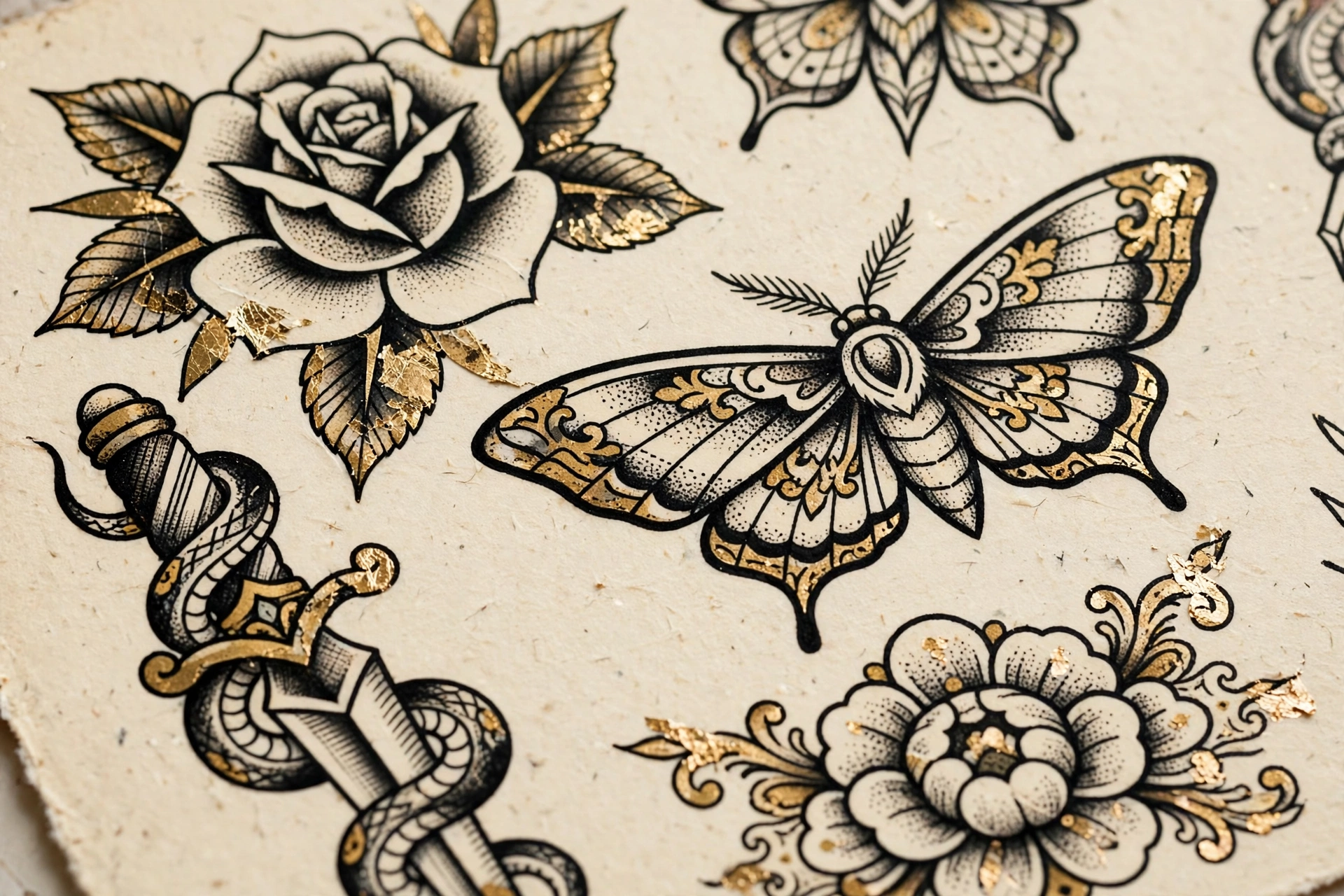
Fox head portrait framed by peonies and leaves on the upper arm, in warm rust, cream and sage tones
Owl with spread wings and a small crescent moon above it on the thigh, richly shaded with jewel tones
Dagger through a rose with curling leaves and a banner left blank or carrying one word, on the forearm
Lady's face in profile with flowers woven through her hair as a calf piece with art nouveau framing
Swallow in flight carrying a small branch, with soft clouds and stars around it on the chest
Cat portrait with a decorative collar and gem, framed by an ornamental border on the upper arm
Moth with moon phases across its wings and botanical sprigs below, centred on the sternum or back
Bear head with pine branches and berries on the thigh, deep greens and browns with bold black outline
See also: Tattoo Style Finder Quiz · Tattoo Cost Estimator · All Tattoo Styles.
The generator reads your birth date, your intention and your style, so the design it makes is yours, not a copy of someone else's.
Size (Tiny to Extra Large) and style in, cost range out. Ranges are estimates — an artist quote wins. A 20% tip is shown separately.
All 23 placements from our placement guides — pick a spot, optionally compare a second one, and see its pain range, healing time, fading and size guidance, quoted from the same guide data, with a link to the full placement guide. Ranges only — sources disagree, no single decimal is a fact.
Two sun signs in, an honest reading out — no invented percentages. The tool compares the two signs' elements and ruling planets, tells you where the pairing clicks and where it rubs, and turns it into a matching-tattoo idea with links to both sign guides.
Your Sun, Moon and Rising signs from your birth date and time — all three computed in your browser, with the Moon and Rising honestly labelled approximate. Each sign comes with a short traditional reading and a tattoo angle, plus links to its sign guide and to the wheel and fusion tools.
See the full list on the Tattoo Styles main page.
Minimalist tattoos explained — the fewest lines that still say it. How the style ages, the placements that suit it, and design ideas to take to your artist.
Ornamental tattoos explained — jewellery-like symmetry, dot chains and lace patterns. How the style ages, the placements that suit it, and design ideas to take to your artist.
Micro tattoos explained — tiny, highly detailed pieces at miniature scale. How the style ages, the placements that suit it, and design ideas to take to your artist.
Realism tattoos explained — photographic shading, portraits and lifelike texture. How the style ages, the placements that suit it, and design ideas to take to your artist.
Traditional uses a limited palette, one bold line weight and flat, simple shading. Neo-traditional keeps the bold outline and readability but adds varied line weights, a wide colour range, smooth blended shading and much more detail. Think of it as the same strong skeleton with a more decorative, illustrated body.
Almost. The bold outlines and strong contrast that carry a traditional tattoo through the decades are all present, so the design stays readable. The softer shading and paler colours may mellow sooner and can be refreshed. Overall it is one of the better-ageing detailed styles you can choose.
Big enough for its detail to breathe — most artists will steer detailed subjects toward palm-size and upward. Fur, petals and small ornaments packed too small merge as ink settles. If you want a subject with lots going on, accept the size it needs, or simplify the design with your artist's help.
Yes, and it looks striking — the varied line weights, smooth shading and decorative framing all work without colour. Black and grey versions can also age very evenly. Many people choose a limited palette of two or three muted colours as a middle path between full colour and pure black and grey.
It can be, if you are ready for a medium-sized piece and a longer session. First-timers sometimes underestimate the commitment of a detailed design, so choose a comfortable placement like the upper arm or thigh, and pick a subject you have loved for a while rather than a passing trend.
Its bold outlines, rich colour and busy detail make it one of the better styles for cover-ups, because there is a lot of visual information to disguise what sits underneath. The new design usually needs to be larger and darker than the old one, so show your artist the existing tattoo early and let them design around it.
AI designs are for inspiration only. Always consult a licensed tattoo artist. Astrology on this site is for inspiration and self-expression. This page does not provide medical advice. Last reviewed: 25 November 2026.