Tattoo Cost Estimator
Size (Tiny to Extra Large) and style in, cost range out. Ranges are estimates — an artist quote wins. A 20% tip is shown separately.
Abstract Tattoos · Tattoo Styles
Abstract tattoos explained — shapes, splashes and compositions that suggest rather than depict. How the style ages, the placements that suit it, and design ideas to take to your artist.
Abstract tattoos suggest rather than depict: a sweep of brush-like black, a torn shape, a splash of colour or a cluster of marks that reads as feeling instead of a picture. There is no single subject to recognise, so the composition itself, and how it moves with your body, becomes the whole design.
This page sits under Tattoo Styles.
Key takeaways
| What | What to expect |
|---|---|
| Line | Mixed: bold brush-like strokes, broken edges and fine trailing lines in one piece |
| Colour | Usually black and grey, sometimes one or two colour washes or splashes |
| Aging | Strong shapes stay readable; soft washes and tiny splatters fade and blur earliest |
| Best placements | Shoulder, upper arm, ribs, back and thigh, where the piece can sweep and turn |
An abstract tattoo is defined by composition rather than subject. Instead of drawing an object, the artist arranges shapes, strokes, splatters and negative space so the piece suggests movement, weather, music or emotion. Nothing needs to be recognised for the design to work, which is exactly the appeal for many wearers.
Look for the tools of abstract painting translated into skin: a broad stroke that thins to a point like a brush lifting, blocks of solid black set against empty skin, fine lines that trail off, and dots or splatter used as texture rather than detail. Some pieces borrow from brush painting, with one confident sweep doing most of the work. Others are built like collages, layering a circle, a torn rectangle and a wash of grey until the balance feels right.
Because there is no outline of a familiar thing holding it together, balance matters more here than in any other style. A good abstract piece has a clear focal point, breathing room around it, and a direction of movement that suits the body part it sits on. Ask to see the design drawn for your placement, not copied flat from a screen, because a composition that sings on paper can sit awkwardly across a shoulder or rib if it ignores the curve underneath.
Abstract tattoos age unevenly, and that is worth knowing before you commit. The bold black shapes and strong lines hold their edges for years, while soft grey washes lighten, fine splatter merges, and delicate trailing lines can disappear into the skin. Plan the piece so it still works when the softest parts soften.
All ink spreads slightly under the skin over time, but abstract work shows it in patches rather than evenly. A solid black block barely changes. A pale wash beside it may fade until the contrast that made the design interesting is much weaker. Tiny isolated dots and specks are the most fragile element: placed too close together, they merge into a grey smudge, and placed alone they can fade to almost nothing.
The honest fix is contrast with margin. Keep the main shapes bold enough to survive, give fine details room to spread, and treat the softest wash as an accent rather than the foundation. Sun protection helps every tattoo, but it matters doubly for pieces that rely on pale grey tones. A touch-up after healing, and possibly years later, is a normal part of owning this style rather than a sign something went wrong.
Abstract tattoos suit placements where a composition can move: the shoulder sweeping onto the upper arm, the ribs following the breath, the back as a wide open canvas, or the thigh for a larger flowing piece. Flat, roomy areas let shapes breathe, while long placements let a single stroke travel.
This style rewards space. On the shoulder and upper arm, a design can wrap and turn, so the piece looks different as you move, which suits work built around movement. The ribs and side body give a tall, curved canvas where a vertical sweep or falling cluster of marks follows the body naturally, though that area is tender and the skin stretches with breathing, so sizing needs care.
The back and thigh are the safest choices for a first large abstract piece: both offer broad, relatively stable skin where the artist can keep shapes well spaced. Small abstract marks can work on a wrist or ankle, but keep them simple, one strong shape rather than a miniature composition, because the busy detail that reads well at A4 size turns muddy when shrunk. Fingers and feet are poor homes for soft washes, which fade fast there.
Pain for abstract work depends more on placement and fill than on the style itself. Solid black blocks need repeated passes and can feel intense, while a light line-and-wash piece is usually gentler. Bony, thin-skinned areas such as ribs, feet and the inner arm will always feel sharper than the outer arm or thigh.
Cost follows size and sitting time on this site, not a special abstract rate. A Tiny piece in the $50 to $250 band usually takes 30 minutes to 1 hour, a Small piece in the $50 to $500 band takes 1 to 3 hours, a Medium piece in the $200 to $1000 band takes 2 to 5 hours, a Large piece in the $500 to $2000 band takes 4 to 8 hours, and an Extra Large piece in the $500 to $2000 band takes 4 to 8 hours or more. Most shops set a minimum, usually $80 to $150, so even a very small mark rarely costs less than that.
Where abstract work can surprise you is design time. A piece that looks effortless may take several drawn drafts to balance, and large solid areas take longer to pack evenly than the same area of line. Ask whether custom drawing time is included, and expect a bigger flowing composition to sit in the Medium or Large band even if parts of it are only wash.
Good abstract ideas start from a feeling, a movement or a piece of music rather than an object. Think of a single brush sweep, overlapping torn shapes, a circle broken by a splash, falling dot clusters, or bold blocks balanced against bare skin. Bring references for mood, then let the artist compose for your body.
Start by choosing your ingredients: stroke, block, wash, splatter or line, and pick two or three rather than all of them. A design built from one bold stroke and one quiet wash has a clarity that a kitchen-sink composition rarely achieves. If you want personal meaning without a literal picture, abstract work carries it privately: colours from a place you love, a rhythm of marks based on a song, or shapes traced from a coastline only you would recognise.
Work with your artist on placement sketches directly on the skin or on photos of the area. Abstract pieces benefit from being drawn in place, with tape, marker or a tablet overlay, because the turn of a shoulder or the taper of a forearm should steer the composition. Agree the boldest shape first, then add the softer elements around it, and step back often: this style is judged from across the room, not only in the mirror up close.
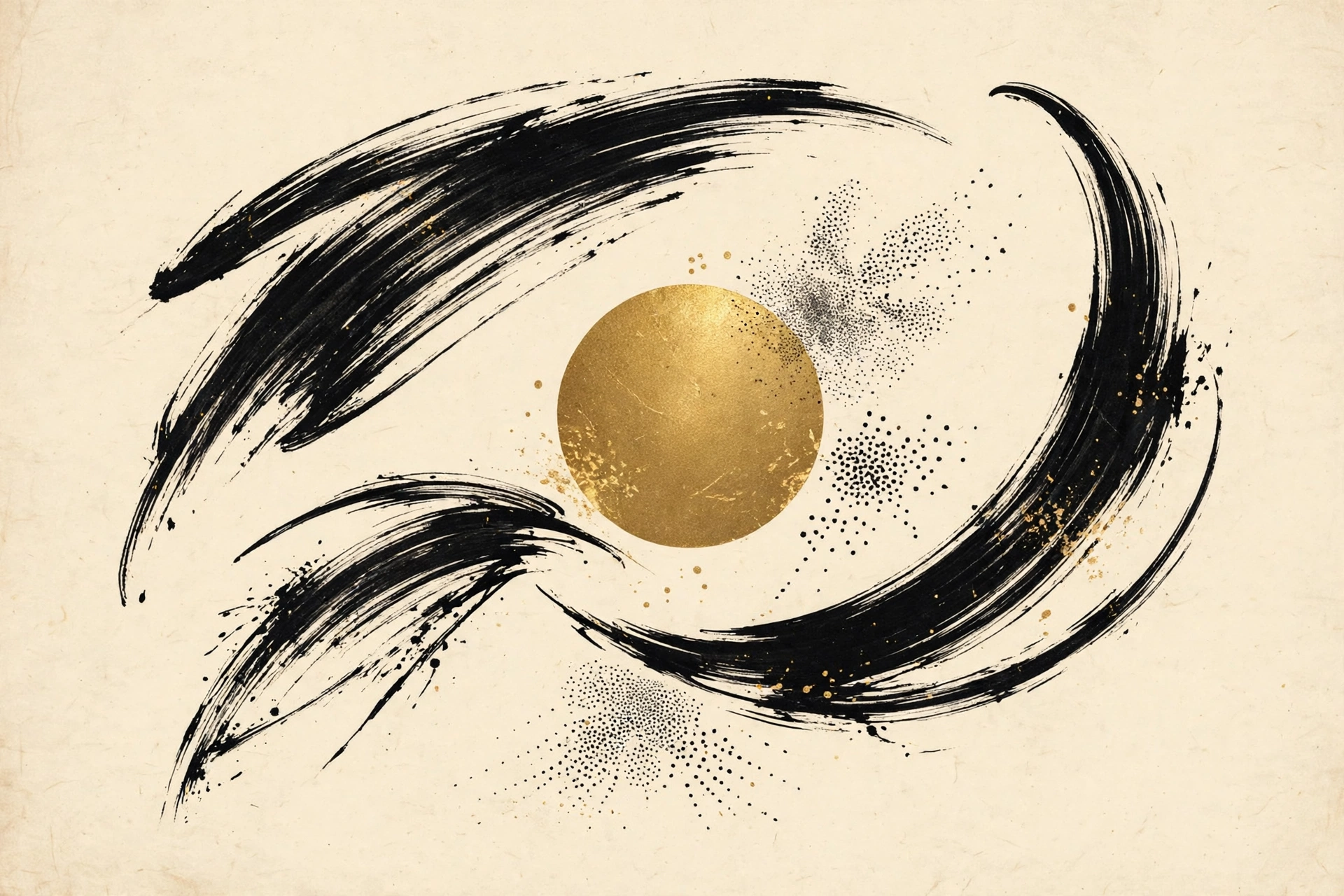
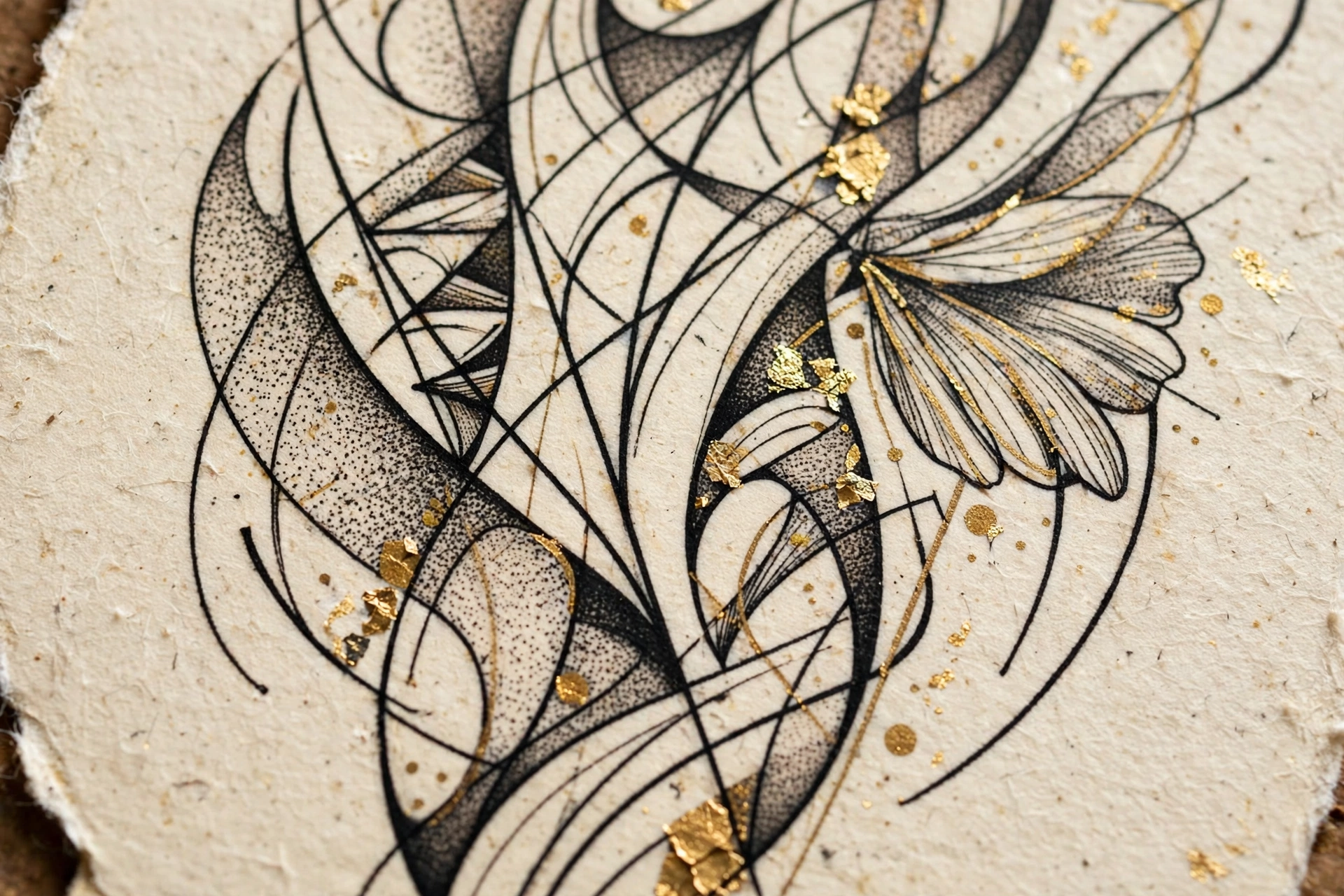
Single bold brush sweep curving over the shoulder, thinning to a fine point
Overlapping torn black rectangles with one soft grey wash behind them
Broken circle with a cluster of fine splatter breaking out of one side
Falling trail of dots and small marks down the spine, spacing wider as it descends
Two solid black blocks balanced by bare skin and one thin connecting line
Abstract wave of layered grey washes sweeping around the upper arm
Scattered constellation of abstract marks and short strokes across the collarbone
Large soft-edged black shape on the thigh with a single clean cut of negative space
See also: Tattoo Style Finder Quiz · Tattoo Cost Estimator · All Tattoo Styles.
The generator reads your birth date, your intention and your style, so the design it makes is yours, not a copy of someone else's.
Size (Tiny to Extra Large) and style in, cost range out. Ranges are estimates — an artist quote wins. A 20% tip is shown separately.
All 23 placements from our placement guides — pick a spot, optionally compare a second one, and see its pain range, healing time, fading and size guidance, quoted from the same guide data, with a link to the full placement guide. Ranges only — sources disagree, no single decimal is a fact.
Two sun signs in, an honest reading out — no invented percentages. The tool compares the two signs' elements and ruling planets, tells you where the pairing clicks and where it rubs, and turns it into a matching-tattoo idea with links to both sign guides.
Your Sun, Moon and Rising signs from your birth date and time — all three computed in your browser, with the Moon and Rising honestly labelled approximate. Each sign comes with a short traditional reading and a tattoo angle, plus links to its sign guide and to the wheel and fusion tools.
See the full list on the Tattoo Styles main page.
Blackwork tattoos explained — solid black ink, bold shapes and high contrast. How the style ages, the placements that suit it, and design ideas to take to your artist.
Dotwork tattoos explained — thousands of single dots building tone and texture. How the style ages, the placements that suit it, and design ideas to take to your artist.
Fine Line tattoos explained — single-needle hairlines and delicate detail. How the style ages, the placements that suit it, and design ideas to take to your artist.
Geometric tattoos explained — circles, grids and exact symmetry. How the style ages, the placements that suit it, and design ideas to take to your artist.
No. Many wearers choose it purely for how it looks and moves on the body. Others build private meaning into colours or shapes that only they recognise. Both are valid, and the design does not need a story to justify it.
The bold shapes should, provided they were sized and spaced generously. The softest washes and tiniest splatters will lighten and merge somewhat. A design planned with strong main shapes and accents kept secondary ages far better than one built entirely from pale detail.
Sometimes. Solid black shapes and dense areas can sit over faded older work, but soft washes will not hide what is underneath. Show your artist the existing tattoo in person so they can judge what the new composition can realistically cover.
Bring references that show the mood, textures and balance you like rather than one image to copy. Name your ingredients, such as stroke, block or wash, agree the placement and the boldest shape first, and ask to see the composition drawn for your body.
It can be, at a modest size with bold, simple shapes. Start with one strong element on the outer arm, shoulder or thigh rather than a delicate all-over composition, and you will learn how your skin holds ink before committing to something larger.
AI designs are for inspiration only. Always consult a licensed tattoo artist. Astrology on this site is for inspiration and self-expression. This page does not provide medical advice. Last reviewed: 25 November 2026.