Tattoo Cost Estimator
Size (Tiny to Extra Large) and style in, cost range out. Ranges are estimates — an artist quote wins. A 20% tip is shown separately.
Fine Line Tattoos · Tattoo Styles
Fine Line tattoos explained — single-needle hairlines and delicate detail. How the style ages, the placements that suit it, and design ideas to take to your artist.
Fine line tattoos are drawn with hairline strokes, often a single needle, to create delicate florals, tiny symbols and soft script that sit lightly on the skin. They are subtle, elegant and quick to wear, but they are also the style to choose with the clearest eyes about how delicately they age.
This page sits under Tattoo Styles.
Key takeaways
| What | What to expect |
|---|---|
| Line | Hairline single-needle strokes, minimal to no bold outline |
| Colour | Usually black or soft grey ink; colour versions fade faster |
| Aging | Lines spread and lighten; close detail can merge, so simplicity protects it |
| Best placements | Inner forearm, upper arm, ankle, collarbone and behind the ear |
Fine line work is defined by its line itself: a hairline stroke, often laid with a single needle or a very small grouping, with little or no shading. Florals, faces, animals, script and symbols are reduced to clean, light contours, so the design feels drawn on with a pen rather than built up like a painting.
The restraint is the point. A fine line rose is a stem, a few petals and perhaps two leaves, each one line doing the work that shading does in other styles. Artists control emphasis by tiny changes in line weight and by leaving gaps, letting the skin complete a curve the needle only suggested. Whip shading or a whisper of stipple sometimes appears, but always in support of the line.
This style exposes skill like no other. With nowhere to hide, every wobble, blowout or uneven depth shows, so portfolio choice matters enormously. Look at healed photos taken months later, not just fresh work, and check that lines are even, unbroken and still light rather than already spreading into fuzzy threads on day one.
Honesty matters here: fine lines spread and lighten as the years pass, more visibly than bold work. A hairline gains width under the skin, closely spaced lines can merge, and the palest strokes may fade to near invisibility. Simple designs with generous spacing age gracefully; dense miniature detail is what struggles.
Every tattoo softens, but a line that starts at hairline width has the least margin. Designs that survive beautifully share habits: one clear subject, lines kept apart, no tiny enclosed spaces like miniature eyes, leaf veins or letter counters that ink can fill in, and enough size that the drawing is not working at the limit of what skin can hold.
Placement and sun decide much of the rest. Fine line on stable, sun-protected skin such as the inner forearm or upper arm can stay crisp for years, while the same design on a hand, finger or foot, where skin flexes, washes and renews constantly, may need repeated touch-ups and still fade. Many artists will tell you plainly if your chosen design is too small or too detailed, and that advice is worth more than the deposit. A touch-up after healing is normal in this style; plan for it rather than fearing it.
Fine line tattoos flatter placements where skin is smooth, stable and not constantly flexed: the inner forearm, upper arm, ankle, collarbone, shoulder blade and behind the ear. These areas show the delicacy off and give the lines their best chance of staying fine. Hands and fingers look lovely fresh but fade fastest.
The inner forearm is the most forgiving canvas: flat, easy to protect from sun, and visible enough to enjoy daily. The upper arm and shoulder blade suit slightly larger florals and flowing designs that follow the body's curves, while the ankle and collarbone carry small, elegant pieces that read like jewellery. Behind the ear hides a tiny symbol discreetly, though hair products and sun need watching there.
Treat the hands, fingers, feet and lips of the elbow or knee creases as advanced placements. Artists often warn that fine work there may blur or drop out in patches as it heals, and some will not guarantee free touch-ups on those areas. If your heart is set on a finger design, choose the simplest possible mark, a short line, a dot, a tiny heart, and accept it as the highest-maintenance version of this style.
Fine line sittings are usually among the gentler tattoo experiences because the needle groupings are small and there is little heavy fill, though a scratchy feeling over bony areas such as the ankle, collarbone or wrist is normal. Most small fine line pieces are finished in a single short sitting.
Use this site's size bands to frame cost, because fine line work follows them like any other style. A Tiny piece in the $50 to $250 band usually takes 30 minutes to 1 hour, a Small piece in the $50 to $500 band takes 1 to 3 hours, a Medium piece in the $200 to $1000 band takes 2 to 5 hours, a Large piece in the $500 to $2000 band takes 4 to 8 hours, and an Extra Large piece in the $500 to $2000 band takes 4 to 8 hours or more. Most shops set a minimum, usually $80 to $150, which is what most tiny fine line pieces actually cost.
Two cost notes are specific to this style. First, you are paying for precision, and experienced fine line specialists may price at the upper end of a band even for small work. Second, ask about the touch-up policy before you book: whether the first touch-up is included, and how the artist handles high-fade placements such as fingers, varies widely between studios.
The best fine line ideas are simple subjects drawn with confidence: a single-stem flower, a continuous-line face, a tiny animal in profile, a short word in flowing script, or a small celestial cluster. One subject, clean spacing and a size that lets every line breathe will always outlast a crowded miniature scene.
Florals are the style's signature for good reason: a lavender stem, wildflower sprig or single rose reduces beautifully to a handful of lines and suits almost every placement. Continuous-line designs, where a face, hand or animal is drawn without the pen lifting, give a modern, gallery feel and age better than dense detail because the lines stay well separated by design.
Personal symbols work well too: a birth flower, a pet's profile reduced to its essential outline, coordinates or a date in fine script, or your star sign's constellation joined by dotted lines. Whatever you choose, ask your artist to show you the design at the exact size it will be tattooed, and check that no two lines sit closer than a grain of rice. If they do, enlarge the piece or simplify the drawing before the needle confirms it.
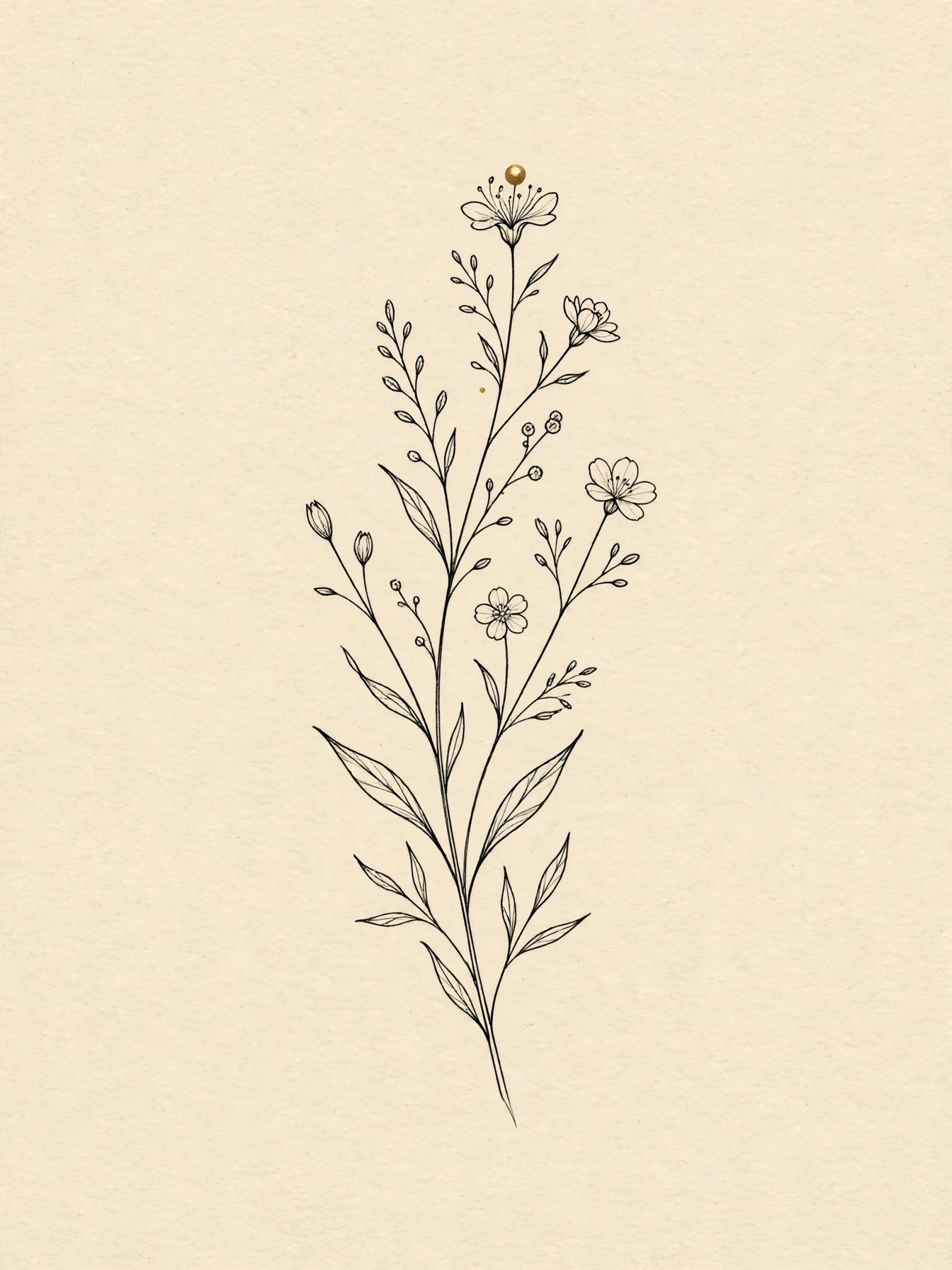
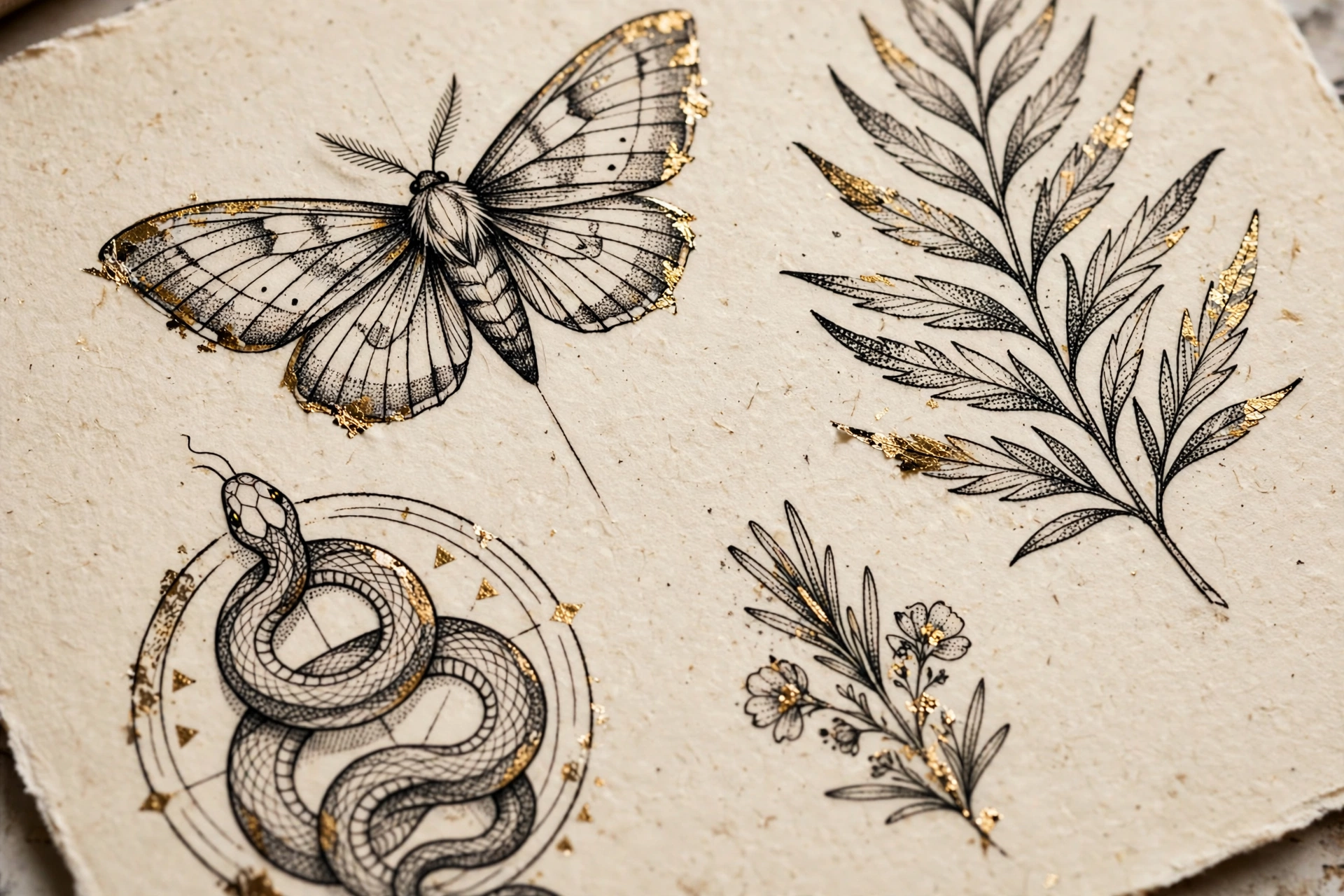
Single-stem lavender sprig with two leaves on the inner forearm
Continuous-line face in profile with a small flower woven into the hair
Tiny cat sitting in profile, drawn in one unbroken line
Birth flower stem with a short script word along its curve
Small constellation of your star sign joined by fine dotted lines
Delicate wildflower bunch tied with a hairline bow at the ankle
Fine line olive branch curving along the collarbone
Miniature wave and crescent moon paired above the ankle bone
See also: Tattoo Style Finder Quiz · Tattoo Cost Estimator · All Tattoo Styles.
The generator reads your birth date, your intention and your style, so the design it makes is yours, not a copy of someone else's.
Size (Tiny to Extra Large) and style in, cost range out. Ranges are estimates — an artist quote wins. A 20% tip is shown separately.
All 23 placements from our placement guides — pick a spot, optionally compare a second one, and see its pain range, healing time, fading and size guidance, quoted from the same guide data, with a link to the full placement guide. Ranges only — sources disagree, no single decimal is a fact.
Two sun signs in, an honest reading out — no invented percentages. The tool compares the two signs' elements and ruling planets, tells you where the pairing clicks and where it rubs, and turns it into a matching-tattoo idea with links to both sign guides.
Your Sun, Moon and Rising signs from your birth date and time — all three computed in your browser, with the Moon and Rising honestly labelled approximate. Each sign comes with a short traditional reading and a tattoo angle, plus links to its sign guide and to the wheel and fusion tools.
See the full list on the Tattoo Styles main page.
Dotwork tattoos explained — thousands of single dots building tone and texture. How the style ages, the placements that suit it, and design ideas to take to your artist.
Geometric tattoos explained — circles, grids and exact symmetry. How the style ages, the placements that suit it, and design ideas to take to your artist.
Blackwork tattoos explained — solid black ink, bold shapes and high contrast. How the style ages, the placements that suit it, and design ideas to take to your artist.
Gothic tattoos explained — cathedral arches, dark ornament and medieval letterforms. How the style ages, the placements that suit it, and design ideas to take to your artist.
They lighten and spread rather than vanish outright, though the palest strokes on high-wear skin can fade heavily. A simple design on stable skin, protected from sun, usually stays clearly readable for years, and a touch-up can restore lines that have softened too far.
Smaller than most styles, but not without limit. If lines must sit closer than a couple of millimetres apart, or the design has tiny enclosed details, your artist will likely suggest sizing up or simplifying. That advice protects the tattoo you will have in five years, not just the fresh one.
Most people find them less intense than heavy fill work because the needle groupings are small. The sensation is often described as a light scratch. Bony placements such as the ankle, ribs and collarbone still feel sharp, as they do in every style.
Yes, but softly pigmented colour, especially pale yellows, pinks and light blues, fades faster than black and may need more maintenance. Many people keep fine line work in black or soft grey for longevity and add colour only as a small accent.
Healed work, ideally several months old. Look for lines that are even, unbroken and still fine, with no fuzzy blown-out sections. Fresh photos alone can flatter this style, so an artist who proudly posts healed results is a reassuring sign.
AI designs are for inspiration only. Always consult a licensed tattoo artist. Astrology on this site is for inspiration and self-expression. This page does not provide medical advice. Last reviewed: 25 November 2026.