Tattoo Cost Estimator
Size (Tiny to Extra Large) and style in, cost range out. Ranges are estimates — an artist quote wins. A 20% tip is shown separately.
Sketch Tattoos · Tattoo Styles
Sketch tattoos explained — raw pencil-energy lines, cross-hatching and unfinished edges. How the style ages, the placements that suit it, and design ideas to take to your artist.
Sketch tattoos look like a page from an artist's notebook transferred to skin: loose searching lines, hatching, smudges and construction marks that were never tidied away. That looseness is entirely deliberate. Beneath the rough energy sits a carefully planned drawing, and the charm of the style is watching a subject appear out of lines that still feel alive.
This page sits under Tattoo Styles.
Key takeaways
| What | What to expect |
|---|---|
| Line | Loose, varied lines — confident strokes, broken contours and visible construction marks left in on purpose |
| Colour | Mostly black and grey like a pencil sketch; occasional colour appears as rough hatching or a single wash |
| Aging | The loosest, palest sketch lines fade first; a strong core drawing underneath keeps the piece readable as it softens |
| Best placements | Forearm, upper arm, calf, thigh and back — areas with room for an energetic, medium-to-large composition |
Sketch tattoos are defined by the look of a drawing still in progress: multiple searching lines instead of one clean contour, cross-hatching for shade, stray construction marks and areas deliberately left unfinished. The looseness is a choice, not a mistake. A skilled artist plans exactly which lines stay rough and which are solid, so the subject reads clearly.
Think of the difference between a polished illustration and the page before it, where the artist tried a line, corrected it and left both versions standing. Sketch style tattoos keep that whole process visible. A bird might be drawn three times in overlapping strokes to suggest movement, or a face might resolve into detail around the eyes while the hair dissolves into loose marks at the edges.
Because the style imitates pencil or charcoal, it is usually black and grey, with line weight doing most of the work — heavy darks where the drawing presses hard, feather-light greys where it barely touches. Colour appears occasionally, most often as rough hatching or one loose wash, but the drawn, unfinished quality always leads. It suits people who love the making of art as much as the finished picture.
Sketch tattoos age unevenly by design, and it is worth knowing that before you book. The palest construction lines and lightest hatching fade first and may soften away almost completely, while the strong core lines that carry the subject hold up well. A piece built on a solid underlying drawing stays readable; one made only of faint lines can drift.
This is the honest trade-off of the style. That whisper-light pencil effect looks wonderful fresh, but skin cannot keep the faintest marks forever, and a sketch tattoo will look more settled and less busy after a few years as its lightest layer settles. Many wearers find the aged version even better — calmer, with the subject standing out more clearly — but you should choose the style expecting that softening, not hoping it will not happen.
Your artist can build longevity in without spoiling the effect. The trick is a hierarchy: a firm, well-placed core drawing for the subject, mid-tone hatching around it, and only then the loose decorative lines that are allowed to fade gracefully. Ask directly how the artist expects the piece to look healed and aged, and look at older healed examples in their portfolio, not only fresh ones.
Sketch tattoos suit medium and larger placements with room for the composition to move: the forearm, upper arm, calf, thigh, shoulder and back. The style needs space for loose lines to spread, overlap and trail off, which a tiny area cannot offer. Flat or gently curved skin shows the drawn quality best, with breathing room around the design.
A sketch piece is a composition, not an icon. A running animal needs ground to run across, a portrait study needs its stray lines and unfinished edges, and cramming that energy into a small patch forces the artist to tidy it — which quietly turns it into a different style. Give it a forearm to travel along, a calf to climb, or a shoulder blade to spread across, and the drawing can behave like a drawing.
It is also a forgiving style for the body's curves, up to a point, because loose lines do not demand the perfect symmetry that geometric work does. A design can flow around an arm or follow a muscle and look intentional doing it. Very mobile, high-friction spots are still best avoided for the fine hatching, which softens fastest where skin works hardest.
A sketch tattoo is usually a single, flowing sitting of linework rather than hours of packed shading, so it is often quicker — and sits lower in its size band — than realism or heavy blackwork of the same size. The sensation is the familiar sting of linework, strongest where lines are built up in layers. Large pieces take time.
On the standard bands, a Tiny sketch piece runs $50–250, Small $50–500, Medium $200–1000, Large $500–2000 and Extra Large $500–2000, with most shops applying a minimum of usually $80–$150 and a tip normally separate. Most sketch work lands in the small to large range — big enough for the drawing to breathe, finished in one session unless the composition is ambitious. Your artist will quote on the actual size and detail.
For pain, expect linework's sharp, scratchy feel rather than the deep ache of long shading sessions, though areas of dense hatching get worked repeatedly and can feel raw by the end. Fleshy placements like the outer arm, calf and thigh are generally the easiest places to sit for a piece like this, while ribs and inner arm will test you more over a long, detailed drawing.
The best sketch ideas are subjects with movement, texture or character that loose lines can express: animals mid-motion, birds, skulls, botanical studies, figures, vintage objects and portraits with strong features. Bring reference images for the subject, not for the exact finished tattoo — the drawing itself is the artist's contribution, and the piece will be better in their own hand.
Animals are the natural home of this style. Fur, feathers and motion are exactly what searching lines and hatching describe well, and a slight roughness adds life rather than error. Skulls, anatomical studies and old machines also thrive here, because they suit the notebook-study feeling — as if the design were drawn from life in a museum or a workshop.
Portraits need more care. A loose line across a human face changes the likeness quickly, so portrait sketch work belongs with an artist who specialises in it and whose healed portraits you have seen. Whichever subject you choose, resist asking for a copy of someone else's sketch tattoo: the style is literally handwriting, and your artist's own version will sit better on your body and age as one coherent drawing.
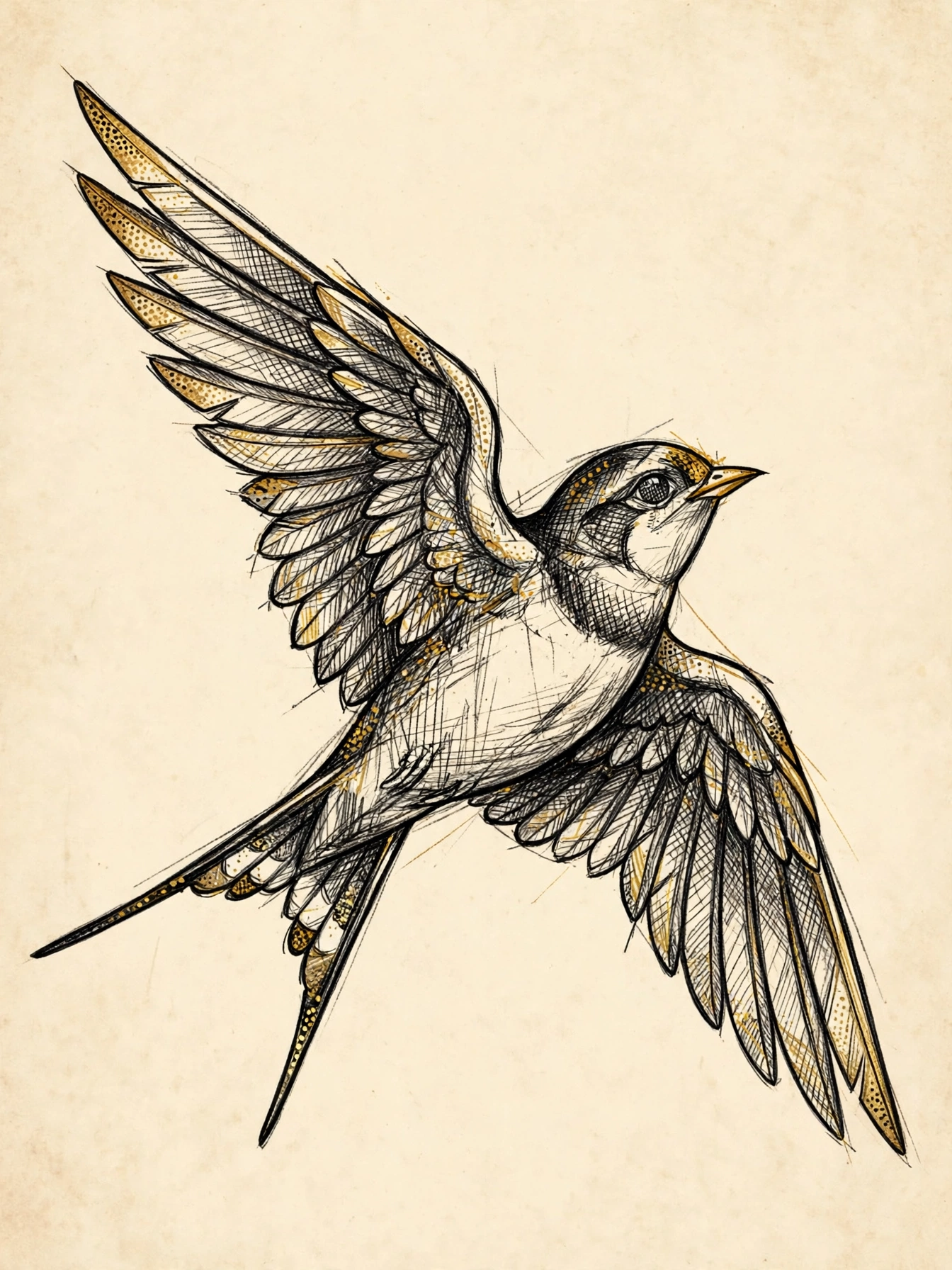
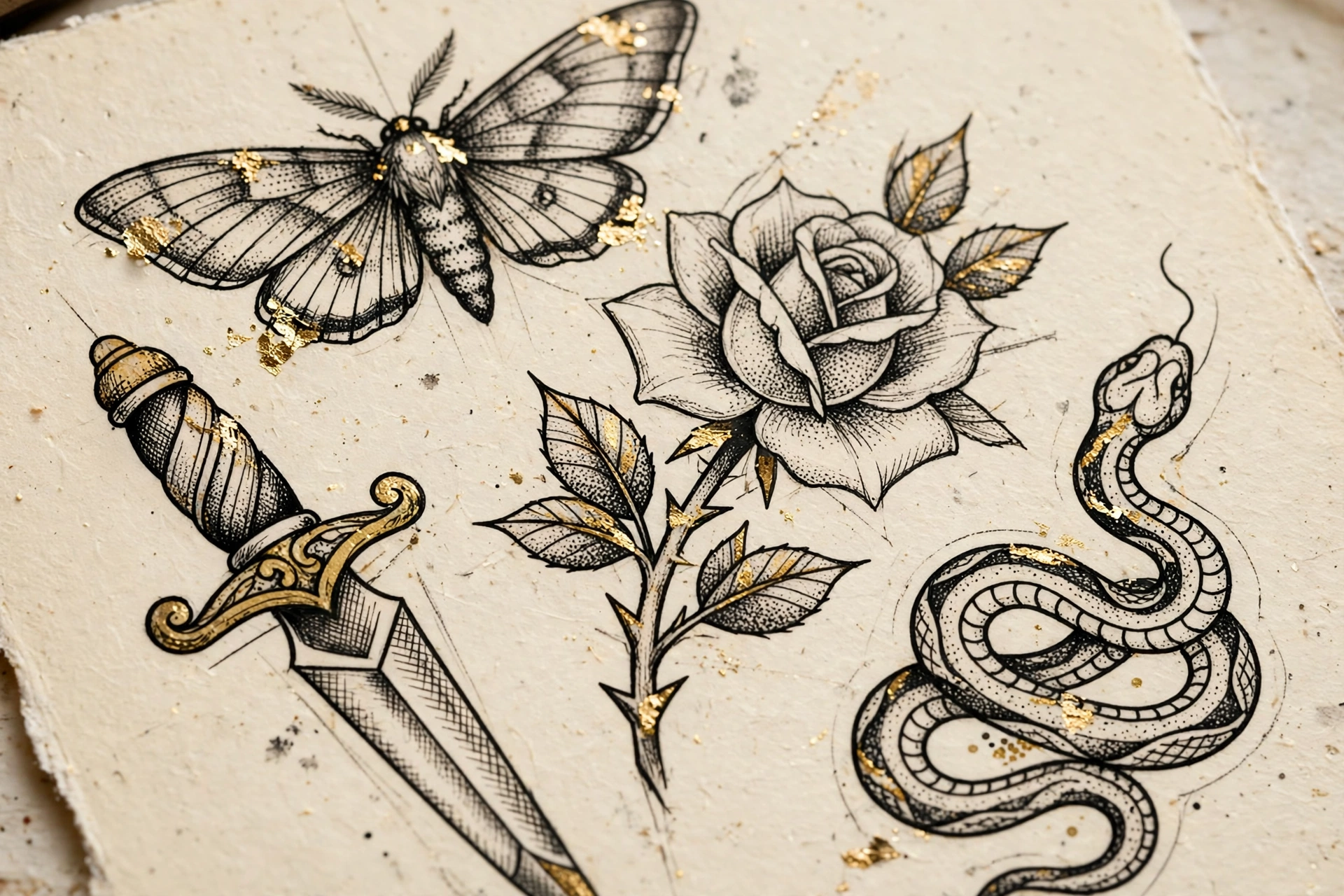
Sketch-style fox mid-stride on the forearm, motion lines trailing from its tail
Raven drawn in rough black strokes on the upper arm, wings built from hatching
Human skull study on the calf, pencil-style shading and construction lines left visible
Sketch portrait of a dog on the thigh, loose lines tightening around the eyes and nose
Botanical study of a poppy on the shoulder, stem drawn with a single searching line
Dancing figure in sketch lines down the side of the calf, movement over detail
Vintage camera or typewriter as a notebook study on the upper arm, annotations in line only
Two hands reaching toward each other across the inner forearms, drawn as one sketch split in two
See also: Tattoo Style Finder Quiz · Tattoo Cost Estimator · All Tattoo Styles.
The generator reads your birth date, your intention and your style, so the design it makes is yours, not a copy of someone else's.
Size (Tiny to Extra Large) and style in, cost range out. Ranges are estimates — an artist quote wins. A 20% tip is shown separately.
All 23 placements from our placement guides — pick a spot, optionally compare a second one, and see its pain range, healing time, fading and size guidance, quoted from the same guide data, with a link to the full placement guide. Ranges only — sources disagree, no single decimal is a fact.
Two sun signs in, an honest reading out — no invented percentages. The tool compares the two signs' elements and ruling planets, tells you where the pairing clicks and where it rubs, and turns it into a matching-tattoo idea with links to both sign guides.
Your Sun, Moon and Rising signs from your birth date and time — all three computed in your browser, with the Moon and Rising honestly labelled approximate. Each sign comes with a short traditional reading and a tattoo angle, plus links to its sign guide and to the wheel and fusion tools.
See the full list on the Tattoo Styles main page.
Sacred Geometry tattoos explained — flower of life, metatron and mathematical pattern. How the style ages, the placements that suit it, and design ideas to take to your artist.
Traditional (Old School) tattoos explained — bold outlines, limited palette and timeless motifs. How the style ages, the placements that suit it, and design ideas to take to your artist.
Realism tattoos explained — photographic shading, portraits and lifelike texture. How the style ages, the placements that suit it, and design ideas to take to your artist.
Tribal tattoos explained — bold black flowing shapes rooted in Indigenous traditions. How the style ages, the placements that suit it, and design ideas to take to your artist.
No — the looseness is deliberate, but it sits on top of a carefully planned drawing. A good sketch artist decides exactly which lines to leave rough and which to make solid. If the underlying drawing were genuinely careless, the tattoo would just look unfinished rather than sketched.
The strong core of the design should stay clear, while the lightest construction lines and faintest hatching will probably soften or partly disappear over the years. Many people accept that as part of the style's character. Choosing an artist who builds in a solid core protects the subject itself.
It can work beautifully, because the rough, energetic linework suits an animal's movement and fur. Portraits of people are riskier — a loose line across a face changes the likeness — so look for an artist whose healed sketch portraits you have actually seen before booking one.
Yes, and it is one of the easiest styles to grow. Extra hatching, a second sketched element or an extended composition can be added later in the same hand. Keep photos of the original and, if you can, return to the same artist so the energy of the linework matches.
Price it by size: Small pieces fall in the $50–500 band, Medium in $200–1000 and Large in $500–2000, with a shop minimum usually $80–$150. A sketch piece is usually a single sitting unless it is large, so it often costs less in time than a heavily shaded realism piece of the same size.
AI designs are for inspiration only. Always consult a licensed tattoo artist. Astrology on this site is for inspiration and self-expression. This page does not provide medical advice. Last reviewed: 25 November 2026.